The Japan Times - Spring in February: UK plants flowering 'a month early'

EUR -
AED 4.114989
AFN 72.258972
ALL 91.29719
AMD 403.802781
ANG 2.00516
AOA 1028.467878
ARS 1731.475792
AUD 1.620481
AWG 2.016604
AZN 1.907451
BAM 1.958187
BBD 2.25635
BDT 139.139594
BGN 1.958157
BHD 0.422758
BIF 3372.210009
BMD 1.120336
BND 1.433848
BOB 13.31405
BRL 6.176184
BSD 1.120265
BTN 105.14616
BWP 15.392762
BYN 3.354389
BYR 21958.576804
BZD 2.253146
CAD 1.583029
CDF 2599.178267
CHF 0.919369
CLF 0.027659
CLP 1088.574119
CNY 7.479922
CNH 7.474246
COP 3671.597279
CRC 507.418481
CUC 1.120336
CUP 26.886772
CVE 111.365068
CZK 24.343752
DJF 199.106231
DKK 7.475249
DOP 68.060758
DZD 152.491123
EGP 60.361547
ERN 16.805033
ETB 180.594869
FJD 2.526637
FKP 0.838896
GBP 0.834779
GEL 2.907257
GGP 0.838896
GHS 13.091147
GIP 0.838896
GMD 83.467083
GNF 9923.372199
GTQ 8.560396
GYD 234.855211
HKD 8.78556
HNL 30.333082
HRK 7.583563
HTG 146.838979
HUF 362.280107
IDR 20259.027773
ILS 3.538905
IMP 0.838896
INR 105.011236
IQD 1696.188025
IRR 2118950.005707
ISK 137.386641
JEP 0.838896
JMD 177.96692
JOD 0.794322
JPY 177.076319
KES 145.587578
KGS 97.973812
KHR 4570.969036
KMF 495.188186
KPW 1008.301953
KRW 1506.212487
KWD 0.348302
KYD 0.93363
KZT 502.622635
LAK 25213.151856
LBP 100326.048745
LKR 372.49236
LRD 190.792841
LSL 18.552428
LTL 3.30806
LVL 0.67768
LYD 7.203498
MAD 10.93167
MDL 20.193433
MGA 5147.941951
MKD 61.550635
MMK 2352.095636
MNT 4034.514305
MOP 9.048129
MRU 45.093273
MUR 52.745293
MVR 17.255162
MWK 1946.022733
MXN 20.836673
MYR 4.547466
MZN 71.600509
NAD 18.553055
NGN 1509.764051
NIO 41.015462
NOK 10.542671
NPR 168.234057
NZD 1.992551
OMR 0.430759
PAB 1.120366
PEN 3.856752
PGK 5.032577
PHP 70.783091
PKR 309.941177
PLN 4.386675
PYG 7002.535229
QAR 4.081345
RON 5.342766
RSD 117.662082
RUB 92.423171
RWF 1652.494938
SAR 4.212928
SBD 9.017114
SCR 15.571896
SDG 673.882188
SEK 11.006434
SGD 1.43371
SHP 0.839046
SLE 25.711956
SLL 23492.881268
SOS 640.272652
SRD 42.070799
STD 23188.683962
STN 24.955474
SVC 9.802949
SYP 14566.602484
SZL 18.552796
THB 37.485317
TJS 10.284189
TMT 3.921174
TND 3.344764
TOP 2.697499
TRY 56.219351
TTD 7.598261
TWD 36.757315
TZS 2963.285297
UAH 51.036607
UGX 4587.59171
USD 1.120336
UYU 45.174861
UZS 13444.026317
VES 1004.175127
VND 28585.921757
VUV 133.613536
WST 3.123298
XAF 655.957
XAG 0.021264
XAU 0.00027288983
XCD 3.027763
XCG 2.019061
XDR 0.792135
XOF 655.957
XPF 119.331742
YER 265.099451
ZAR 18.389647
ZMK 10084.360068
ZMW 22.769754
ZWL 360.74759
SSP 6436.588023
MXV 2.342411
  • RYCEF

    0.1000

    19.81

    +0.5%

  • VOD

    -0.2500

    16.33

    -1.53%

  • CMSC

    -0.2800

    20.12

    -1.39%

  • RBGPF

    -2.0000

    65

    -3.08%

  • RIO

    -0.2500

    94.16

    -0.27%

  • BTI

    -1.2000

    54.85

    -2.19%

  • NGG

    -0.3000

    74.94

    -0.4%

  • GSK

    -0.3500

    49.35

    -0.71%

  • BCE

    -0.4200

    20.14

    -2.09%

  • CMSD

    -0.3400

    19.93

    -1.71%

  • BP

    -0.9100

    43.52

    -2.09%

  • RELX

    0.1700

    33.24

    +0.51%

  • BCC

    -0.6200

    75.97

    -0.82%

  • AZN

    -1.9400

    164.21

    -1.18%

  • JRI

    0.0000

    10.77

    0%

Spring in February: UK plants flowering 'a month early'


Spring in February: UK plants flowering 'a month early'

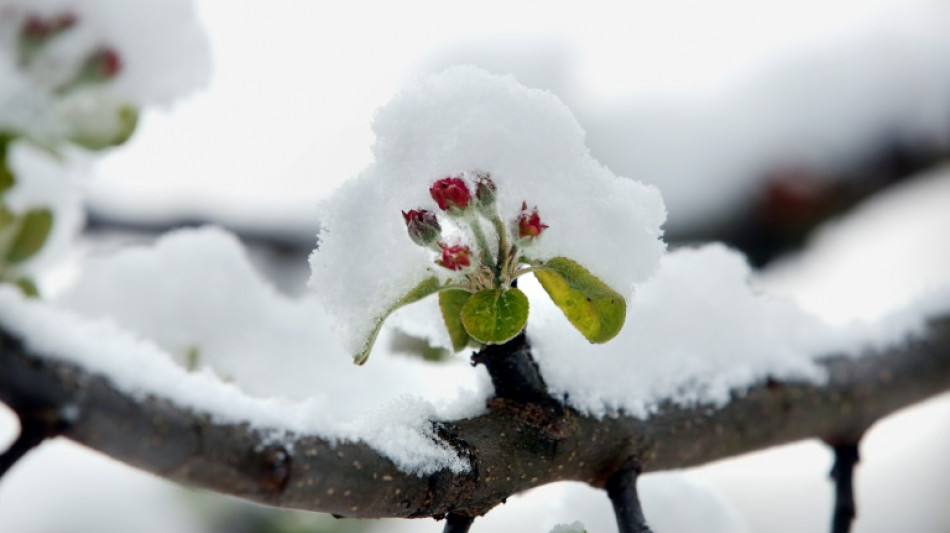
Global warming is causing plants in the UK to burst into flower around a month earlier, with potentially profound consequences for crops and wildlife, according to research Wednesday that used nature observations going back to the 1700s.

Text size:

Trees, herbs and other flowering plants have shifted seasonal rhythms as temperatures have increased, according to the study led by the University of Cambridge.

The results are "truly alarming" because of the ecological threats posed by early flowering, said Ulf Buntgen, a professor from Cambridge's Department of Geography, who led the research published in the journal Proceedings of the Royal Society B.

Crops can be killed off if they blossom early and are then lashed by a late frost, but reasearchers said the bigger threat was to wildlife.

This is because insects and birds have evolved to synchronise their own development stages with the plants they rely on. When they are no longer in phase, the result is an "ecological mismatch".

"A certain plant flowers, it attracts a particular type of insect, which attracts a particular type of bird, and so on," Buntgen said in a press release from the university.

"But if one component responds faster than the others, there's a risk that they'll be out of synch, which can lead species to collapse if they can't adapt quickly enough."

- Spring backwards? -

To track the changes in flowering patterns, researchers used a database known as Nature's Calendar, which has entries by scientists, naturalists, amateur and professional gardeners, as well as organisations such as the Royal Meteorological Society, going back more than 200 years.

Looking at more than 400,000 observations of 406 trees, shrubs, herbs and climbing plants across swathes of Britain, they found that the average first flowering date from 1987 to 2019 is 30 days earlier than the average first flowering date from 1753 to 1986.

The changes seen in recent decades coincide with accelerating impacts of human-caused climate change, especially higher temperatures.

Spring in Britain might eventually creep into the historically wintry month of February if global temperatures continue to increase at their current rate, said Buntgen.

That rapid shift in natural cycles could reverberate through forests, farms and gardens.

Buntgen said scientists need to have access to data that track whole ecosystems over long periods of time, if we are to truly understand the implications of climate change.

"We can use a wide range of environmental datasets to see how climate change is affecting different species, but most records we have only consider one or a handful of species in a relatively small area," said Buntgen.

There is growing concern among scientists about the scale of the impact of a rapidly warming world, on everything from extreme weather events to loss of biodiversity.

The United Nations last month confirmed that the past seven years have been the hottest on record, while the average global temperature in 2021 was around 1.11 degrees Celsius above the pre-industrial levels measured between 1850 and 1900.

K.Okada--JT