Philippine museum brings deadly, lucrative galleon trade to life / Photo: Jam STA ROSA - AFP

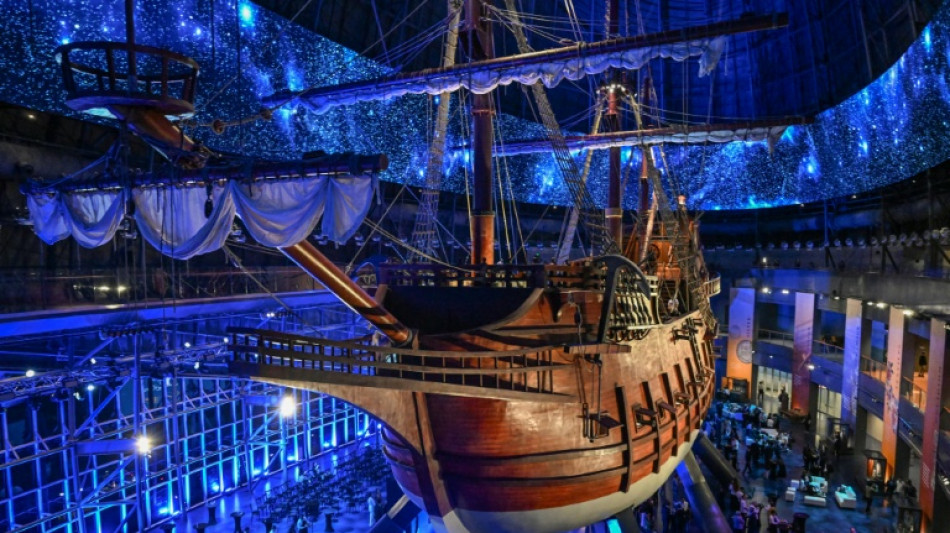
A full-size replica of a Spanish galleon stares out into Manila Bay, the centrepiece of a museum that will transport visitors back to the 17th century, when conscripted Philippine mariners birthed the era of globalisation.
The Museo del Galeon, which focuses on the hulking Espiritu Santo, aims to tell the story of Spain's 250-year-long Pacific galleon trade from the perspective of the Filipinos who built and crewed the towering vessels.
"This is a land with a great tradition of seafaring, but often under inhumane and degrading conditions," the museum's executive director Manuel Quezon told AFP, noting Filipinos still make up a quarter of the world's sailors.
"And it is one that we don't flinch from telling."
Built with forced labour in 1603, the Espiritu Santo was one of 181 treasure ships that made hundreds of trips between Manila and the Mexican port of Acapulco between 1565 and 1815 under harrowing conditions that historians say killed one in three crewmen.
"It was the first global trade, connecting three continents," said Francis Navarro, director of archives at the Ateneo de Manila University.
"It made the world smaller."
- Ravaged forests, families -
Sailing west across the Pacific for three months, the ships brought silver coins from Spain's American colonies to Manila, where they would be exchanged for luxury goods like silk, porcelain and jade from China.
The return voyage lasted as long as a year, with cargo then transported across Mexico by mule before heading to Spain, completing a trade loop between the old and new worlds.
The galleons brought more than silver to the Philippines. They brought ideas, disease, food, religion, fashion and more -- the things that "made us who we are", Quezon said.
The colonial trade also ravaged the archipelago's forests and wrecked communities, with able-bodied men required to offer 40 days of unpaid service to fell trees and build ships under Spanish foremen.
Others were forced into service as sailors for up to 10 years at a time.
Cramped inside vessels overladen with precious cargo, crewmembers subsisted on a miserable diet of hardtack, an unleavened bread, and salted meat and fish that routinely spoiled and left many gravely ill.
"You had an astounding mortality rate of about 30 percent per voyage," Quezon said.
Deadly rebellions were sparked in some areas where galleons were built, Navarro added, including on the Cavite coast along Manila Bay.
The multi-continent trade would only end with Mexico's fight for independence from Spain.
- 'Filling in the blanks' -
Fourteen years after its conception, museumgoers will starting May 1 be able to walk the replica ship's decks, immersed in a giant, wrap-around LED display of star-studded night skies.
Artefacts from voyages line exhibits surrounding the vessel, including part of a Chinese tomb that once served as ballast in the hold of a galleon.
"We're filling the blanks in with this museum," Quezon told AFP on a tour ahead of its opening.
"The child who comes through, we want them to realise that many of the things that they take for granted have absolutely amazing stories behind them."
Funding for the "billion-peso" ($16.5 million) project came from the Philippines' wealthiest families after bids to secure financing from the government and a Mexican billionaire faltered.
But while the Espiritu Santo is a physical marvel, it will never set sail.
Early in the process, Quezon, a historian and grandson of a former Philippine president, learned to his dismay that the local hardwood and water-resistant species used to build the galleons had long been wiped out.
A wooden galleon of Espiritu Santo's size would have required 800 trees that could now only be found in the forests of Myanmar, said Quezon.
While the museum representation is scrupulously faithful to what is known of the original vessel's design and dimensions, it was built largely with fibreglass and other man-made materials.
"In those days, you would have levelled entire forests just to be able to produce a single galleon," he said.
"That would have been irresponsible, particularly because it wasn't meant to float."
T.Maeda--JT