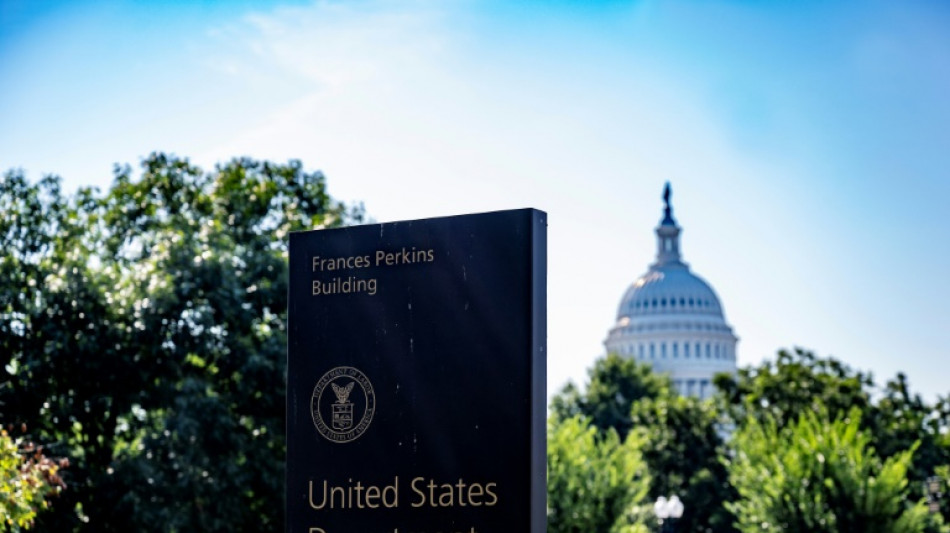
'My heart sank': Surging scams roil US job hunters / Photo: Jim WATSON - AFP

After a series of interviews, Nicole Becker was ecstatic to receive a job offer from a sportswear brand. But like many Americans navigating a tough job market, she was soon confronted with a sobering reality -- the recruiter was a scammer.
From fake job listings to fraudsters posing as real recruiters, employment scams are exploding online -- fueled by a cooling labor market and a boom in generative AI that experts say has made these schemes more sophisticated than ever.
In July, a purported Chinese brand offered Becker -- a 37-year-old based in Oregon -- a coveted role to lead global communications after an elaborate and legitimate-looking recruitment process that stretched over two weeks.
There were no red flags after an initial online interview with a supposed human resources official was followed by a call with someone calling himself the head of marketing and sales.
Then came the offer letter, accompanied by a detailed PowerPoint deck outlining her assigned role, budget, and performance targets for the first six months. Both parties promptly signed the agreement.
But a week later, during an onboarding meeting, Becker picked up the first hint that something was amiss.
She was told that the company's servers had been destroyed in California's wildfires. As a result, she would have to purchase a laptop and cellphone from a designated retailer herself, with the promise of reimbursement in her first paycheck.
"That's when my heart sank and I was like, 'oh no, I fell for a fake job,'" Becker told AFP, requesting that her real name be withheld.
"It is so scary because I consider myself to be a smart and clued-in person, especially with what's going on with AI and scams in general. If I can get scammed, I feel this can happen to anybody."
- 'Perfect storm' -
Employment-related scams jumped by over 1,000 percent from May through July, a period when new graduates typically search for jobs, according to the US firm McAfee.
Nearly 1 in 3 Americans report receiving job offer scams via text message, highlighting how "these schemes have moved beyond email into our daily conversations," McAfee said.
The firm's research shows victims lost an average of $1,471 per scam, with $12 billion reported lost to fraud last year, a 21 percent increase compared to the previous year.
"We're seeing a perfect storm of factors -- a tight labor market, where more people are urgently competing for fewer opportunities, is creating pressure that scammers exploit," Lisa Plaggemier, executive director of the nonprofit National Cybersecurity Alliance, told AFP.
"At the same time, generative AI has made it easier for bad actors to craft convincing fake postings, recruiter profiles, and even interview scripts.
"The combination means scams are harder to spot, and job seekers, especially first-time applicants, are more vulnerable than ever."
Becker's experience -- who immediately ceased all communication with the scammers -- illustrates a common scam tactic: fraudsters run a long con, counting on job seekers to let their guard down after clearing a few hurdles in the interview process.
- 'Candidate fraud' -
The Federal Trade Commission (FTC) recently warned consumers about "fake check scams," in which fraudsters pose as employers and send counterfeit checks, instructing victims to purchase equipment from selected vendors.
"If you get an offer that includes depositing a check and then using some of the money for any reason, that's a scam. Walk away," the FTC said.
Employers are also frequently targeted by scams.
In July, the FBI warned about North Korean scammers posing as Americans to "gain fraudulent employment and access to US company networks."
Further complicating the hiring landscape is the rapid advancement of AI tools, which have made virtual interviews increasingly prone to deception.
A recent survey of 3,000 job candidates conducted by the American firm Gartner found that six percent admitted to engaging in interview fraud -– either by impersonating someone else or having someone pose as them.
The firm estimates that by 2028, one in four candidate profiles worldwide will be fake.
In response, some companies that initially adopted AI tools to streamline hiring are now reintroducing face-to-face interviews at various stages of the recruitment process to safeguard against fraud.
"It's getting harder for employers to evaluate candidates' true abilities, and in some cases, their identities. Employers are increasingly concerned about candidate fraud," said Gartner's Jamie Kohn.
Such scams create "cybersecurity risks that can be far more serious than making a bad hire."
burs-ac/jgc
T.Kobayashi--JT