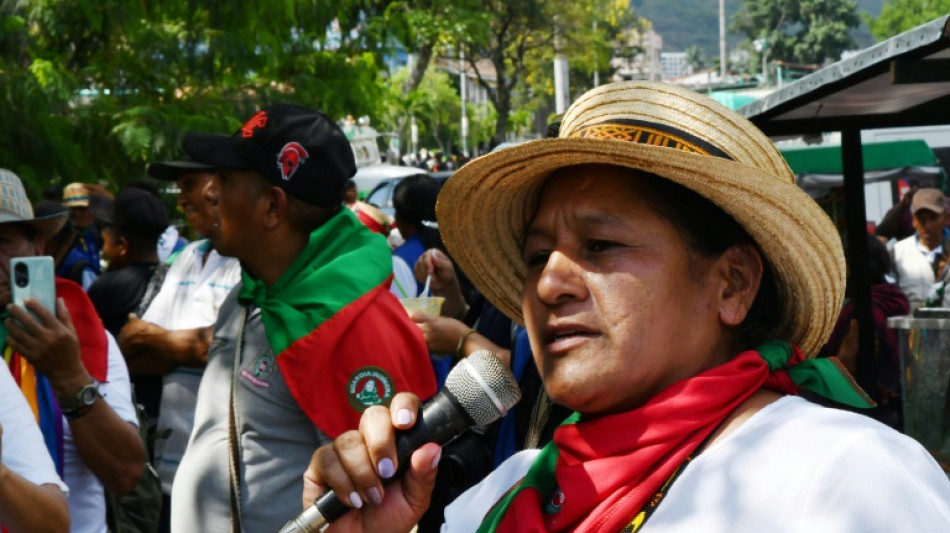
Colombian senator kidnapped, president targeted in election run-up / Photo: Nelson Rios - AFP/File

A Colombian senator was kidnapped and held hostage for hours Tuesday as the country's president reported an attempt on his own life in the run-up to elections that observers have warned could be marred by violence.
Senator Aida Quilcue, an Indigenous activist and human rights prize recipient, was taken around lunchtime by unknown people in her home department of Cauca, a conflict-ridden, coca-growing region controlled in large part by dissidents of the now-disbanded FARC guerrilla army.
Quilcue, 53, was kidnapped while travelling in an SUV with two bodyguards, according to her daughter, Alejandra Legarda.
Members of an Indigenous guard group later found the vehicle, "but with no-one inside," added Defense Minister Pedro Sanchez on X.
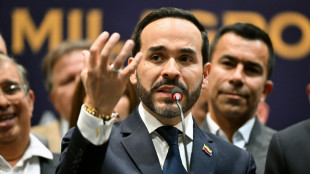
President Gustavo Petro warned the kidnappers to release Quilcue or risk crossing "a red line." Shortly thereafter, Sanchez said the senator and her bodyguards had been freed and were safe.
Petro, meanwhile, claimed that he too had been targeted, escaping an assassination attempt after months of warnings about an alleged plot by drug traffickers against him.
On Monday night, his helicopter was unable to land at his destination on the Caribbean coast because of fears that unspecified people "were going to shoot" at it, the president reported.
"We headed out to open sea for four hours and I arrived somewhere we weren't supposed to go, escaping from being killed," Petro said.
- Risk of electoral violence -
Over a quarter of a million people have been killed during six decades of armed conflict between left-wing guerrillas, rightwing paramilitaries, drug traffickers and the military in Colombia.
The violence decreased dramatically after the Revolutionary Armed Forces of Colombia (FARC), the country's biggest rebel group, agreed in 2016 to lay down arms.
But FARC dissidents opposed to the peace deal continue to fight other groups for control of Colombia's lucrative cocaine trade and to carry out attacks on the security forces, who frequently retaliate.
Colombia is the world's largest producer of cocaine.
Last week, a Colombian observer group said more than 300 municipalities -- a third of the national territory -- are at risk of electoral violence.
The Nasa Indigenous people, to which Quilcue belongs, have long lived under threat from armed groups in the most dangerous country in the world for human rights defenders.
Quilcue was a member of a political grouping that united behind Petro for 2022 elections from which he emerged as the country's first-ever leftist president.
In October that year, she reported an attack against her while running for the Senate.
She received a national human rights award in 2021.
There has been a surge in violence in Colombia ahead of this year's presidential elections, with bomb and drone attacks in parts of the country and the assassination of a presidential hopeful.
Last week, gunmen killed two bodyguards of a senator in an attack on his convoy in the Arauca region near Venezuela. He was not in the car at the time.
Petro, who is constitutionally barred from seeking a second term, has long claimed that a drug-trafficking cabal has had its sights set on ending his life since he assumed office in August 2022. He reported another attempt on his life in 2024.
Colombia has a long list of leftist leaders, including presidential candidates, who have been assassinated over the years.
Colombia is slated to hold legislative elections on March 8 and presidential elections on May 31, with a runoff planned for June if one is needed.
T.Shimizu--JT