The Japan Times - Deadly Indian Himalayan flood likely caused by glacier collapse, experts say

EUR -
AED 4.229988
AFN 73.146945
ALL 96.133079
AMD 434.212947
ANG 2.061819
AOA 1056.200947
ARS 1595.729488
AUD 1.676138
AWG 2.073241
AZN 1.95884
BAM 1.9575
BBD 2.319785
BDT 141.322745
BGN 1.968783
BHD 0.434815
BIF 3421.327021
BMD 1.1518
BND 1.483169
BOB 7.988181
BRL 6.046028
BSD 1.151795
BTN 109.176408
BWP 15.880861
BYN 3.428493
BYR 22575.287657
BZD 2.316392
CAD 1.600253
CDF 2628.988678
CHF 0.919315
CLF 0.02693
CLP 1063.36549
CNY 7.961072
CNH 7.958342
COP 4233.211976
CRC 534.857582
CUC 1.1518
CUP 30.52271
CVE 110.369005
CZK 24.518422
DJF 205.093682
DKK 7.472328
DOP 68.558058
DZD 153.334083
EGP 61.736268
ERN 17.277006
ETB 178.048178
FJD 2.580321
FKP 0.866974
GBP 0.867284
GEL 3.086771
GGP 0.866974
GHS 12.620455
GIP 0.866974
GMD 84.656271
GNF 10098.639609
GTQ 8.815384
GYD 241.106739
HKD 9.021621
HNL 30.579896
HRK 7.535884
HTG 150.976542
HUF 389.090264
IDR 19570.240438
ILS 3.616135
IMP 0.866974
INR 108.896278
IQD 1508.830137
IRR 1512601.862779
ISK 143.606561
JEP 0.866974
JMD 181.293527
JOD 0.816578
JPY 183.86078
KES 149.734428
KGS 100.724635
KHR 4612.886352
KMF 492.970864
KPW 1036.623761
KRW 1744.390407
KWD 0.354775
KYD 0.959846
KZT 556.830884
LAK 25050.648874
LBP 103140.830206
LKR 362.813545
LRD 211.358254
LSL 19.777978
LTL 3.400967
LVL 0.696713
LYD 7.352226
MAD 10.765177
MDL 20.230571
MGA 4800.106597
MKD 61.676346
MMK 2417.436221
MNT 4113.24352
MOP 9.293293
MRU 45.987343
MUR 54.017007
MVR 17.795778
MWK 1997.10857
MXN 20.796407
MYR 4.629663
MZN 73.657744
NAD 19.778236
NGN 1591.99517
NIO 42.386262
NOK 11.212362
NPR 174.665914
NZD 2.005595
OMR 0.442792
PAB 1.151815
PEN 4.012185
PGK 4.977258
PHP 69.977059
PKR 321.451413
PLN 4.279935
PYG 7530.377025
QAR 4.199475
RON 5.097752
RSD 117.405319
RUB 93.874992
RWF 1681.924321
SAR 4.322129
SBD 9.262822
SCR 17.163771
SDG 692.232263
SEK 10.889179
SGD 1.482949
SHP 0.864149
SLE 28.276608
SLL 24152.69076
SOS 658.257439
SRD 43.308822
STD 23839.942611
STN 24.520978
SVC 10.077884
SYP 127.305795
SZL 19.775833
THB 37.764652
TJS 11.005823
TMT 4.031301
TND 3.395971
TOP 2.773258
TRY 51.215473
TTD 7.825763
TWD 36.869937
TZS 2977.40446
UAH 50.484891
UGX 4290.85719
USD 1.1518
UYU 46.623733
UZS 14046.382845
VES 538.960062
VND 30332.663288
VUV 137.508177
WST 3.196803
XAF 656.512961
XAG 0.016275
XAU 0.000254
XCD 3.112798
XCG 2.07583
XDR 0.816616
XOF 656.512961
XPF 119.331742
YER 274.819021
ZAR 19.662788
ZMK 10367.582559
ZMW 21.681643
ZWL 370.879256
  • CMSC

    -0.1028

    22.2

    -0.46%

  • BCC

    1.2500

    76.2

    +1.64%

  • RELX

    0.3700

    33.12

    +1.12%

  • RBGPF

    -13.5000

    69

    -19.57%

  • RIO

    3.8200

    92.64

    +4.12%

  • NGG

    0.7400

    84.43

    +0.88%

  • GSK

    0.5700

    54.8

    +1.04%

  • CMSD

    0.0000

    22.5

    0%

  • BCE

    0.0200

    25.25

    +0.08%

  • JRI

    0.4150

    12.335

    +3.36%

  • AZN

    1.3200

    195.2

    +0.68%

  • VOD

    0.2850

    14.985

    +1.9%

  • RYCEF

    0.7100

    15

    +4.73%

  • BP

    -0.6700

    46.68

    -1.44%

  • BTI

    -0.0700

    58.19

    -0.12%

Deadly Indian Himalayan flood likely caused by glacier collapse, experts say
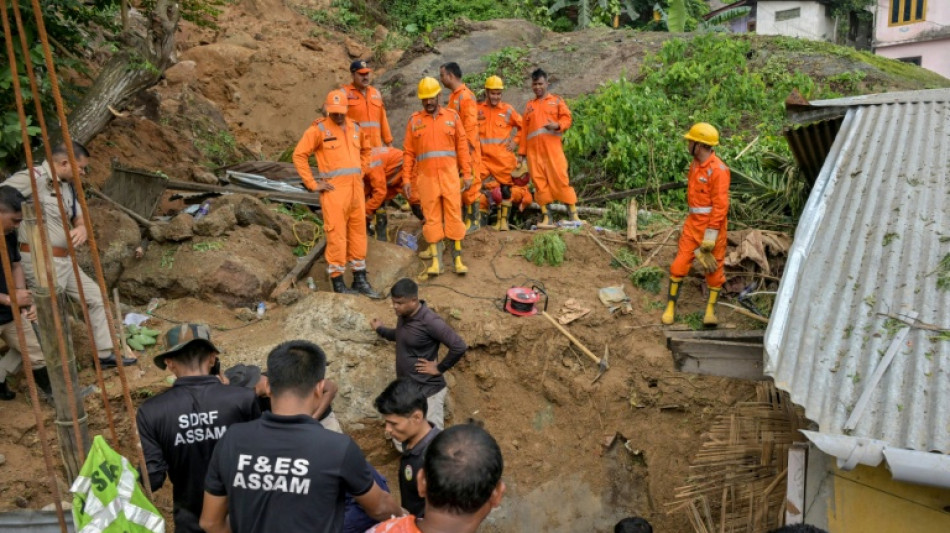
Deadly Indian Himalayan flood likely caused by glacier collapse, experts say / Photo: Biju BORO - AFP

Deadly Indian Himalayan flood likely caused by glacier collapse, experts say

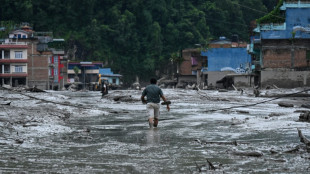
A deadly wall of muddy water that swept away an Indian Himalayan town this week was likely caused by a rapidly melting glacier exacerbated by the rising effects of climate change, experts said on Thursday.

Text size:

Scores of people are missing after water and debris tore down a narrow mountain valley, smashing into the town of Dharali in Uttarakhand state on Tuesday.

Several people could be seen in videos running before being engulfed as waves uprooted entire buildings, leaving others smothered in freezing sludge.

At least four people have been confirmed killed, but at least 50 others are missing.

Government officials said shortly after the disaster that the flood was caused by an intense "cloudburst" of rain.

However, experts assessing the damage suggested that it was only the final trigger, adding to days of prolonged rains that had already soaked and loosened the ground.

P.K. Joshi, of New Delhi's Jawaharlal Nehru University, an expert on Himalayan hazards, said it appeared the flood was caused by the collapse of debris -- known as moraine -- that had dammed a lake of meltwater from a retreating glacier.

"Given the persistent rainfall over preceding days and the sudden discharge observed, a glacial lake outburst flood (GLOF) or collapse of a moraine-dammed lake is suspected as the primary trigger," Joshi told AFP.

That would have contributed to a "sudden high energy flash flood", he said, noting that glacial terrain upstream of the town included "unstable sediment zones".

Cloud cover has obstructed satellite imagery to check for the exact source of the debris, and Joshi cautioned that there was not enough satellite data for a "definitive confirmation".

- 'Disaster severity' -

Safi Ahsan Rizvi, an adviser to the National Disaster Management Authority, also said that it was "likely" that the cause was a "glacio-fluvial debris landslide".

Sandip Tanu Mandal, a glaciologist at New Delhi's Mobius Foundation, also pointed to the "possibility of a GLOF", caused by "significant water accumulation in the lake due to increased melting and rainfall".

Mandal noted that while heavy, the amount of rain immediately before the flood was "not very significant" in comparison to the vast volumes of water that poured down the valley.

That would indicate the source was a potentially collapsing lake.

Himalayan glaciers, which provide critical water to nearly two billion people, are melting faster than ever before due to climate change, exposing communities to unpredictable and costly disasters, scientists warn.

The softening of permafrost increases the chances of landslides.

Joshi said the latest disaster "highlights the complex and interconnected nature of Himalayan hazards".

Rapid development and building downstream meant that the damage caused was multiplied.

"The land use patterns in the floodplain exacerbated the disaster severity," Joshi said.

M.Sugiyama--JT