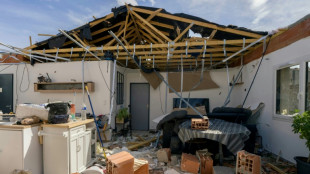
'More and faster': UN calls to shrink buildings' carbon footprint / Photo: Yasuyoshi CHIBA - AFP

Countries must move rapidly to slash CO2 emissions from homes, offices, shops and other buildings -- a sector that accounts for a third of global greenhouse gas pollution, the United Nations said Monday.
Carbon dioxide emissions from the building sector rose around five percent in the last decade when they should have fallen 28 percent, according to a new report by the United Nations Environment Programme (UNEP).
It said emissions had plateaued since 2023 as climate policies began to have an impact, particularly green building standards, the use of renewable energy and electrified heating and cooling.
But the building sector still consumes 32 percent of the world's energy and contributes 34 percent of CO2 emissions, the report found.
"The buildings where we work, shop and live account for a third of global emissions and a third of global waste," said Inger Andersen, Executive Director of UNEP.
"The good news is that government actions are working. But we must do more and do it faster."
She called on nations to include targets to "rapidly cut emissions from buildings and construction" in their climate plans.
The report said that while most of the countries that signed up to the 2015 Paris climate deal -- nearly 200 have signed -- mention the sector, so far only 19 countries have sufficiently detailed goals in their national carbon cutting plans.
The report said that as of 2023, important metrics like energy-related emissions and the adoption of renewable energy "remain well below required progress rates".
That means that countries, businesses and homeowners now need to dramatically pick up the pace to meet the 2030 emissions reduction targets.
- 'Critical challenge' -
Direct and indirect CO2 emissions will now need to fall more than 10 percent per year, more than double the originally envisaged pace.
The rollout of renewables is a similar story.
The share of renewables like solar and wind in final energy consumption rose by only 4.5 percentage points since 2015, well behind the goal of nearly 18 percentage points.
That now needs to accelerate by a factor of seven to meet this decade's goal of tripling renewable energy use worldwide, UNEP said.
The report urged countries to accelerate the roll-out of renewable technologies and increase the share of renewables in the final energy mix to 46 percent by 2030 -- a rise of around 18 percent.
It also called on policymakers to increase energy efficiency retrofits to include better design, insulation and the use of renewables and heat pumps.
More work also needs to be done to improve the sustainability of materials like steel and cement, whose manufacture accounts for nearly a fifth of all emissions from the building sector.
But the report did say that circular construction practices were increasing in some areas, with recycled materials accounting for 18 percent of construction inputs in Europe.
The authors urged all major greenhouse gas emitters to take action by introducing zero-carbon building energy codes by 2028, and called on other countries to create and tighten their regulations within the next 10 years.
The report highlighted positive national policies from China, France, Germany, Mexico and South Africa among others.
But it said financing remained a "critical challenge".
In 2023, it found that global investment in energy efficiency in buildings fell seven percent from a year earlier to $270 billion, driven by higher borrowing costs and the winding back of government support programmes, notably in Europe.
Those investments now need to double -- to $522 billion -- by 2030, it said.
S.Yamamoto--JT