The Japan Times - S.Sudan heatwave 'more likely' due to climate change: study

EUR -
AED 4.279407
AFN 76.324228
ALL 92.268441
AMD 424.047681
ANG 2.085556
AOA 1069.704958
ARS 1765.109716
AUD 1.62275
AWG 2.097462
AZN 1.977699
BAM 1.955098
BBD 2.348007
BDT 143.158577
BGN 1.976701
BHD 0.439542
BIF 3478.650464
BMD 1.165256
BND 1.480768
BOB 13.459165
BRL 6.001186
BSD 1.165801
BTN 111.175066
BWP 15.578939
BYN 3.515828
BYR 22839.026188
BZD 2.344608
CAD 1.618093
CDF 2650.957856
CHF 0.93908
CLF 0.02723
CLP 1071.709087
CNY 7.833728
CNH 7.830403
COP 3646.774896
CRC 529.709727
CUC 1.165256
CUP 30.879296
CVE 110.225407
CZK 24.123602
DJF 207.598993
DKK 7.475271
DOP 67.855626
DZD 155.078138
EGP 58.507273
ERN 17.478847
ETB 190.422968
FJD 2.556048
FKP 0.857209
GBP 0.857611
GEL 3.026728
GGP 0.857209
GHS 13.050536
GIP 0.857209
GMD 85.644286
GNF 10247.319148
GTQ 8.893805
GYD 243.896578
HKD 9.135028
HNL 31.271304
HRK 7.534785
HTG 152.519142
HUF 361.758489
IDR 20689.885477
ILS 3.462797
IMP 0.857209
INR 111.241381
IQD 1527.151445
IRR 1601732.369038
ISK 140.600123
JEP 0.857209
JMD 184.726816
JOD 0.826126
JPY 185.718285
KES 150.737317
KGS 101.901698
KHR 4715.427612
KMF 492.903723
KPW 1048.731137
KRW 1608.432562
KWD 0.359784
KYD 0.971472
KZT 536.298867
LAK 26165.601278
LBP 104397.288092
LKR 383.062403
LRD 211.583999
LSL 18.574287
LTL 3.440699
LVL 0.704852
LYD 7.386474
MAD 10.762934
MDL 20.144937
MGA 5020.369011
MKD 61.502908
MMK 2447.048469
MNT 4190.555791
MOP 9.412319
MRU 46.841175
MUR 54.55759
MVR 18.015071
MWK 2021.543253
MXN 19.764433
MYR 4.693064
MZN 74.465735
NAD 18.574527
NGN 1567.922544
NIO 42.904589
NOK 10.897093
NPR 177.883157
NZD 1.959483
OMR 0.448047
PAB 1.165781
PEN 3.909096
PGK 5.170187
PHP 72.041967
PKR 323.768659
PLN 4.311851
PYG 6974.644335
QAR 4.250073
RON 5.257868
RSD 117.297072
RUB 98.348945
RWF 1717.242112
SAR 4.371299
SBD 9.322201
SCR 16.12517
SDG 700.319152
SEK 11.101666
SGD 1.480837
SHP 0.863299
SLE 28.77716
SLL 24434.84398
SOS 666.283542
SRD 43.999506
STD 24118.455627
STN 24.491413
SVC 10.200555
SYP 15150.6641
SZL 18.562651
THB 38.236712
TJS 10.760035
TMT 4.09005
TND 3.393781
TOP 2.805658
TRY 56.08977
TTD 7.920155
TWD 36.979762
TZS 3082.689375
UAH 51.942825
UGX 4357.509567
USD 1.165256
UYU 46.85317
UZS 13779.346068
VES 916.224007
VND 30410.862524
VUV 138.031989
WST 3.153612
XAF 655.743966
XAG 0.016984
XAU 0.000253
XCD 3.149164
XCG 2.10109
XDR 0.823897
XOF 655.732715
XPF 119.331742
YER 276.223808
ZAR 18.591113
ZMK 10488.706996
ZMW 22.120529
ZWL 375.212098
  • CMSC

    -0.0650

    21.275

    -0.31%

  • RBGPF

    0.0000

    71.13

    0%

  • RYCEF

    0.4200

    20.85

    +2.01%

  • JRI

    -0.0400

    12.44

    -0.32%

  • CMSD

    -0.1000

    21.16

    -0.47%

  • BCC

    -1.1000

    79.94

    -1.38%

  • RELX

    -0.5400

    35.34

    -1.53%

  • VOD

    -0.1900

    15.94

    -1.19%

  • BTI

    0.9700

    57.44

    +1.69%

  • RIO

    -2.1100

    104.7

    -2.02%

  • BP

    -0.3600

    42.5

    -0.85%

  • AZN

    -3.3900

    166.27

    -2.04%

  • NGG

    -0.6400

    80.53

    -0.79%

  • BCE

    -0.1000

    23.49

    -0.43%

  • GSK

    -0.6400

    51.43

    -1.24%

S.Sudan heatwave 'more likely' due to climate change: study
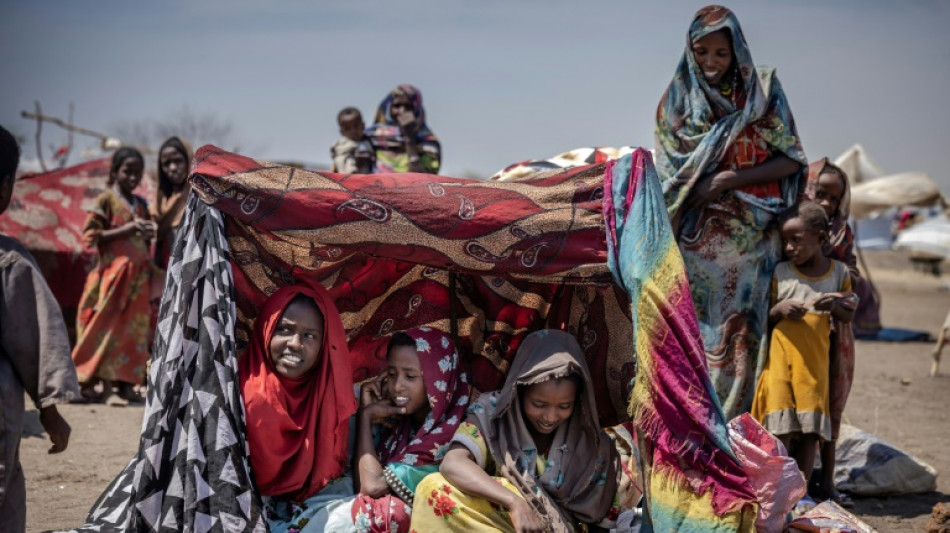
S.Sudan heatwave 'more likely' due to climate change: study / Photo: LUIS TATO - AFP

S.Sudan heatwave 'more likely' due to climate change: study

Man-made climate change increased the likelihood of the heatwave gripping South Sudan, a study said Friday, saying soaring temperatures were disproportionately affecting women and girls.

Text size:

The impoverished nation has been plagued by insecurity and instability since declaring independence in 2011, and is ill-equipped to counter increasing environmental disasters.

The heatwave comes as South Sudan endures yet another bout of political turmoil, provoking fears that a 2018 agreement -- which ended the vicious five-year civil war -- might be unravelling.

A February heatwave has seen temperatures hit 40 degrees Celsius (104 Fahrenheit) in parts of the country, according to a recent report from IGAD (the Intergovernmental Authority on Development).

The heatwave prompted the government to close the capital's schools, noting that an "average of 12 students had been collapsing in Juba city every day", and order citizens to remain at home.

Climate change "made the extreme heat at least 2C hotter and at least 10 times more likely", according to a new study from the World Weather Attribution, a network of researchers examining links between environmental change and extreme weather events.

"Climate change is clearly making life even more difficult in South Sudan, a country already facing economic challenges and periods of instability," Kiswendsida Guigma, a climate scientist for the Red Cross and Red Crescent in Burkina Faso and one of the study's authors.

- 'New normal' -

Significant numbers of people work outdoors in South Sudan, where many houses have tin roofs and no air conditioning -- conditions that make it difficult to follow government directives to remain inside, the study said.

Drinking water remains in short supply, while access to electricity was 8.4 percent in 2022, according to the World Bank.

It said women and girls were disproportionately affected because daily tasks -- such as collecting water, cooking, and other household chores -- are usually carried out by women.

Elizabeth Lodou Lochapio told AFP from the southeastern town of Kapoeta that women were bearing the brunt of the burden.

"They have to go out there to make a living despite the heat wave," she said.

When the sun was at its hottest, between midday and 3:00 pm, she said, "I don't move, I make sure that I stay in one place."

"Climate change means that dangerous heatwaves exceeding 40 degrees are becoming the new normal in South Sudan," said Sarah Kew, a researcher at the Netherlands Meteorological Institute and one of the study's authors.

"Once rare, these high temperature events are occurring every two years, posing enormous challenges for the people of South Sudan."

The heat is expected to persist throughout March, according to the projections noted in the study.

S.Suzuki--JT