Typhoon Man-yi weakens as it crosses Philippines' main island / Photo: John Marshal Aquino - John Marshal Aquino/AFP

Typhoon Man-yi lashed the Philippines' most populous island on Sunday, with the national weather service warning of flooding, landslides and huge waves as the storm sweeps across the archipelago nation.
Man-yi was still a super typhoon when it made its second landfall on Luzon, with maximum sustained winds of 185 kilometres (115 miles) per hour, but was downgraded to a typhoon category as it traversed the mountainous island.
More than 1.2 million people fled their homes ahead of Man-yi, including several thousand in the capital Manila, as the weather forecaster warned of a "life-threatening" impact from the powerful storm, which follows an unusual streak of violent weather.
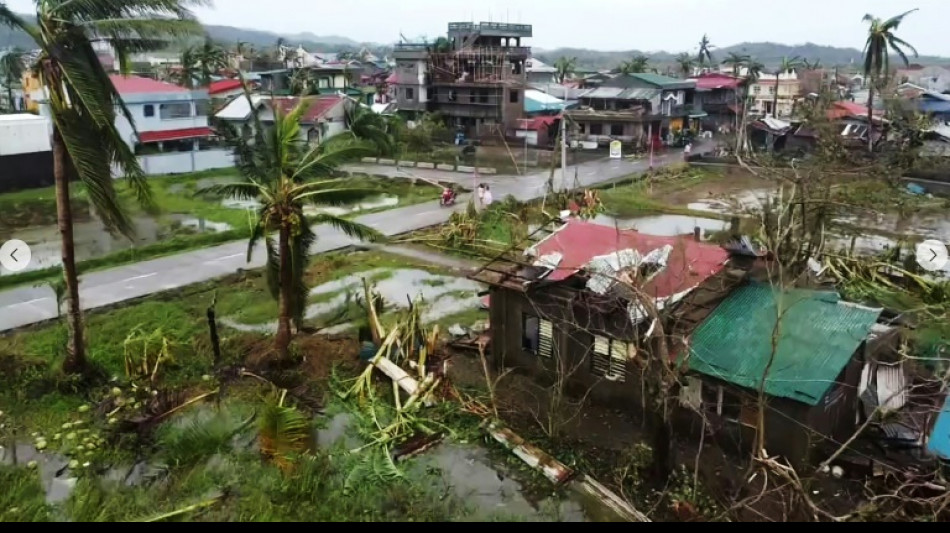
Man-yi uprooted trees, brought down power lines and smashed flimsy houses to pieces after making its first landfall late Saturday on lightly populated Catanduanes island in the typhoon-prone Bicol region.
No deaths have been reported, but there was "extensive" damage to structures on Catanduanes, civil defence chief Ariel Nepomuceno said.
Man-yi remained a super typhoon as it moved northwest and hit heavily populated Luzon -- the country's economic engine -- with forecasters warning of a "potentially dangerous" situation in Aurora province.
"I saw roofing sheets flying off the houses around our building. Branches were being torn off trees," said Julius Fabianes, a rescuer with the Aurora disaster agency in Baler town.
The weather service forecast significant weakening as Man-yi crossed Luzon and moved offshore later Sunday or early Monday.
Flooding and landslides were expected as Man-yi dumped heavy rain over provinces in its path.
Forecasters also warned storm surges reaching more than three metres could swamp vulnerable coastal communities, including in Manila.
- Late in typhoon season -
Panganiban municipality in the northeast of Catanduanes took a direct hit from Man-yi.
Photos and a drone video shared on the Facebook page of Mayor Cesar Robles showed fallen power lines, damaged and destroyed buildings, and trees and corrugated iron sheets strewn on the roads.
"Pepito was so strong, I have never experienced a typhoon this strong," Robles said in a post, using the local name for Man-yi, as clean-up efforts got underway and people returned home.
Climate change is increasing the intensity of storms, leading to heavier rains, flash floods and stronger gusts.
Mother-of-three Marissa Cueva Alejandro, 36, who grew up in Catanduanes and sheltered with a relative during Man-yi, said typhoons are getting stronger.
"Before, we would only experience (typhoon) signal number three to four, but now typhoons are getting as strong as signal number five," she said, referring to the weather service's five-tiered wind warning system.
Man-yi is the sixth storm in the past month to batter the archipelago nation. At least 163 people died in the previous storms, which left thousands homeless and wiped out crops and livestock.
About 20 big storms and typhoons hit the Southeast Asian nation or its surrounding waters each year, killing scores of people, but it is rare for multiple such weather events to take place in a small window.
The weather forecaster maintained its second-highest typhoon signals over a wide band of provinces stretching from Luzon's east coast, where Man-yi made its second landfall, across to the western side of the island where it will exit.
Man-yi hit the Philippines late in the typhoon season -- most cyclones develop between July and October.
This month, four storms were clustered simultaneously in the Pacific basin, which the Japan Meteorological Agency told AFP was the first time such an occurrence had been observed in November since its records began in 1951.
M.Matsumoto--JT