The Japan Times - Nearly half of tropical coral species face extinction: report

EUR -
AED 4.301716
AFN 77.102387
ALL 96.616471
AMD 443.59572
ANG 2.096746
AOA 1074.110656
ARS 1684.073797
AUD 1.758993
AWG 2.108396
AZN 1.969468
BAM 1.957105
BBD 2.345093
BDT 142.274846
BGN 1.956007
BHD 0.441553
BIF 3442.853937
BMD 1.171331
BND 1.509332
BOB 8.045363
BRL 6.406593
BSD 1.164301
BTN 104.676122
BWP 15.509538
BYN 3.38224
BYR 22958.084827
BZD 2.341701
CAD 1.616097
CDF 2613.239193
CHF 0.932854
CLF 0.027423
CLP 1075.808999
CNY 8.274988
CNH 8.264125
COP 4497.758224
CRC 573.294418
CUC 1.171331
CUP 31.040268
CVE 110.338556
CZK 24.254104
DJF 207.332642
DKK 7.469173
DOP 74.991593
DZD 152.193302
EGP 55.679188
ERN 17.569963
ETB 181.362875
FJD 2.661028
FKP 0.878173
GBP 0.875095
GEL 3.150162
GGP 0.878173
GHS 13.36591
GIP 0.878173
GMD 86.093306
GNF 10127.924632
GTQ 8.912942
GYD 243.592389
HKD 9.11565
HNL 30.667099
HRK 7.533972
HTG 152.464242
HUF 384.781097
IDR 19525.616879
ILS 3.760118
IMP 0.878173
INR 105.789742
IQD 1525.229804
IRR 49342.312982
ISK 148.653646
JEP 0.878173
JMD 186.706858
JOD 0.830471
JPY 182.433563
KES 151.043402
KGS 102.432364
KHR 4665.189668
KMF 494.301362
KPW 1054.231935
KRW 1724.076032
KWD 0.359305
KYD 0.970243
KZT 603.629828
LAK 25249.724748
LBP 104262.760889
LKR 359.538149
LRD 205.499626
LSL 19.790509
LTL 3.458635
LVL 0.708527
LYD 6.336359
MAD 10.761174
MDL 19.82213
MGA 5198.532133
MKD 61.550841
MMK 2459.697828
MNT 4154.37601
MOP 9.332201
MRU 46.432945
MUR 53.96325
MVR 18.043867
MWK 2018.971787
MXN 21.296909
MYR 4.814311
MZN 74.859436
NAD 19.790509
NGN 1696.918251
NIO 42.849297
NOK 11.831326
NPR 167.483226
NZD 2.014724
OMR 0.450386
PAB 1.164276
PEN 3.91441
PGK 4.940378
PHP 69.135453
PKR 329.125834
PLN 4.227977
PYG 7933.458103
QAR 4.244229
RON 5.090017
RSD 117.381377
RUB 92.827568
RWF 1694.651428
SAR 4.395478
SBD 9.640746
SCR 16.086003
SDG 704.554117
SEK 10.833077
SGD 1.515035
SHP 0.878802
SLE 28.228883
SLL 24562.220258
SOS 664.251324
SRD 45.233288
STD 24244.183864
STN 24.516763
SVC 10.187748
SYP 12951.233403
SZL 19.783611
THB 37.189173
TJS 10.769872
TMT 4.111371
TND 3.422281
TOP 2.820284
TRY 49.900805
TTD 7.89523
TWD 36.561336
TZS 2881.45984
UAH 49.291291
UGX 4156.771079
USD 1.171331
UYU 45.630419
UZS 13975.25684
VES 301.742191
VND 30838.213177
VUV 143.479984
WST 3.256414
XAF 656.402992
XAG 0.018862
XAU 0.000278
XCD 3.16558
XCG 2.098417
XDR 0.816355
XOF 656.4086
XPF 119.331742
YER 279.391668
ZAR 19.827656
ZMK 10543.376279
ZMW 27.076397
ZWL 377.168059
  • CMSC

    0.1200

    23.42

    +0.51%

  • SCS

    0.0200

    16.14

    +0.12%

  • RIO

    0.1870

    76.427

    +0.24%

  • NGG

    0.2520

    74.892

    +0.34%

  • BTI

    0.1170

    58.877

    +0.2%

  • GSK

    0.4200

    48.83

    +0.86%

  • BP

    -0.2400

    35.64

    -0.67%

  • BCC

    0.5800

    77.59

    +0.75%

  • BCE

    0.3650

    23.555

    +1.55%

  • RYCEF

    0.2300

    14.85

    +1.55%

  • CMSD

    0.0520

    23.332

    +0.22%

  • AZN

    -0.2900

    91.22

    -0.32%

  • RBGPF

    3.1200

    81.17

    +3.84%

  • VOD

    0.0430

    12.603

    +0.34%

  • RELX

    0.2550

    40.335

    +0.63%

  • JRI

    -0.0400

    13.68

    -0.29%

Nearly half of tropical coral species face extinction: report
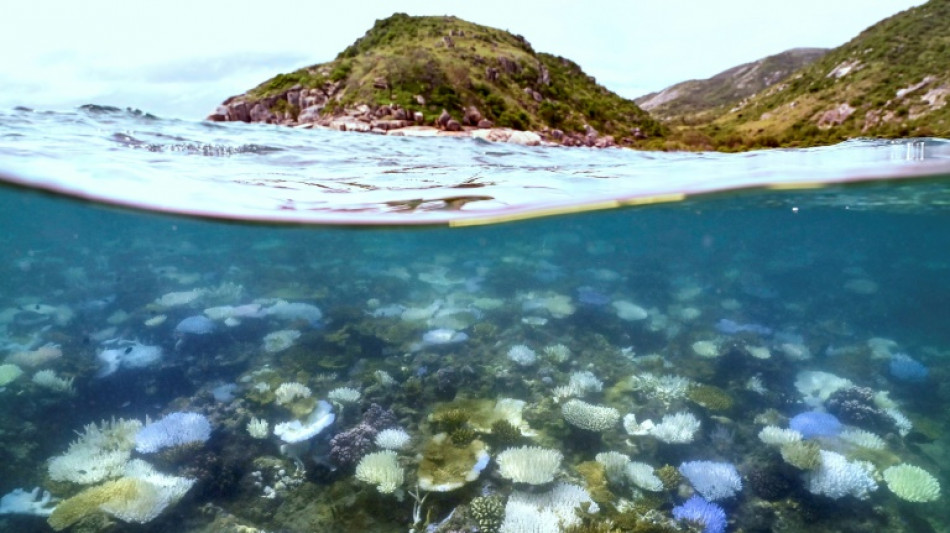
Nearly half of tropical coral species face extinction: report / Photo: DAVID GRAY - AFP/File

Nearly half of tropical coral species face extinction: report

Almost half of all warm-water species of coral are threatened with extinction -- and climate change is the chief culprit, a new report said on Wednesday.

Text size:

The updated risk assessment from the International Union for Conservation of Nature (IUCN) was announced at the COP29 climate summit in Azerbaijan, which is being skipped by the leaders of many top polluting nations.

Oceans have absorbed around 90 percent of the excess heat in the atmosphere due to the release of carbon dioxide and other greenhouse gases.

Rising ocean temperatures have spurred mass bleaching events at coral reefs across the world, threatening crucial ecosystems for marine life as well as the livelihoods of people who rely on them.

The updated assessment of the IUCN's Red List of Threatened Species looked at reef-building corals, which live in warm, shallow waters in tropical areas.

Its analysis found that 892 reef-building coral species are now considered threatened, representing 44 percent of the total.

This marked a significant increase from the last assessment in 2008, when a third of all species was listed as threatened.

The organisation is still assessing the extinction risk for cold-water coral, which lives in deeper, darker ocean waters, making it difficult to study.

The IUCN called on negotiators at the COP29 conference to act quickly to reduce planet-heating fossil fuel emissions.

"Healthy ecosystems like coral reefs are essential for human livelihoods -- providing food, stabilising coastlines, and storing carbon," IUCN chief Grethel Aguilar said in a statement.

"Climate change remains the leading threat to reef-building corals and is devastating the natural systems we depend on."

As well as global warming, pollution, disease, unsustainable fishing and agricultural runoff also threaten the world's coral.

Most reef-building coral is found across the Indo-Pacific region, such as Australia's Great Barrier Reef which suffered one its worst-ever bleaching events this year.

The IUCN's updated assessment included results from a study about reef-building coral in the Atlantic Ocean, which was published in the PLOS One journal on Wednesday.

That study found that almost one in three -- or 23 out of 85 -- species of Atlantic coral is critically endangered, more than previously thought.

Staghorn coral and elkhorn coral were given as examples of two critically endangered species in the Caribbean that have been hit hard by warming waters, pollution -- and hurricanes.

"Without relevant decisions from those with the power to change this trajectory, we will see the further loss of reefs, and progressive disappearance of coral species at larger and larger scales," warned IUCN coral specialist David Obura.

Y.Watanabe--JT