Climate change solutions not always good for biodiversity / Photo: JOAQUIN SARMIENTO - AFP/File

Some approaches to tackling global warming can have unintended knock-on consequences for nature and the protection of biodiversity, say scientists urging a more coordinated effort on these challenges.
"Sometimes by trying to find a solution to a problem, we risk creating damage elsewhere," Anne Larigauderie at the Intergovernmental Scientific and Political Platform on Biodiversity (IPBES), an expert independent body, told AFP.
The IPBES will publish a report in December on how different crises -- including climate change and biodiversity loss -- are closely related and should be addressed together, not in isolation.
The IPBES and the UN's Intergovernmental Panel on Climate Change (IPCC) warned in 2021 that a siloed approach risked "actions which, inadvertently, prevent the resolution of one or the other problem, or even both."
In Britain, for example, an ostensibly sound policy of planting trees on wetlands backfired when in turn these carbon-rich landscapes dried up, releasing the planet-heating emissions stored in their roots and soil.
- Negative effects -
Climate Action Network, a collective of non-government organisations, has warned against "false solutions" which promise a healthier planet but with a cost to people or ecosystems attached.
Intentionally injecting iron into the oceans, for example, to boost microplankton growth may seem promising but "geoengineering" techniques have raised concerns about potential repercussions.
Alison Smith, a researcher at the University of Oxford, said iron fertilisation was "likely to cause massive environmental damage for uncertain climate gain."
"Measures taken to mitigate climate change must be evaluated according to their overall benefits and risks and not only according to their carbon footprint," said the Foundation for Biodiversity Research in 2022.
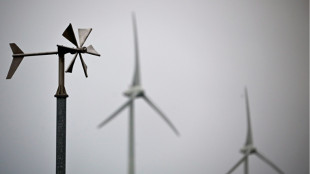
Wind turbines produce clean power and reduce the dependence of energy systems on fossil fuels, but can pose a risk to migratory birds or bats in some locations.
And building dams for hydroelectricity can block the passage of fish along waterways, reducing their populations.
- 'Breaking down silos' -
"With crises as vast, complex and interconnected as climate change and biodiversity loss, focusing on one aspect of the problem will never be enough," said Tom Oliver at the University of Reading.
It is "important to look beyond 'sticking plaster fixes'" such as geoengineering, he said, which "can have huge anticipated side effects."
Installing "underwater curtains" to protect glaciers in Antarctica from warming waters -- an idea floated at last year's UN climate summit -- could impede nutrient flow, Lars Smedsrud, from the University of Bergen, wrote in the journal Nature this year.
In the quest for solutions to our biggest and most daunting challenges it is "important to look at the big picture -- not just focus narrowly on climate change," said Smith.
She is one of many experts pushing for nature-based solutions that have "combined benefits for biodiversity, the climate and populations".
A 2020 study in the journal Global Change Biology concluded that "nature-based interventions were most often shown to be as effective or more so than alternative interventions for addressing climate impacts."
And it is in preserving existing ecosystems, rather than trying to recreate new ones, that the potential is greatest.
A 2023 study in Nature found that simply protecting existing forests and leaving them alone to regenerate would deliver considerable carbon removal benefits.
"There is no one single silver bullet -- we need to do everything we can, across all sectors, countries and methods," said Smith.
"Breaking down silos is the only way forward that won't cause more problems than it solves."
T.Shimizu--JT