The Japan Times - Combining climate measures key to slashing emissions: study

EUR -
AED 4.306273
AFN 77.383663
ALL 96.436312
AMD 447.301136
ANG 2.099207
AOA 1075.161802
ARS 1700.362176
AUD 1.773283
AWG 2.110459
AZN 1.990694
BAM 1.957582
BBD 2.362901
BDT 143.473659
BGN 1.956911
BHD 0.44205
BIF 3476.395101
BMD 1.172477
BND 1.514679
BOB 8.10669
BRL 6.474892
BSD 1.173193
BTN 105.848608
BWP 15.503575
BYN 3.442107
BYR 22980.554465
BZD 2.359538
CAD 1.615773
CDF 2654.488636
CHF 0.930965
CLF 0.02724
CLP 1068.607311
CNY 8.255705
CNH 8.247288
COP 4530.112147
CRC 584.544556
CUC 1.172477
CUP 31.070648
CVE 110.740403
CZK 24.353489
DJF 208.373063
DKK 7.47153
DOP 73.338506
DZD 152.075507
EGP 55.711664
ERN 17.587159
ETB 181.974686
FJD 2.687025
FKP 0.87569
GBP 0.876151
GEL 3.154102
GGP 0.87569
GHS 13.512803
GIP 0.87569
GMD 86.179501
GNF 10182.9649
GTQ 8.985371
GYD 245.452848
HKD 9.122119
HNL 30.695439
HRK 7.534694
HTG 153.653142
HUF 387.792754
IDR 19575.680476
ILS 3.762251
IMP 0.87569
INR 105.780958
IQD 1535.945222
IRR 49390.604928
ISK 148.024999
JEP 0.87569
JMD 187.714873
JOD 0.831253
JPY 182.450942
KES 151.131725
KGS 102.53368
KHR 4701.633502
KMF 493.612554
KPW 1055.222506
KRW 1730.764481
KWD 0.359834
KYD 0.97759
KZT 605.290977
LAK 25391.167702
LBP 104995.339736
LKR 362.980409
LRD 208.009094
LSL 19.621411
LTL 3.46202
LVL 0.70922
LYD 6.354679
MAD 10.757471
MDL 19.78501
MGA 5308.976711
MKD 61.575864
MMK 2462.269149
MNT 4159.48369
MOP 9.40312
MRU 46.617383
MUR 53.980847
MVR 18.126492
MWK 2037.766044
MXN 21.113972
MYR 4.788386
MZN 74.933015
NAD 19.62746
NGN 1709.330645
NIO 43.033988
NOK 11.913536
NPR 169.354158
NZD 2.030616
OMR 0.450719
PAB 1.173213
PEN 3.946589
PGK 4.982149
PHP 68.687224
PKR 328.58638
PLN 4.203801
PYG 7832.296492
QAR 4.269228
RON 5.090774
RSD 117.440326
RUB 93.706781
RWF 1702.436994
SAR 4.397752
SBD 9.544103
SCR 17.352346
SDG 705.247584
SEK 10.880841
SGD 1.512765
SHP 0.879662
SLE 28.25928
SLL 24586.26638
SOS 670.068055
SRD 45.349052
STD 24267.912238
STN 24.856518
SVC 10.265563
SYP 12965.682007
SZL 19.6274
THB 36.827995
TJS 10.834378
TMT 4.115395
TND 3.405454
TOP 2.823044
TRY 50.097258
TTD 7.96045
TWD 36.985761
TZS 2919.468831
UAH 49.551662
UGX 4190.904206
USD 1.172477
UYU 45.972828
UZS 14099.038756
VES 327.371366
VND 30865.464096
VUV 142.306971
WST 3.265015
XAF 656.554641
XAG 0.017948
XAU 0.000271
XCD 3.168678
XCG 2.114325
XDR 0.814801
XOF 654.241743
XPF 119.331742
YER 279.577104
ZAR 19.62289
ZMK 10553.699481
ZMW 26.69032
ZWL 377.537202
  • SCS

    0.0200

    16.14

    +0.12%

  • CMSD

    0.0000

    23.28

    0%

  • CMSC

    0.0300

    23.29

    +0.13%

  • RIO

    0.4400

    77.63

    +0.57%

  • AZN

    0.7500

    90.61

    +0.83%

  • BCC

    1.4100

    77.7

    +1.81%

  • GSK

    -0.4200

    48.29

    -0.87%

  • RELX

    0.0900

    40.65

    +0.22%

  • RYCEF

    0.6300

    15.4

    +4.09%

  • NGG

    -0.7700

    76.39

    -1.01%

  • RBGPF

    -1.7900

    80.22

    -2.23%

  • VOD

    -0.0100

    12.8

    -0.08%

  • JRI

    0.0000

    13.43

    0%

  • BCE

    -0.3000

    22.85

    -1.31%

  • BP

    -1.1600

    33.31

    -3.48%

  • BTI

    -0.1300

    57.04

    -0.23%

Combining climate measures key to slashing emissions: study
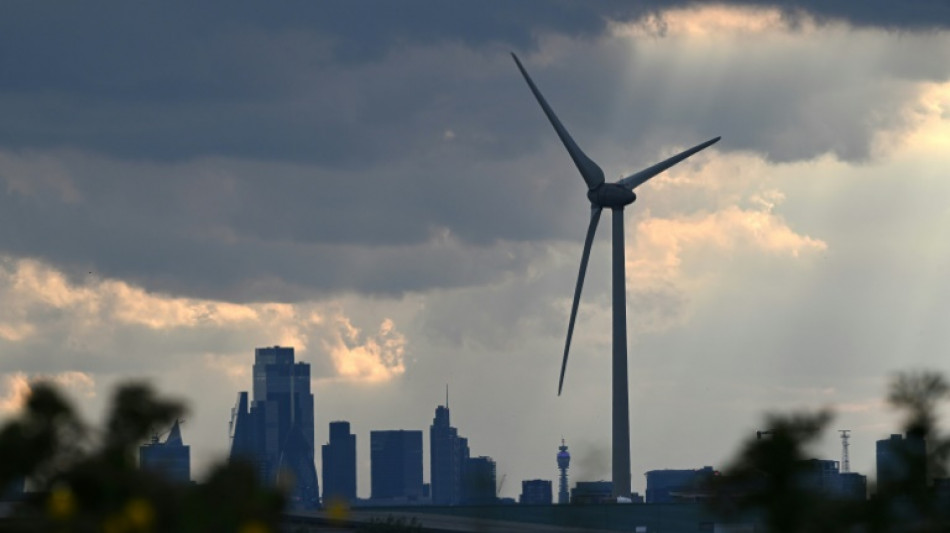
Combining climate measures key to slashing emissions: study / Photo: JUSTIN TALLIS - AFP

Combining climate measures key to slashing emissions: study

A major new study published Thursday on the effectiveness of climate measures such as taxes or subsidies in reducing greenhouse gases has found stand-alone measures fail to make a big difference.

Text size:

Published in the journal Science, the study examined 25 years of public policies in 41 countries across six continents.

It concluded that out of the 1,500 policies analysed in sectors including energy, transport and construction, "only 63 cases of successful climate policies, each leading to average emission reductions of 19 percent, were identified."

"The researchers show that bans on coal-fired power plants or combustion engine cars do not result in major emissions reductions when implemented alone," said the Potsdam Institute for Climate Impact Research (PIK) that led the study with Mercator Research Institute on Global Commons and Climate Change (MCC).

"Successful cases only arise in tandem with tax or price incentives in well-designed policy mixes, as shown in the UK for coal-fired power generation or in Norway for cars," the researchers said.

The study used a new OECD database and an innovative approach that combined machine learning methods with established statistical analyses.

It "identified 63 successful policy interventions with total emission reductions between 0.6 billion and 1.8 billion tonnes CO2".

By comparison, humanity emitted 57.4 billion tonnes of CO2 equivalent in 2022, according to United Nations estimates.

Among the successes identified was Britain's introduction in 2013 of a minimum carbon price, subsidies for renewable energy, and a coal phase-out plan.

The researchers hope their work will influence the climate roadmaps countries are updating and must submit to the UN by February 2025.

The aim of these roadmaps is to keep alive the Paris Agreement's flagship goal of limiting warming to 1.5 degrees Celsius from pre-industrial levels.

- 'Right mix is crucial' -

An interactive website, "Climate Policy Explorer", provides an overview of the results, analysis and methods, and is accessible to the public.

"Our findings demonstrate that more policies do not necessarily equate to better outcomes. Instead, the right mix of measures is crucial," explained the study's lead author Nicolas Koch of PIK and MCC.

"For example, subsidies or regulations alone are insufficient; only in combination with price-based instruments, such as carbon and energy taxes, can they deliver substantial emission reductions."

"But by focusing only on 69 statistically identifiable large trend breaks, they miss the impact of thousands of smaller efforts globally, and the cumulative and often self-reinforcing impact of many smaller measures", said Michael Grubb at University College London.

He also acknowledged "the most sophisticated study to date".

"Their conclusion that big impacts require combinations of policies makes absolute sense," he added.

"The study only looks for policies making sudden reductions, whereas most climate policies work on the efficiency of new things or the long-term trajectory of emissions, taking many years to build up greener infrastructure or ways of living," said Robin Lamboll at Imperial College London.

S.Suzuki--JT