The Japan Times - Humanity suffering from 'extreme heat epidemic,' UN chief warns

EUR -
AED 4.239934
AFN 72.734234
ALL 95.473534
AMD 435.086683
ANG 2.066665
AOA 1058.683523
ARS 1606.779579
AUD 1.67603
AWG 2.081001
AZN 1.923998
BAM 1.947203
BBD 2.32587
BDT 142.052854
BGN 1.973411
BHD 0.435824
BIF 3431.291824
BMD 1.154508
BND 1.481534
BOB 7.97977
BRL 5.95218
BSD 1.154841
BTN 107.185645
BWP 15.705844
BYN 3.43426
BYR 22628.356568
BZD 2.322486
CAD 1.605107
CDF 2649.595554
CHF 0.920593
CLF 0.026694
CLP 1054.019354
CNY 7.933816
CNH 7.95228
COP 4240.704107
CRC 536.908686
CUC 1.154508
CUP 30.594462
CVE 109.782227
CZK 24.532121
DJF 205.641431
DKK 7.472853
DOP 69.480544
DZD 153.506858
EGP 61.790768
ERN 17.31762
ETB 180.316895
FJD 2.602027
FKP 0.875696
GBP 0.871705
GEL 3.105622
GGP 0.875696
GHS 12.704023
GIP 0.875696
GMD 84.851585
GNF 10128.066507
GTQ 8.835147
GYD 241.702911
HKD 9.047273
HNL 30.677235
HRK 7.532586
HTG 151.58617
HUF 385.020345
IDR 19653.189482
ILS 3.621057
IMP 0.875696
INR 107.657928
IQD 1512.742808
IRR 1522651.722883
ISK 144.394565
JEP 0.875696
JMD 182.644156
JOD 0.818556
JPY 184.018243
KES 150.282159
KGS 100.961856
KHR 4620.461154
KMF 492.686132
KPW 1038.991782
KRW 1758.159818
KWD 0.357274
KYD 0.962401
KZT 549.007666
LAK 25450.097837
LBP 103412.671303
LKR 364.055397
LRD 211.918079
LSL 19.395563
LTL 3.408962
LVL 0.69835
LYD 7.366097
MAD 10.788271
MDL 20.342135
MGA 4886.174202
MKD 61.56184
MMK 2424.935503
MNT 4124.736339
MOP 9.323951
MRU 46.0726
MUR 54.019057
MVR 17.837035
MWK 2002.455336
MXN 20.675849
MYR 4.649173
MZN 73.842755
NAD 19.395563
NGN 1596.049431
NIO 42.501624
NOK 11.261654
NPR 171.487221
NZD 2.01877
OMR 0.443914
PAB 1.154901
PEN 4.01826
PGK 4.994797
PHP 69.955683
PKR 322.219196
PLN 4.290411
PYG 7500.367068
QAR 4.210982
RON 5.090191
RSD 117.314152
RUB 92.711004
RWF 1690.0508
SAR 4.333583
SBD 9.24758
SCR 15.851325
SDG 693.859166
SEK 10.94387
SGD 1.485887
SHP 0.86618
SLE 28.402956
SLL 24209.467756
SOS 659.952094
SRD 43.137024
STD 23895.984412
STN 24.391575
SVC 10.104863
SYP 127.858648
SZL 19.388395
THB 37.793398
TJS 11.043535
TMT 4.040778
TND 3.390291
TOP 2.779778
TRY 51.372029
TTD 7.838023
TWD 36.906732
TZS 2990.176173
UAH 50.535267
UGX 4302.007163
USD 1.154508
UYU 46.943563
UZS 14028.821439
VES 546.457723
VND 30399.349836
VUV 138.822647
WST 3.206892
XAF 653.03997
XAG 0.016017
XAU 0.000247
XCD 3.120116
XCG 2.081204
XDR 0.812172
XOF 653.03997
XPF 119.331742
YER 275.494487
ZAR 19.59887
ZMK 10391.949231
ZMW 22.25819
ZWL 371.751101
  • RBGPF

    -13.5000

    69

    -19.57%

  • BCC

    -0.7700

    75.08

    -1.03%

  • RIO

    1.5200

    94.81

    +1.6%

  • VOD

    0.1100

    15.13

    +0.73%

  • BCE

    0.1400

    25.38

    +0.55%

  • CMSC

    0.0900

    21.99

    +0.41%

  • RYCEF

    0.5500

    15.64

    +3.52%

  • RELX

    0.0800

    33.23

    +0.24%

  • GSK

    0.8000

    55.99

    +1.43%

  • BTI

    -0.5800

    57.89

    -1%

  • JRI

    0.2200

    12.52

    +1.76%

  • CMSD

    0.0500

    22.15

    +0.23%

  • NGG

    2.2400

    86.84

    +2.58%

  • AZN

    3.5100

    200.73

    +1.75%

  • BP

    -0.8300

    46.17

    -1.8%

Humanity suffering from 'extreme heat epidemic,' UN chief warns
Humanity suffering from 'extreme heat epidemic,' UN chief warns / Photo: Yuki IWAMURA - AFP/File

Humanity suffering from 'extreme heat epidemic,' UN chief warns

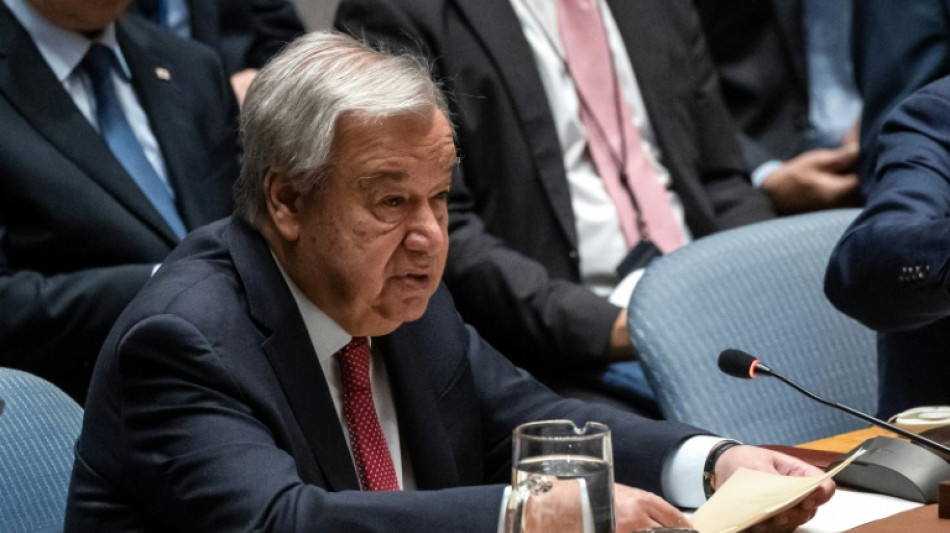
Humanity is suffering from an "extreme heat epidemic," UN Secretary-General Antonio Guterres warned Thursday, calling for action to limit the impacts of heat waves intensified by climate change.

Text size:

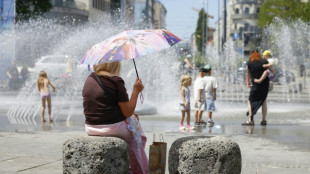
"Billions of people are facing an extreme heat epidemic -- wilting under increasingly deadly heat waves, with temperatures topping 50 degrees Celsius around the world," he said. "That's 122 degrees Fahrenheit. And halfway to boiling."

According to the European Copernicus network, July 21, 22 and 23 were the three hottest days ever recorded worldwide, with July 22 holding the absolute record of 17.16 degrees Celsius (62.9 degrees Fahrenheit).

Guterres repeated his call for humanity to fight its "addiction" to fossil fuels.

"Today, our focus is on the impact of extreme heat. But let's not forget that there are many other devastating symptoms of the climate crisis: ever-more fierce hurricanes. Floods. Droughts. Wildfires. Rising sea levels. And the list goes on," he said.

"To tackle all these symptoms, we need to fight the disease. And the disease is the madness of incinerating our only home. The disease is the addiction to fossil fuels. The disease is climate inaction," he stressed, calling in particular on G20 countries to take action.

While 2023 was the hottest year on record, and 2024 could set a new record, temperatures well above 40C (104F) are increasingly common.

In the space of a year, the 50C threshold has even been exceeded in at least 10 places, from Death Valley in the United States (53.9C on July 7) to Agadir in Morocco, and also in China and India.

The intense heat, often less visible than other devastating impacts of climate change such as storms or floods, is nonetheless more deadly.

This "silent killer" is responsible for around 489,000 deaths per year between 2000 and 2019, compared with 16,000 deaths per year from cyclones, according to the UN's "Call to Action" document published on Thursday.

- Workers exposed -

Extremely high temperatures also have an economic impact, with the UN estimating economic losses from heat stress at work will reach $2.4 trillion in 2030.

According to a report by the International Labor Organization published on Thursday, more than 70 percent of workers were exposed to excessive heat in 2020, 8.8 percent more than in 2000.

"The good news is that we can save lives and we can limit its impact," Guterres said Thursday.

The UN has called for the world community to first act to protect "the most vulnerable" -- including young children, the elderly and also humanity's poorest.

In this context, early warning systems should include extreme heat, warning populations of the arrival of heat waves and informing them of the precautions to take, the document says.

The call to action also recommends an "increase (to) equitable access to and scale up (of) low-carbon cooling."

This would involve investing in passive cooling systems -- which include climate-sensitive urban design measures, reflective surfaces and natural cooling systems -- and the phase-out of climate-warming gases that are used in many cooling systems.

K.Inoue--JT