The Japan Times - Climate change is slowing heat waves, prolonging misery

EUR -
AED 4.27647
AFN 76.85373
ALL 92.304242
AMD 424.523883
ANG 2.084124
AOA 1068.970686
ARS 1760.97915
AUD 1.61839
AWG 2.097477
AZN 1.976574
BAM 1.955449
BBD 2.3458
BDT 143.57549
BGN 1.975344
BHD 0.439125
BIF 3475.506687
BMD 1.164456
BND 1.480254
BOB 13.656669
BRL 6.009778
BSD 1.164701
BTN 111.030046
BWP 15.606336
BYN 3.512631
BYR 22823.341766
BZD 2.3425
CAD 1.613226
CDF 2649.13758
CHF 0.936287
CLF 0.027367
CLP 1077.075457
CNY 7.82503
CNH 7.827545
COP 3678.691844
CRC 525.610272
CUC 1.164456
CUP 30.85809
CVE 110.243813
CZK 24.150359
DJF 207.404593
DKK 7.474743
DOP 68.378327
DZD 155.035466
EGP 58.51136
ERN 17.466843
ETB 190.247322
FJD 2.553129
FKP 0.856304
GBP 0.857185
GEL 3.039093
GGP 0.856304
GHS 13.044773
GIP 0.856304
GMD 86.169916
GNF 10238.032435
GTQ 8.890482
GYD 243.678401
HKD 9.128953
HNL 31.242398
HRK 7.533802
HTG 152.373988
HUF 364.864852
IDR 20630.670717
ILS 3.461637
IMP 0.856304
INR 111.119224
IQD 1525.826419
IRR 1600661.509937
ISK 140.794817
JEP 0.856304
JMD 184.616898
JOD 0.825606
JPY 185.914163
KES 150.634134
KGS 101.832082
KHR 4713.215632
KMF 492.564863
KPW 1048.010933
KRW 1600.754881
KWD 0.359561
KYD 0.970634
KZT 539.757856
LAK 26119.541062
LBP 104300.094649
LKR 381.964794
LRD 210.814011
LSL 18.632719
LTL 3.438336
LVL 0.704368
LYD 7.38174
MAD 10.76187
MDL 20.137562
MGA 5024.142315
MKD 61.5095
MMK 2445.092559
MNT 4190.618952
MOP 9.405394
MRU 46.857001
MUR 54.578295
MVR 17.991228
MWK 2019.655219
MXN 19.731536
MYR 4.688089
MZN 74.406152
NAD 18.632559
NGN 1560.77888
NIO 42.862683
NOK 10.859928
NPR 177.647673
NZD 1.958569
OMR 0.447727
PAB 1.164701
PEN 3.902834
PGK 5.165074
PHP 72.488599
PKR 323.120739
PLN 4.336452
PYG 6901.821771
QAR 4.245675
RON 5.25833
RSD 117.296886
RUB 99.561464
RWF 1712.107721
SAR 4.369287
SBD 9.315942
SCR 15.882335
SDG 700.411858
SEK 11.089023
SGD 1.480455
SHP 0.862706
SLE 28.703406
SLL 24418.063648
SOS 665.586376
SRD 43.937254
STD 24101.892572
STN 24.495818
SVC 10.191041
SYP 15140.259566
SZL 18.618822
THB 38.357352
TJS 10.773561
TMT 4.075597
TND 3.397291
TOP 2.803731
TRY 56.179534
TTD 7.904651
TWD 36.813122
TZS 3082.90133
UAH 51.894641
UGX 4391.250358
USD 1.164456
UYU 46.901993
UZS 13763.65037
VES 920.708859
VND 30360.284601
VUV 137.453315
WST 3.155621
XAF 655.847855
XAG 0.016529
XAU 0.000253
XCD 3.147002
XCG 2.099142
XDR 0.823331
XOF 655.845039
XPF 119.331742
YER 275.397571
ZAR 18.631179
ZMK 10481.494751
ZMW 22.042237
ZWL 374.954425
  • JRI

    -0.0150

    12.385

    -0.12%

  • RYCEF

    -0.0500

    20.7

    -0.24%

  • CMSD

    0.1000

    21.28

    +0.47%

  • GSK

    -0.1050

    50.165

    -0.21%

  • CMSC

    0.0200

    21.33

    +0.09%

  • BCE

    0.1300

    23.53

    +0.55%

  • BCC

    -0.1450

    78.625

    -0.18%

  • AZN

    -1.3150

    163.205

    -0.81%

  • RIO

    -0.1500

    104.63

    -0.14%

  • BP

    -0.3550

    41.985

    -0.85%

  • RELX

    0.0550

    36.355

    +0.15%

  • BTI

    0.0300

    56.31

    +0.05%

  • NGG

    0.4800

    79.91

    +0.6%

  • VOD

    0.0900

    15.97

    +0.56%

  • RBGPF

    -0.4400

    70.69

    -0.62%

Climate change is slowing heat waves, prolonging misery
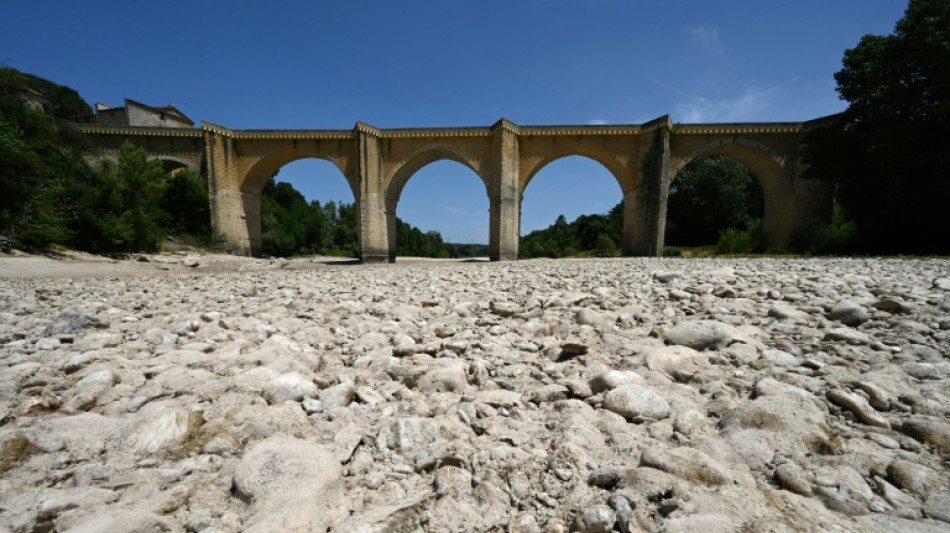
Climate change is slowing heat waves, prolonging misery / Photo: Pascal GUYOT - AFP/File

Climate change is slowing heat waves, prolonging misery

Climate change is causing heat waves to slow to a crawl, exposing humans to extreme temperatures for longer than ever before, a study published in Science Advances said Friday.

Text size:

While previous research has found climate change is causing heat waves to become longer, more frequent and more intense, the new paper differed by treating heat waves as distinct weather patterns that move along air currents, just as storms do.

For every decade between 1979 to 2020, researchers found heat waves slowed down by an average of five miles (eight kilometers) an hour per day.

"If a heatwave is moving slower, that means heat can stay in a region longer, so that has effects on communities," senior author Wei Zhang of Utah State University told AFP.

The researchers divided the world into three dimensional-grid cells and defined heat waves as a million square kilometer zones where temperatures reached at least the 95th percentile of the local historical maximum temperature. They then measured their movement over time in order to determine how fast the hot air was moving.

They also used climate models to determine what the results would have looked like absent human-caused climate change, and found manmade factors loomed large.

"It's pretty clear to us that a dominant factor here to explain this trend is anthropogenic forcing, the greenhouse gas," said Zhang.

The changes have accelerated in particular since 1997 and in addition to human causes, weakening upper atmospheric air circulation may play a part, the paper said.

The duration of heat waves also increased, from an average of eight days at the start, to 12 days during the last five years of the study period.

"The results suggest that longer-traveling and slower-moving large contiguous heat waves will cause more devastating impacts on natural and societal systems in the future if GHG keep rising, and no effective mitigation measures are taken," the authors wrote.

Zhang said he was worried by the disproportionate impacts on less-developed regions.

"In particular, cities that don't have enough green infrastructure or not many cooling centers for some folks, in particular for the disadvantaged population, will be very dangerous," he warned.

la-ia/mdl

K.Yoshida--JT