The Japan Times - No 'human era' in Earth's geological history, scientists say

EUR -
AED 4.333943
AFN 77.886842
ALL 96.792942
AMD 447.296501
ANG 2.112488
AOA 1082.159122
ARS 1713.458937
AUD 1.696407
AWG 2.124194
AZN 1.996602
BAM 1.947356
BBD 2.379383
BDT 144.483519
BGN 1.981838
BHD 0.444943
BIF 3498.430304
BMD 1.180108
BND 1.500606
BOB 8.192823
BRL 6.20808
BSD 1.181378
BTN 108.03203
BWP 15.549237
BYN 3.382732
BYR 23130.117712
BZD 2.375908
CAD 1.613538
CDF 2543.133159
CHF 0.919263
CLF 0.025867
CLP 1021.391854
CNY 8.197621
CNH 8.187991
COP 4274.41035
CRC 586.16336
CUC 1.180108
CUP 31.272863
CVE 110.782636
CZK 24.314731
DJF 209.728756
DKK 7.46822
DOP 74.287605
DZD 153.336689
EGP 55.568333
ERN 17.701621
ETB 183.211244
FJD 2.604026
FKP 0.861189
GBP 0.863178
GEL 3.180407
GGP 0.861189
GHS 12.928055
GIP 0.861189
GMD 86.725765
GNF 10327.125434
GTQ 9.064695
GYD 247.168748
HKD 9.216882
HNL 31.213903
HRK 7.536877
HTG 154.830622
HUF 380.943748
IDR 19785.927529
ILS 3.659326
IMP 0.861189
INR 106.761956
IQD 1546.531595
IRR 49712.051645
ISK 145.200535
JEP 0.861189
JMD 185.488081
JOD 0.836727
JPY 183.523283
KES 152.387676
KGS 103.200652
KHR 4750.534523
KMF 493.285478
KPW 1062.097242
KRW 1711.664242
KWD 0.362458
KYD 0.984473
KZT 596.578289
LAK 25366.422407
LBP 100958.242999
LKR 365.838373
LRD 219.499673
LSL 19.011247
LTL 3.484552
LVL 0.713836
LYD 7.458173
MAD 10.808314
MDL 20.001122
MGA 5251.480408
MKD 61.658671
MMK 2478.210923
MNT 4206.642931
MOP 9.503692
MRU 47.121434
MUR 53.872178
MVR 18.232606
MWK 2049.847706
MXN 20.52202
MYR 4.671456
MZN 75.231947
NAD 19.011085
NGN 1641.53047
NIO 43.30141
NOK 11.441467
NPR 172.851978
NZD 1.962741
OMR 0.453763
PAB 1.181383
PEN 3.972238
PGK 5.001318
PHP 69.531845
PKR 330.135697
PLN 4.221949
PYG 7854.940943
QAR 4.297069
RON 5.095943
RSD 117.395934
RUB 90.220397
RWF 1714.696992
SAR 4.425624
SBD 9.50943
SCR 16.816716
SDG 709.838278
SEK 10.571614
SGD 1.500395
SHP 0.885387
SLE 28.883091
SLL 24746.274816
SOS 674.433345
SRD 44.873592
STD 24425.853934
STN 25.077296
SVC 10.337309
SYP 13051.493324
SZL 19.011467
THB 37.149753
TJS 11.033804
TMT 4.142179
TND 3.36036
TOP 2.841417
TRY 51.311217
TTD 7.998387
TWD 37.281027
TZS 3054.698637
UAH 50.877442
UGX 4219.703348
USD 1.180108
UYU 45.831275
UZS 14456.323222
VES 436.394019
VND 30706.41137
VUV 140.617793
WST 3.199014
XAF 653.152601
XAG 0.014267
XAU 0.000247
XCD 3.189301
XCG 2.129068
XDR 0.810988
XOF 650.832122
XPF 119.331742
YER 281.308231
ZAR 18.963758
ZMK 10622.392479
ZMW 23.184454
ZWL 379.994309
  • SCS

    0.0200

    16.14

    +0.12%

  • RBGPF

    0.1000

    82.5

    +0.12%

  • CMSD

    0.0300

    24.08

    +0.12%

  • CMSC

    -0.0100

    23.75

    -0.04%

  • RYCEF

    0.7000

    16.7

    +4.19%

  • RELX

    -0.2700

    35.53

    -0.76%

  • BCC

    0.9400

    81.75

    +1.15%

  • BCE

    -0.0300

    25.83

    -0.12%

  • NGG

    -0.6600

    84.61

    -0.78%

  • BTI

    0.3100

    60.99

    +0.51%

  • GSK

    0.8700

    52.47

    +1.66%

  • JRI

    0.0700

    13.15

    +0.53%

  • RIO

    1.4900

    92.52

    +1.61%

  • BP

    -0.1800

    37.7

    -0.48%

  • VOD

    0.2600

    14.91

    +1.74%

  • AZN

    1.3100

    188.41

    +0.7%

No 'human era' in Earth's geological history, scientists say
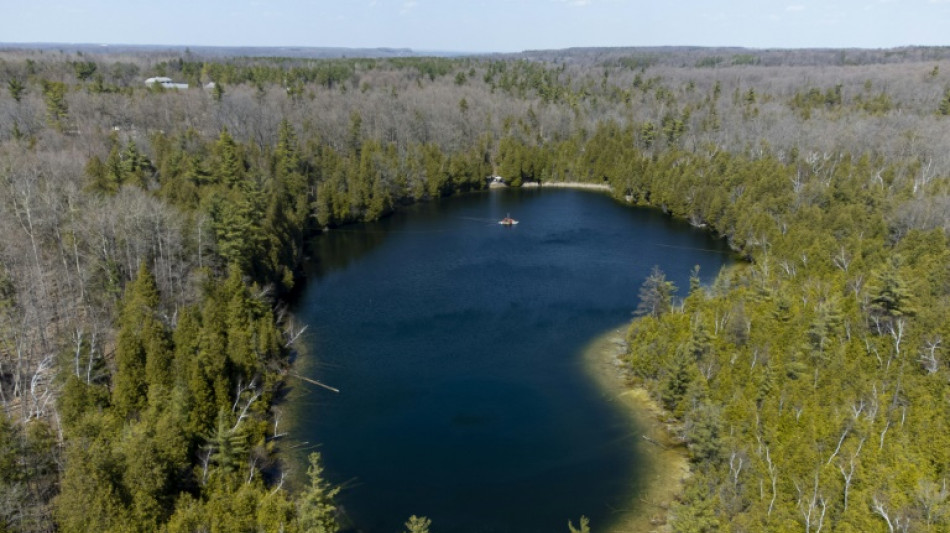
No 'human era' in Earth's geological history, scientists say / Photo: Peter POWER - AFP

No 'human era' in Earth's geological history, scientists say

A top panel of geologists has decided not to grant the 'human age' its own distinct place in Earth's geological timeline after disagreeing over when exactly our era might have begun.

Text size:

After 15 years of deliberation, a team of scientists made the case that humankind has so fundamentally altered the natural world that a new phase of Earth's existence -- a new epoch -- has already begun.

Soaring greenhouse gases, the spread of microplastics, decimation of other species, and fallout from nuclear tests -- all were submitted as evidence that the world entered the Anthropocene, or era of humans, in the mid-20th century.

But the proposal was rejected in a contentious vote that has been upheld by the International Union of Geological Sciences, the field's governing body said in a statement published on its website on Thursday.

The decision "to reject the proposal for an Anthropocene Epoch as a formal unit of the Geologic Time Scale is approved", it said.

There is no avenue for appeal, though some involved in the voting committee have raised allegations over the conduct of the ballot and a perceived lack of due process.

The union denied these assertions and called the outcome "a decisive rejection of the Anthropocene proposal" by the field's pre-eminent experts.

There were four votes in favour, 12 against and three abstentions, it added.

Despite this, the Anthropocene would endure as a widely used term: "It will remain an invaluable descriptor of human impact on the Earth system," the union said.

- 'Missed opportunity' -

In 2009 scientists began an enquiry that ultimately concluded that the Holocene epoch -- which began 11,700 years ago as the last ice age ended -- gave way to the Anthropocene around 1950.

They gathered a trove of evidence to show this, including traces of radioactive material found in the layered sediment of lakes, the global upheaval of plants and animals, and omnipresent "forever chemicals".

But opponents argued mankind had been reshaping the planet long before the 1950s, pointing to defining moments like the advent of farming and the industrial revolution.

Martin Head, who was part of the team that advocated for the Anthropocene, said there was "a myriad of geological signals" and lamented the way the process was handled.

"I feel this has been a missed opportunity to recognise and endorse a simple reality, that our planet left its natural functioning state in the mid-20th century," Head, a professor of earth sciences at Brock University in Canada, told AFP.

There was no disagreement that 'the age of man' had resulted in profound planetary changes, said Erle Ellis, an environmental scientist critical of the Anthropocene proposal.

But scientists weren't convinced this impact represented an epoch, no less one that definitively began only seven decades ago, said Ellis, professor of geography and environmental systems at the University of Maryland.

"The truth is, there was never a need for a firm boundary. It just wasn't the critical thing," he told AFP earlier this month after the proposal was first voted down.

S.Yamada--JT