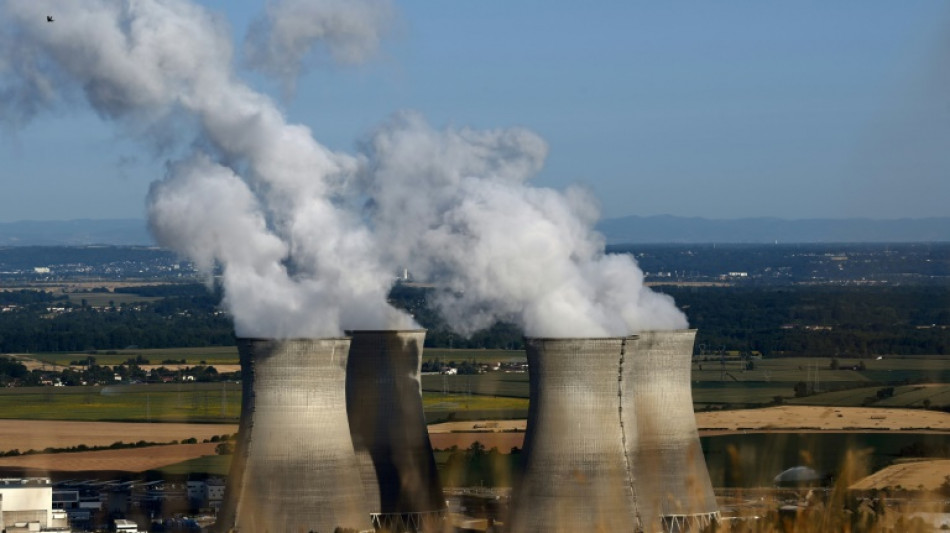
Nuclear's EU comeback on show at Brussels summit / Photo: OLIVIER CHASSIGNOLE - AFP

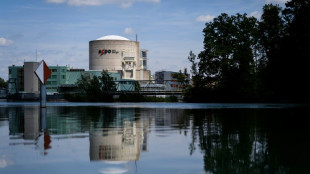
Promoting nuclear power was long taboo in Brussels, but a high-profile international summit Thursday will send loud and clear the message that atomic energy -- now touted by its champions as key to fighting climate change -- is back.
Gone are the days when Berlin's anti-nuclear stance set the tone: in the past two years atomic pioneer France has been decisive in crafting friendlier regulation, and putting nuclear back on the EU's agenda.
Rafael Grossi, the head of the International Atomic Energy Agency (IAEA) which is organising this week's meet in Brussels, is a leading proponent of nuclear as a "clean and reliable source of energy."
"The world needs much more of it," says Grossi, who sees "a growing realisation that nuclear energy is an indispensable part of the solution to some of the most pressing global challenges of our time."
The IAEA's first summit held to promote nuclear energy brings together representatives from some 50 countries -- from the EU but also the United States and China -- and 25 leaders including France's Emmanuel Macron.
"For the past four years, we have been sowing seeds -- they began to grow, and now we are reaping the harvest," said EU lawmaker Christophe Grudler, from Macron's centrist Renew Europe party.
Back in 2021, European Commission chief Ursula von der Leyen made headlines by arguing the EU needed nuclear as a "stable source" of energy -- and Brussels went on to label it among its list of "sustainable" investments.
By early 2023, France was spearheading the launch of a "nuclear alliance" of a dozen EU members including Poland, Bulgaria, Finland and the Netherlands, with a view to weighing on policy.
With notable successes so far: last June, Paris secured a change to EU renewable energy rules to recognise nuclear power as a way to produce low-carbon hydrogen.
In December EU states and lawmakers reached a deal on public aid for investment in existing nuclear power plants, then in February on including nuclear in a law cutting red tape for "net-zero" emission technologies.
Finally, Brussels included nuclear energy in its roadmap to reaching its 2040 climate goals, and in February it launched an industrial alliance to speed up the development of small modular reactors (SMRs).
- Convert the 'momentum' -
With 100 reactors currently in service across 12 countries, nuclear accounts for about a quarter of electricity produced in the EU, and almost half its carbon-free power.
Around 60 reactors are at various stages of planning or construction, one third of them in Poland.
Massimo Garribba, deputy director general at the European Commission's energy department, told a conference Monday he had seen a "change of attitude" among EU members these past 18 months.
"They have become much more outspoken," he said, "but also they have been working together to try and set up an agenda."
The French-led nuclear alliance says that "momentum must now be converted into a comprehensive and enabling European framework for nuclear development" -- including its financing.
Its members want nuclear and renewables put on a strict equal footing without "discrimination" in the bloc's goal of becoming carbon neutral by 2050.
The alliance wants that equality to apply to European Investment Bank financing, to the "Hydrogen Bank" funding instrument set up to boost sustainable hydrogen, and to any revisions of EU rules on renewables.
Despite the EU's more accommodating stance, the nuclear vs. renewables debate is still fuelling a standoff between Paris and Brussels: France failed to meet EU-set renewable targets in 2020, but is refusing to make amends -- arguing that its carbon footprint is low enough thanks to nuclear.
"France will not be paying penalties," warned its economy minister Bruno Le Maire this month. "These goals of having this many wind turbines, that many solar panels -- that's a Europe that we don't want any more."
- 'Theoretical' -
Likewise when it comes to a new French energy strategy that includes no goals for renewables: Brussels wants it to set targets by June, with at least 44 percent of renewables by 2030, against 20 percent now.
France's stance is anathema to many environmental activists -- and to EU countries like Spain, Austria, Germany and Luxembourg which together form a "Friends of Renewables" alliance within the bloc.
"We have never thought about mixing or exchanging renewable and nuclear," Spanish energy and climate minister Teresa Ribera said in December.
Sven Giegold, a German state secretary for the economy, said the promise of nuclear remains largely "theoretical" with many projects at planning stage -- making the case instead for "competitive" renewables.
Rejecting that argument, the centrist Grudler said SMRs will be a reality by 2035, and new generation EPR reactors by 2040.
"That is still a way off, but it's now that we need to create the framework and the financing plans," he said.
S.Suzuki--JT