The Japan Times - Warmest Arctic summer caused by accelerating climate change

EUR -
AED 4.330863
AFN 77.820662
ALL 96.710083
AMD 446.915552
ANG 2.110688
AOA 1081.237111
ARS 1712.049869
AUD 1.696014
AWG 2.122385
AZN 1.999969
BAM 1.945697
BBD 2.377356
BDT 144.360427
BGN 1.98015
BHD 0.444482
BIF 3495.449829
BMD 1.179103
BND 1.499328
BOB 8.185843
BRL 6.199486
BSD 1.180371
BTN 107.939993
BWP 15.53599
BYN 3.379851
BYR 23110.412093
BZD 2.373884
CAD 1.611869
CDF 2540.966445
CHF 0.91914
CLF 0.025848
CLP 1020.643256
CNY 8.190631
CNH 8.184246
COP 4260.545962
CRC 585.66398
CUC 1.179103
CUP 31.24622
CVE 110.688288
CZK 24.29488
DJF 209.550233
DKK 7.467634
DOP 74.224166
DZD 153.244416
EGP 55.519107
ERN 17.68654
ETB 183.055348
FJD 2.630873
FKP 0.860455
GBP 0.862779
GEL 3.177673
GGP 0.860455
GHS 12.917063
GIP 0.860455
GMD 86.659259
GNF 10318.327481
GTQ 9.056973
GYD 246.958173
HKD 9.208851
HNL 31.187291
HRK 7.535522
HTG 154.698714
HUF 380.920301
IDR 19770.367994
ILS 3.656209
IMP 0.860455
INR 106.603028
IQD 1545.214033
IRR 49669.699645
ISK 145.289235
JEP 0.860455
JMD 185.330055
JOD 0.836029
JPY 183.444203
KES 152.257677
KGS 103.113012
KHR 4746.480142
KMF 492.864429
KPW 1061.192392
KRW 1711.997572
KWD 0.362196
KYD 0.983634
KZT 596.070037
LAK 25344.81143
LBP 100872.232776
LKR 365.526699
LRD 219.312992
LSL 18.995699
LTL 3.481584
LVL 0.713227
LYD 7.451607
MAD 10.799106
MDL 19.984083
MGA 5247.007079
MKD 61.632525
MMK 2476.09962
MNT 4203.059097
MOP 9.495595
MRU 47.081421
MUR 53.708211
MVR 18.216755
MWK 2048.101661
MXN 20.514553
MYR 4.64743
MZN 75.167649
NAD 18.995947
NGN 1640.332736
NIO 43.277197
NOK 11.433865
NPR 172.704717
NZD 1.963554
OMR 0.453362
PAB 1.180376
PEN 3.968887
PGK 4.997009
PHP 69.385519
PKR 329.853883
PLN 4.222543
PYG 7848.248955
QAR 4.293407
RON 5.095259
RSD 117.432769
RUB 90.142087
RWF 1713.236162
SAR 4.42191
SBD 9.501329
SCR 16.802389
SDG 709.232781
SEK 10.571829
SGD 1.500013
SHP 0.884632
SLE 28.858499
SLL 24725.192318
SOS 673.823663
SRD 44.835427
STD 24405.044418
STN 25.055931
SVC 10.328502
SYP 13040.374153
SZL 18.99502
THB 37.251404
TJS 11.024404
TMT 4.13865
TND 3.357492
TOP 2.838996
TRY 51.250288
TTD 7.991573
TWD 37.253763
TZS 3052.095081
UAH 50.834097
UGX 4216.108388
USD 1.179103
UYU 45.79223
UZS 14444.007554
VES 436.022235
VND 30680.251156
VUV 140.497995
WST 3.196289
XAF 652.59615
XAG 0.014777
XAU 0.000253
XCD 3.186584
XCG 2.127254
XDR 0.810297
XOF 650.277405
XPF 119.331742
YER 281.068604
ZAR 18.969486
ZMK 10613.339413
ZMW 23.164702
ZWL 379.670575
  • SCS

    0.0200

    16.14

    +0.12%

  • RBGPF

    0.1000

    82.5

    +0.12%

  • CMSC

    -0.0100

    23.75

    -0.04%

  • BCC

    0.9400

    81.75

    +1.15%

  • GSK

    0.8700

    52.47

    +1.66%

  • NGG

    -0.6600

    84.61

    -0.78%

  • CMSD

    0.0300

    24.08

    +0.12%

  • RIO

    1.4900

    92.52

    +1.61%

  • BTI

    0.3100

    60.99

    +0.51%

  • AZN

    1.3100

    188.41

    +0.7%

  • BCE

    -0.0300

    25.83

    -0.12%

  • RYCEF

    0.7000

    16.7

    +4.19%

  • RELX

    -0.2700

    35.53

    -0.76%

  • JRI

    0.0700

    13.15

    +0.53%

  • VOD

    0.2600

    14.91

    +1.74%

  • BP

    -0.1800

    37.7

    -0.48%

Warmest Arctic summer caused by accelerating climate change
Warmest Arctic summer caused by accelerating climate change / Photo: ANDREJ IVANOV - AFP/File

Warmest Arctic summer caused by accelerating climate change

Summer surface air temperatures in 2023 were the warmest ever observed in the Arctic as a result of accelerating human-caused climate change, an official report card published Tuesday said.

Text size:

The average temperature from the months of July-September was 43 degrees Fahrenheit (6.4 Celsius), the highest since record-keeping began in 1900.

"The overriding message from this year’s report card is that the time for action is now," National Oceanic and Atmospheric Administration administrator Rick Spinrad said in a statement.

"We as a nation and global community must dramatically reduce greenhouse gas emissions that are driving these changes."

Average summer temperatures have been rising 0.31 F (0.17 C) per decade.

Overall, it was the Arctic's sixth warmest year, at 20 degrees Fahrenheit (-7 C).

Now in its 18th year, the NOAA Arctic Report Card is the work of 82 authors across 13 countries.

Observations from this year's report emphasize an ongoing trend line of warming sea and air temperatures, decreasing snow cover, diminishing sea ice, and continued melting of the Greenland Ice Sheet.

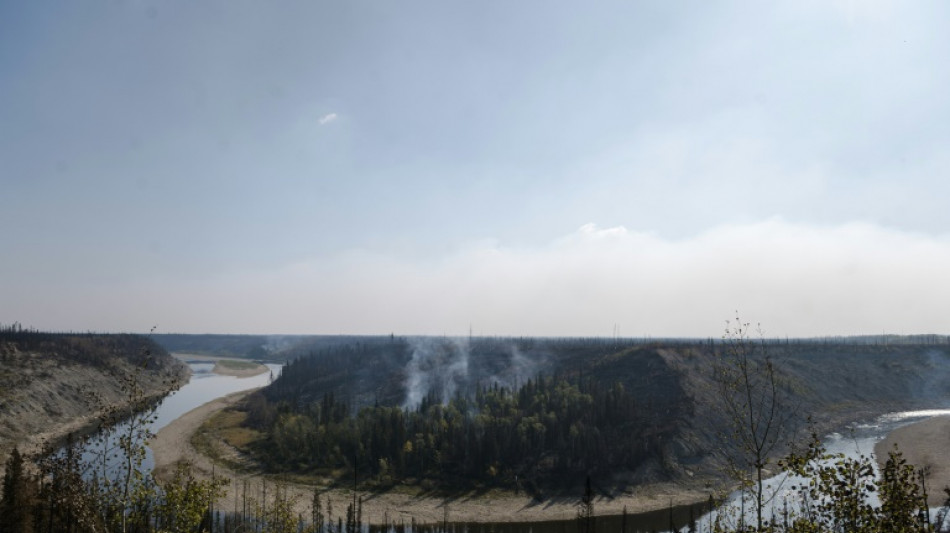
But the year also brought high impact events that had the "clear signature" of climate change, for example the Canadian Arctic experienced its worst wildfire season on record, causing the evacuation of 20,000 people from the town of Yellowknife in August.

Also in August, a glacial lake near Juneau, Alaska burst through its dam, causing massive flooding and property damage along the Mendenhall River, as a result of two decades of glacial thinning.

The long term warming trend has a variety of uneven impacts across ecosystems and food webs that people rely upon.

For example, sockeye salmon reached a record-high abundance in Bristol Bay, Alaska in the years 2021 and 2022.

The species, a staple of commercial fisheries, has thrived under warmer waters, which allow juveniles to grow faster in lakes and increase their odds of survival when they reach the ocean.

On the other hand, chinook and chum salmon have drastically declined following heat waves that negatively impact their growth rates, contributing to smaller adults.

Another chapter of the report examines subsea permafrost, a field that is relatively little known, even among scientists -- though potentially an important source of greenhouse gas emissions.

As the world emerged from the last ice age, rising ocean waters in the Arctic covered permafrost, transforming it into subsea permafrost over thousands of years.

"An estimated 2.5 million km2 of subsea permafrost remains today, but it continues to thaw due to the original ocean inundation event and more recent, rapid Arctic warming," the report said.

M.Yamazaki--JT