The Japan Times - Aluminum recycling in Brazil: Scraping by in a billion-dollar industry

EUR -
AED 4.259303
AFN 74.22611
ALL 96.551845
AMD 437.423681
ANG 2.076108
AOA 1063.520759
ARS 1603.426694
AUD 1.670482
AWG 2.089059
AZN 1.969884
BAM 1.97852
BBD 2.334821
BDT 142.233303
BGN 1.982428
BHD 0.437918
BIF 3437.597105
BMD 1.159783
BND 1.496586
BOB 8.009981
BRL 6.013124
BSD 1.159217
BTN 110.308704
BWP 15.991636
BYN 3.447286
BYR 22731.748738
BZD 2.331372
CAD 1.611049
CDF 2650.104591
CHF 0.920284
CLF 0.027217
CLP 1074.666797
CNY 7.986904
CNH 7.975422
COP 4272.153827
CRC 538.991709
CUC 1.159783
CUP 30.734252
CVE 111.194204
CZK 24.528079
DJF 206.11681
DKK 7.472233
DOP 69.694725
DZD 153.936039
EGP 62.028851
ERN 17.396746
ETB 182.144127
FJD 2.618099
FKP 0.879697
GBP 0.872522
GEL 3.119424
GGP 0.879697
GHS 12.757593
GIP 0.879697
GMD 85.823837
GNF 10177.096187
GTQ 8.869894
GYD 242.59685
HKD 9.091093
HNL 30.850972
HRK 7.532097
HTG 152.147146
HUF 382.401946
IDR 19688.477886
ILS 3.630643
IMP 0.879697
INR 108.149542
IQD 1519.31586
IRR 1526129.585322
ISK 143.406714
JEP 0.879697
JMD 183.395985
JOD 0.822264
JPY 183.848237
KES 150.922446
KGS 101.422787
KHR 4650.729677
KMF 496.96958
KPW 1043.739082
KRW 1744.201987
KWD 0.358652
KYD 0.965993
KZT 552.302234
LAK 25457.239207
LBP 103811.147156
LKR 365.701019
LRD 213.023174
LSL 19.79777
LTL 3.424537
LVL 0.701541
LYD 7.428455
MAD 10.835269
MDL 20.529749
MGA 4845.573542
MKD 61.647557
MMK 2436.015377
MNT 4143.582844
MOP 9.360427
MRU 46.518682
MUR 54.266061
MVR 17.942045
MWK 2014.542824
MXN 20.679627
MYR 4.665231
MZN 74.168171
NAD 19.797749
NGN 1605.673396
NIO 42.598236
NOK 11.201359
NPR 176.493725
NZD 2.011151
OMR 0.445936
PAB 1.159212
PEN 4.05465
PGK 5.091545
PHP 69.803809
PKR 323.812422
PLN 4.285224
PYG 7509.230498
QAR 4.226281
RON 5.097944
RSD 117.397948
RUB 93.419721
RWF 1693.283324
SAR 4.353209
SBD 9.327019
SCR 16.081944
SDG 697.029048
SEK 10.864388
SGD 1.487561
SHP 0.870138
SLE 28.472524
SLL 24320.084247
SOS 662.813499
SRD 43.345698
STD 24005.168553
STN 25.196288
SVC 10.143525
SYP 128.442852
SZL 19.79818
THB 37.773559
TJS 11.111092
TMT 4.070839
TND 3.398268
TOP 2.792479
TRY 51.581242
TTD 7.87547
TWD 37.051614
TZS 3001.87936
UAH 50.927939
UGX 4364.133322
USD 1.159783
UYU 47.030059
UZS 14144.133325
VES 548.899652
VND 30544.627583
VUV 139.456948
WST 3.221545
XAF 663.577032
XAG 0.015574
XAU 0.000246
XCD 3.134372
XCG 2.089191
XDR 0.82455
XOF 661.664399
XPF 119.331742
YER 276.782431
ZAR 19.51792
ZMK 10439.437724
ZMW 22.158451
ZWL 373.449685
  • RBGPF

    -13.5000

    69

    -19.57%

  • CMSC

    -0.4028

    21.9

    -1.84%

  • CMSD

    -0.4000

    22.1

    -1.81%

  • AZN

    3.3400

    197.22

    +1.69%

  • NGG

    0.9100

    84.6

    +1.08%

  • BTI

    0.2100

    58.47

    +0.36%

  • GSK

    0.9600

    55.19

    +1.74%

  • RYCEF

    0.7400

    15.09

    +4.9%

  • RIO

    4.4700

    93.29

    +4.79%

  • RELX

    0.4000

    33.15

    +1.21%

  • BCE

    0.0100

    25.24

    +0.04%

  • JRI

    0.3800

    12.3

    +3.09%

  • BCC

    0.9000

    75.85

    +1.19%

  • VOD

    0.3200

    15.02

    +2.13%

  • BP

    -0.3500

    47

    -0.74%

Aluminum recycling in Brazil: Scraping by in a billion-dollar industry
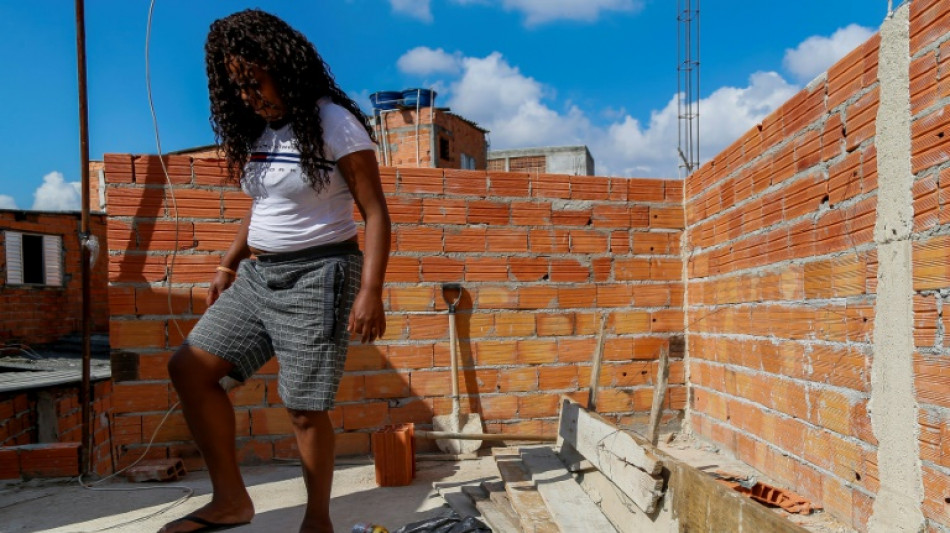
Aluminum recycling in Brazil: Scraping by in a billion-dollar industry / Photo: Miguel SCHINCARIOL - AFP

Aluminum recycling in Brazil: Scraping by in a billion-dollar industry

Shirlei Aparecida de Souza uses her foot to crush the empty cold drink cans she collects in the alleys of a poor Sao Paulo neighborhood: a precarious livelihood critical to Brazil's environmental protection goals.

Text size:

It is thanks to about a million collectors like her that the country recycled as many aluminum cans as it produced for the first time in 2022, according to data from Recicla Latas, a recycling industry body.

Brazil is a world leader in recycling drinks cans: its new record beats out the European Union, which recycles 73 percent, and the United States with 60 percent, according to their own databases.

Recicla Latas says the country's recycling efforts have prevented about 16.5 million tons of planet-warming greenhouse gas emissions in the last 10 years.

But for Aparecida de Souza, collecting cans is a matter of survival.

She gathers them off the street, from garbage cans or landfills, and sells them to collection centers that send the cans to recycling plants.

She earns about 20 real, or just over $4, a day: "Just enough to buy the necessities, a packet of rice, black beans and sometimes meat," the 38-year-old told AFP.

With this, she supports five daughters in a working-class district of the largest metropolis in Latin America.

- 'Family tradition' -

Dressed in flip-flops, a T-shirt and shorts, Aparecida de Souza leaves the house every day at dawn to collect as many cans as she can. It takes almost 70 black rubbish bags to make a kilogram of aluminum, which sells for just over $1.

The work is a "family tradition," into which she was initiated by her mother from the age of 15, she told AFP.

"Aluminum sells for a higher price than other materials such as cardboard, and it is lighter to carry."

Aline Sousa da Silva, an activist with the Ancat association representing collectors of recyclable materials, said there is "a lot of competition" in gathering cans, which can be reused indefinitely.

The recycling rate of other materials in Brazil is much lower than that for cans: about four percent on average.

In 2022, nearly 430,000 tons of cans were recycled, according to Renato Paquet, a director at Recicla Latas, whose data is used as a reference by the Brazilian government.

That is the equivalent of about 31.8 billion cans.

- 156 cans per person -

Since 2010, when drinks manufacturers signed an agreement with Brazilian authorities, aluminum recycling numbers have skyrocketed in a country where each of its 200-odd million inhabitants consumes about 156 cans every year.

It takes "an average of 60 days" for a can bought in a supermarket to reappear on the shelves after recycling, according to Danilo Machado, logistics supervisor at the Latasa-Garimpeiro Urbano recycling company.

The industry adds some $1.25 billion to the Brazilian economy every year. But those who form its backbone live mostly precarious lives with few social protections.

On January 1, they received a special honor at the inauguration of leftist leader Luiz Inacio Lula da Silva, with Sousa da Silva among a group of activists chosen to present him with the presidential sash.

H.Takahashi--JT