1.5C of warming is too hot for a just world: study / Photo: Robyn Beck - AFP/File

Curbing global heating at 1.5 degrees Celsius will avert runaway climate change but not mass suffering in developing nations, a consortium of 50 researchers warned Wednesday.
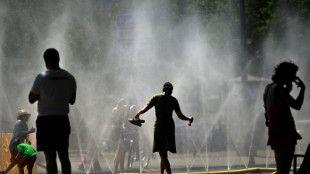
Some 200 million people in poorer regions will be exposed to unliveable heat, and half a billion will face the destructive ravages of rising seas even if the world meets the more optimistic Paris target of a 1.5C cap, they reported in a major study.
If exposing large swathes of humanity to "significant harm is to be avoided, the just boundary should be set at or below 1C," the scientists said.
The Earth's average surface temperature has already risen 1.2C.
These are sobering conclusions because greenhouse gas emissions remain at record levels, and current policies are on track to see 2.7C of warming by century's end.
We are "putting the stability and resilience of the entire planet at risk," said Johan Rockstrom, lead author of the new study.
The scientists say atmospheric concentration of carbon dioxide must also be cut by a sixth, with the world's richest one percent emitting twice as much as the poorest 50 percent, the study noted.
Rockstrom is among the originators of the concept of "planetary boundaries" -- red lines that must not be crossed.
In 2009 he and colleagues identified nine such boundaries and said we had already stepped outside the safe zone of three: planet-warming gases in the air, accelerating species extinction, and an excess of nitrogen and phosphorus in the environment (mostly from fertiliser).
Today we have breached three more: deforestation, overuse of fresh water, and the omnipresence of synthetic chemicals, including plastics.
- 'Scientific backbone' -
Outdoor particle pollution, which shortens more than four million lives every year, could be added this year to the list of our transgressions, and ocean acidification may not be far behind.
"The Earth system is in danger -- many tipping elements are about to cross their tipping points," said co-author Dahe Qin, director of the Chinese Academy of Science's influential Academic Committee.
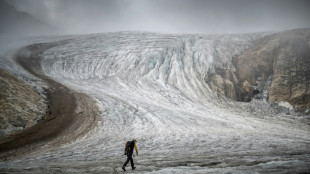
The Greenland ice sheet, large swathes of permafrost and the Amazon forest, for example, are approaching points of no return beyond which they will, respectively, lift oceans by metres, release billions of tonnes of CO2 and methane and turn tropical forests to savannah.
Only the restoration of the life-protecting ozone layer -- the ninth boundary -- is clearly moving in the right direction.
Rockstrom, head of the Potsdam Institute for Climate Impact Research, and colleagues applied the same yardsticks to measure the limits for a "just" world in which human exposure to harm is minimised.
Besides climate change, they found the tolerable threshold of ambient particle pollution -- especially across Asia -- must also be lowered compared to the original planetary boundaries schema.
"Justice is a necessity for humanity to live within planetary limits," said co-author Joyeeta Gupta, a professor at the University of Amsterdam. "We cannot have a safe planet without justice."
The scientists have proposed the new thresholds as the "scientific backbone" of evolving sustainability standards for government and business.
The study, published in Nature, was supported by the Global Commons Alliance, a coalition of more than 70 research and policy centres, including the World Economic Forum, The Nature Conservancy and Future Earth.
"Nothing less than a just global transformation across all Earth system boundaries is required to ensure human well-being," the authors concluded.
"Such transformations must be systemic across energy, food, urban and other sectors, addressing the economic, technological, political and other drivers of Earth system change, and ensure access for the poor through reductions and reallocation of resource use."
T.Kobayashi--JT