The Japan Times - Arctic blast breaks US wind-chill record

EUR -
AED 4.24119
AFN 73.895229
ALL 96.121797
AMD 435.474912
ANG 2.066857
AOA 1058.781575
ARS 1596.310642
AUD 1.675918
AWG 2.07975
AZN 1.960111
BAM 1.969704
BBD 2.324417
BDT 141.599507
BGN 1.973594
BHD 0.43586
BIF 3422.279069
BMD 1.154615
BND 1.489917
BOB 7.974288
BRL 6.006067
BSD 1.154051
BTN 109.817165
BWP 15.920377
BYN 3.431925
BYR 22630.455382
BZD 2.320983
CAD 1.608887
CDF 2638.295737
CHF 0.924067
CLF 0.027103
CLP 1070.177986
CNY 7.960731
CNH 7.957821
COP 4258.786141
CRC 536.589946
CUC 1.154615
CUP 30.597299
CVE 110.698737
CZK 24.551703
DJF 205.198458
DKK 7.471171
DOP 69.389397
DZD 153.622695
EGP 62.963126
ERN 17.319226
ETB 181.332532
FJD 2.586049
FKP 0.875243
GBP 0.871983
GEL 3.106408
GGP 0.875243
GHS 12.700953
GIP 0.875243
GMD 85.441642
GNF 10131.746943
GTQ 8.830369
GYD 241.515831
HKD 9.053296
HNL 30.718522
HRK 7.533981
HTG 151.469174
HUF 384.711992
IDR 19561.603986
ILS 3.6446
IMP 0.875243
INR 108.105439
IQD 1512.545742
IRR 1519329.105994
ISK 143.368111
JEP 0.875243
JMD 182.578767
JOD 0.818602
JPY 183.457368
KES 150.099783
KGS 100.971005
KHR 4630.006503
KMF 494.755683
KPW 1039.124319
KRW 1743.41035
KWD 0.357388
KYD 0.961688
KZT 549.841159
LAK 25343.800878
LBP 103395.779747
LKR 364.071444
LRD 212.073918
LSL 19.709295
LTL 3.409278
LVL 0.698416
LYD 7.395285
MAD 10.786992
MDL 20.438267
MGA 4823.981745
MKD 61.622462
MMK 2424.112128
MNT 4123.140655
MOP 9.318717
MRU 46.311692
MUR 54.405395
MVR 17.862002
MWK 2005.566775
MXN 20.731979
MYR 4.67505
MZN 73.837509
NAD 19.709099
NGN 1599.396069
NIO 42.409414
NOK 11.215521
NPR 175.707263
NZD 2.012736
OMR 0.443931
PAB 1.154046
PEN 4.036553
PGK 5.069058
PHP 69.790126
PKR 322.368849
PLN 4.29201
PYG 7475.769141
QAR 4.207446
RON 5.10028
RSD 117.465776
RUB 93.877539
RWF 1685.738003
SAR 4.333345
SBD 9.285457
SCR 16.140178
SDG 693.923359
SEK 10.948418
SGD 1.485995
SHP 0.86626
SLE 28.345495
SLL 24211.71322
SOS 659.875403
SRD 43.152621
STD 23898.200801
STN 25.084012
SVC 10.098325
SYP 127.648533
SZL 19.70917
THB 37.692393
TJS 11.06158
TMT 4.052699
TND 3.38287
TOP 2.780035
TRY 51.317212
TTD 7.840377
TWD 36.893992
TZS 2988.502822
UAH 50.701002
UGX 4344.686613
USD 1.154615
UYU 46.820491
UZS 14081.108519
VES 546.453738
VND 30412.560957
VUV 138.950239
WST 3.197445
XAF 660.620113
XAG 0.015389
XAU 0.000248
XCD 3.120405
XCG 2.079881
XDR 0.820876
XOF 658.695399
XPF 119.331742
YER 275.548508
ZAR 19.591197
ZMK 10392.918889
ZMW 22.059713
ZWL 371.785582
  • RBGPF

    -13.5000

    69

    -19.57%

  • CMSC

    -0.1528

    22.15

    -0.69%

  • CMSD

    -0.0520

    22.448

    -0.23%

  • RYCEF

    0.7600

    15.05

    +5.05%

  • GSK

    0.5800

    54.81

    +1.06%

  • NGG

    0.9000

    84.59

    +1.06%

  • AZN

    1.3600

    195.24

    +0.7%

  • BTI

    0.1900

    58.45

    +0.33%

  • BCE

    -0.1100

    25.12

    -0.44%

  • RELX

    0.3600

    33.11

    +1.09%

  • RIO

    4.0800

    92.9

    +4.39%

  • BCC

    0.9000

    75.85

    +1.19%

  • VOD

    0.3000

    15

    +2%

  • JRI

    0.3800

    12.3

    +3.09%

  • BP

    -0.4550

    46.895

    -0.97%

Arctic blast breaks US wind-chill record
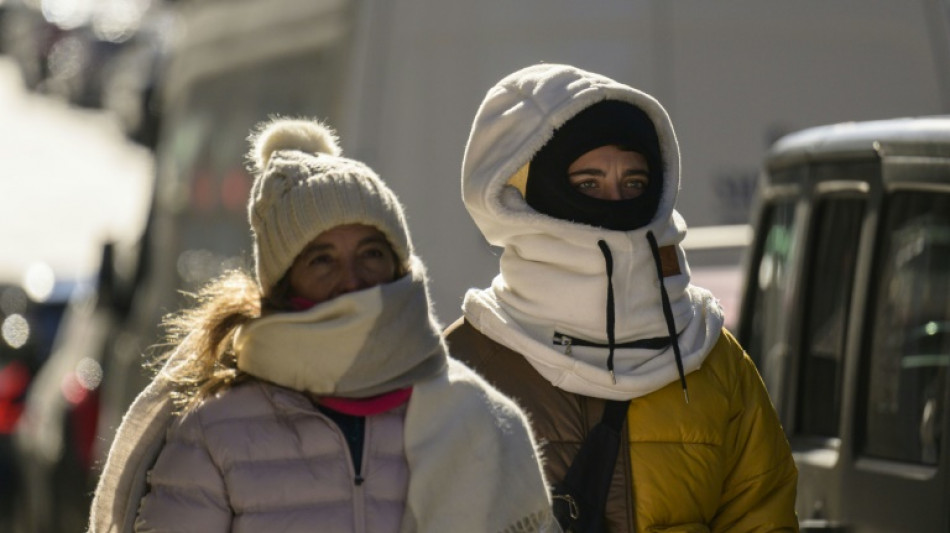
Arctic blast breaks US wind-chill record / Photo: ANGELA WEISS - AFP

Arctic blast breaks US wind-chill record

An Arctic blast that brought "frostquakes" to parts of the United States saw the country record its lowest ever wind-chill temperature, meteorologists said Saturday.

Text size:

Atop Mount Washington in the northeastern state of New Hampshire, the wind-chill factor reached minus 78 degrees Celsius (minus 108 degrees Fahrenheit) overnight, the National Weather Service (NWS) said.

The service's office in the town of Gray, Maine, said in a tweet that it set a new US record for the lowest wind-chill temperature in the United States.

CNN reported that it broke the previous record of minus 76 C set in Alaska.

The previous low at Mount Washington was minus 74 C, recorded there in 2004, the Weather Channel said.

At almost 6,300 feet (1,920 meters), Mount Washington is the highest peak in the northeastern US and is known for having some of the world's worst weather.

Temperatures of minus 43 C and wind gusts of over 110 miles per hour (177 kmh) combined for the historic low.

The NWS office in Caribou, Maine, said a wind chill of minus 51 C was recorded in the small town of Frenchville, just south of the border with Canada.

The office said they had received reports of "frostquakes," also called "cryoseisms," in the region.

"Just like earthquakes, (they) generate tremors, thundering sensations. These are caused by sudden cracks in frozen soil or underground water when it's very cold," the NWS office wrote on Twitter.

Ahead of the blast, it had warned of an "epic, generational Arctic outbreak."

The NWS said the chills would be "something northern and eastern Maine has not seen since similar outbreaks in 1982 and 1988."

"Most stations are forecast to see their lowest wind chills in decades or, in some cases, the lowest ever recorded," the service added.

It warned that frostbite to exposed skin can occur within five minutes in such conditions.

"The dangers of being caught unprepared without shelter from the elements and without proper winter survival gear cannot be stressed enough," the service wrote.

The NWS said the blast brought temperatures 10 to 30 degrees Fahrenheit below average over parts of the US Northeast and the coastal Mid-Atlantic.

Extreme weather warnings covering several million people were in effect across much of New England, Quebec and eastern Canada.

A wind chill factor of minus 41 C was measured at Montreal International Airport.

The Hydro Quebec energy company said the polar blast had sparked record high electricity consumption late Friday and urged customers to turn down their heating by a degree or two.

In New York City, a "code blue" regulation was in effect, meaning no homeless shelter could turn anyone anyway.

In New York's Central Park, the mercury dipped to minus 16 C, the NWS said.

Wind-chill temperatures fell below minus 34 C in Boston, where public schools were closed Friday as a precautionary measure.

Warmer air is due to move into the region late on Sunday.

T.Ikeda--JT