The Japan Times - Truth: The end of the ‘Roman Empire’

EUR -
AED 4.236995
AFN 72.682942
ALL 95.499599
AMD 434.251954
ANG 2.065235
AOA 1057.951222
ARS 1605.382781
AUD 1.64816
AWG 2.07956
AZN 1.962086
BAM 1.946619
BBD 2.31966
BDT 141.323481
BGN 1.972045
BHD 0.435048
BIF 3409.12169
BMD 1.153709
BND 1.472953
BOB 7.958466
BRL 6.13012
BSD 1.151768
BTN 107.673185
BWP 15.704931
BYN 3.49432
BYR 22612.692624
BZD 2.316375
CAD 1.582855
CDF 2624.687914
CHF 0.910144
CLF 0.027116
CLP 1070.699078
CNY 7.944902
CNH 7.968707
COP 4233.434017
CRC 537.962827
CUC 1.153709
CUP 30.573283
CVE 109.747403
CZK 24.475875
DJF 205.092729
DKK 7.470501
DOP 68.367561
DZD 152.575662
EGP 59.996458
ERN 17.305632
ETB 181.514032
FJD 2.554831
FKP 0.864812
GBP 0.866441
GEL 3.132315
GGP 0.864812
GHS 12.554788
GIP 0.864812
GMD 84.797727
GNF 10095.387511
GTQ 8.822391
GYD 240.963553
HKD 9.037878
HNL 30.485224
HRK 7.512147
HTG 151.097385
HUF 392.907233
IDR 19562.517279
ILS 3.587025
IMP 0.864812
INR 108.4608
IQD 1508.784179
IRR 1517848.149879
ISK 143.371629
JEP 0.864812
JMD 180.946608
JOD 0.81798
JPY 183.840071
KES 149.206304
KGS 100.889409
KHR 4602.294375
KMF 492.634265
KPW 1038.372085
KRW 1736.689162
KWD 0.353693
KYD 0.959773
KZT 553.718519
LAK 24732.355738
LBP 103147.330197
LKR 359.285515
LRD 210.765973
LSL 19.429067
LTL 3.406602
LVL 0.697867
LYD 7.373226
MAD 10.762342
MDL 20.057404
MGA 4802.350857
MKD 61.350654
MMK 2421.422446
MNT 4116.640054
MOP 9.296655
MRU 46.103564
MUR 53.658616
MVR 17.835848
MWK 1997.180773
MXN 20.704471
MYR 4.544428
MZN 73.7177
NAD 19.429067
NGN 1564.71816
NIO 42.380124
NOK 11.057422
NPR 172.277494
NZD 1.982693
OMR 0.4436
PAB 1.151768
PEN 3.98192
PGK 4.971553
PHP 69.395518
PKR 321.563224
PLN 4.276224
PYG 7522.521818
QAR 4.211637
RON 5.078046
RSD 116.898675
RUB 95.998092
RWF 1675.796505
SAR 4.33178
SBD 9.289271
SCR 15.803168
SDG 693.379249
SEK 10.79329
SGD 1.477088
SHP 0.86558
SLE 28.35236
SLL 24192.709325
SOS 658.195776
SRD 43.249663
STD 23879.442983
STN 24.384994
SVC 10.077472
SYP 127.728575
SZL 19.435338
THB 37.966256
TJS 11.062327
TMT 4.049518
TND 3.401557
TOP 2.777853
TRY 51.123432
TTD 7.814146
TWD 36.961029
TZS 2994.477262
UAH 50.45524
UGX 4353.467906
USD 1.153709
UYU 46.411113
UZS 14041.775313
VES 524.580585
VND 30356.386139
VUV 137.118236
WST 3.1471
XAF 652.877857
XAG 0.016971
XAU 0.000256
XCD 3.117956
XCG 2.07571
XDR 0.811971
XOF 652.877857
XPF 119.331742
YER 275.276092
ZAR 19.716207
ZMK 10384.764004
ZMW 22.487941
ZWL 371.493765
  • RBGPF

    -13.5000

    69

    -19.57%

  • BCC

    -1.5600

    68.3

    -2.28%

  • NGG

    -3.5400

    81.99

    -4.32%

  • CMSD

    -0.2420

    22.658

    -1.07%

  • AZN

    -5.3300

    183.6

    -2.9%

  • CMSC

    -0.2000

    22.65

    -0.88%

  • BCE

    0.0600

    25.79

    +0.23%

  • RIO

    -2.5000

    83.15

    -3.01%

  • RELX

    -0.4600

    33.36

    -1.38%

  • GSK

    -0.5300

    51.84

    -1.02%

  • RYCEF

    -1.2600

    15.34

    -8.21%

  • VOD

    -0.0900

    14.33

    -0.63%

  • JRI

    -0.3900

    11.77

    -3.31%

  • BTI

    -1.3500

    57.37

    -2.35%

  • BP

    -1.0800

    44.78

    -2.41%


Truth: The end of the ‘Roman Empire’


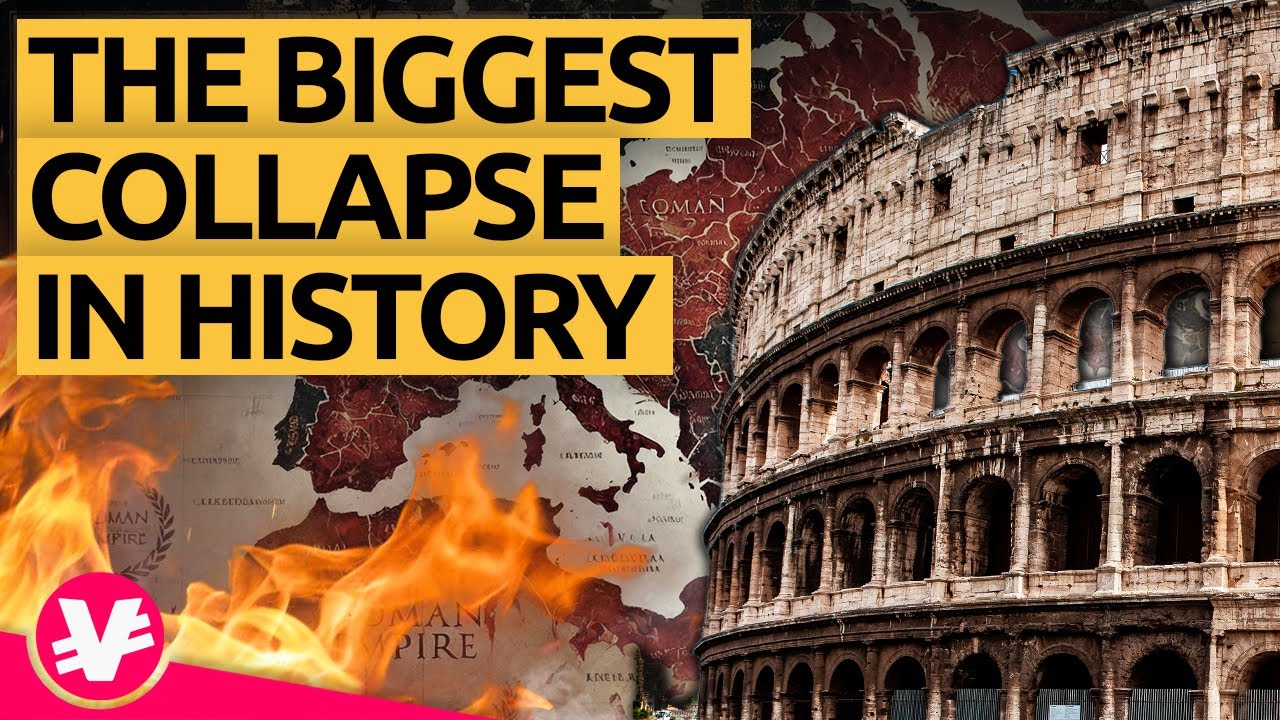
The fall of the Roman Empire in the fifth century AD has long captivated historians and the public alike. For centuries, scholars have debated the precise causes of the Empire’s decline, offering myriad explanations—ranging from political corruption and economic instability to moral degeneration and barbarian invasions. Yet despite the passage of time and the wealth of research available, there remains no single, universally accepted answer to the question: why did the Roman Empire truly collapse?

A central factor often cited is political fragmentation. As the Empire grew too vast to govern effectively from one centre, Emperor Diocletian introduced the Tetrarchy—a system dividing the realm into eastern and western halves. While initially intended to provide administrative efficiency, this division ultimately paved the way for competing centres of power and weakened the unity that had long defined Roman rule. Frequent changes of leadership and civil wars further sapped the state’s coherence, undermining confidence in the imperial regime.

Economics played an equally crucial role. Burdened by expensive military campaigns to protect ever-extending frontiers, the Empire resorted to debasing its currency, provoking rampant inflation and eroding public trust. The resulting fiscal strains fuelled social unrest, as high taxes weighed heavily upon small farmers and urban dwellers alike. Coupled with declining trade routes and resource depletion, these pressures contributed to a persistent sense of crisis.

Compounding these challenges was the growing threat from beyond Rome’s borders. Germanic tribes such as the Visigoths, Vandals, and Ostrogoths gradually eroded the Western Empire’s defensive capabilities. While earlier Roman armies proved formidable, internal discord had dulled their edge, allowing external forces to breach once-impenetrable frontiers.

Modern historians emphasise that the Empire did not fall solely because of barbarian invasions, moral decay, or fiscal collapse; instead, its downfall was the outcome of a confluence of factors, each interacting with the other. The story of Rome’s fall thus serves as a stark reminder that even the mightiest of civilisations can succumb to the inexorable weight of political, economic, and social upheaval.