RYCEF
0.1000

The capture of more than 250 Russian soldiers during Ukraine's Operation Vivaldi has exposed serious weaknesses in the forces fighting around Lyman. That figure remains a Ukrainian military claim, but the operation's significance extends beyond the prisoners themselves: it has challenged Russian positions, disrupted supplies and complicated the approach to northern Donetsk's principal defensive cities.
The chronology matters. The prisoner total was publicised in late September and became a prominent part of the account of Vivaldi's third phase. By 14 October, Brigadier General Andrii Biletskyi, commander of Ukraine's Third Army Corps, was announcing the completion of a fourth phase. The events concern a campaign conducted over months in the wider Lyman sector, rather than a single, independently documented moment in which hundreds of Russian troops all surrendered together inside the city.
Footage released by the corps showed dozens of men being escorted through woodland and assembled under guard. Some prisoners described severe shortages of food and water and said they had seen little point in continuing to fight. Those accounts are consistent with the picture of isolated positions presented by Ukrainian commanders. They still require caution: statements made in captivity cannot establish conditions across an entire army, and the released footage does not independently verify the full prisoner count.
The central military issue is the loss of a functioning supply system. Soldiers may remain in possession of a trench or village long after the routes needed to sustain them have become unusable. Ammunition runs down, food deliveries become irregular and casualty evacuation grows increasingly dangerous. A position that appears intact on a map can consequently lose much of its fighting value before an attacking force physically reaches it.
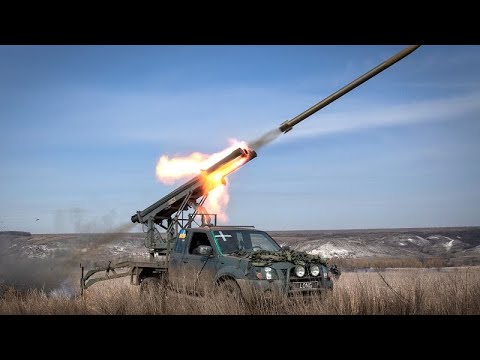
The Ukrainian account of Vivaldi describes a sustained effort to create precisely those conditions. Strikes on Russian logistics, fuel supplies and drone operators preceded advances on the ground. Infantry then worked alongside unmanned systems to penetrate and isolate positions. Viewed in that sequence, the surrenders suggest the cumulative effects of pressure on a military organisation's ability to support its soldiers. They cannot be explained adequately by a simple assertion that Russian morale suddenly disappeared.
There is a distinction between fear and a rational assessment of an untenable position. A soldier who expects relief may continue fighting under exceptionally difficult conditions. The calculation changes when communications are unreliable, resupply has stopped and withdrawal appears as dangerous as remaining in place. If the Ukrainian description is broadly accurate, Vivaldi narrowed those choices until surrender became a means of survival for groups of Russian troops.
The latest Ukrainian figures give a sense of the operation's claimed scale. On 14 October, Biletskyi said its fourth phase had recovered another 101 square kilometres, including Zelena Dolyna, Lypove and Kolodiazi. He put the total across four phases at 277 square kilometres and 16 settlements. These are the commander's figures; the complete tally has not been independently established. They should also be kept separate from the earlier prisoner count, which was not presented as a new fourth-phase total.
The value of these gains depends heavily on their location. The Lyman sector is part of the northern approach to Slovyansk and Kramatorsk, two central components of Ukraine's defensive network in Donetsk. Russian progress there could threaten the approaches and communications supporting those cities. Ukrainian advances can therefore matter beyond the area retaken, particularly if they deny Russia positions needed for a coordinated attack from several directions.
The operation's potential effect is to make Russia revise those plans. A formation forced to restore a damaged front has fewer resources immediately available for an offensive elsewhere. Reinforcements must move, supply arrangements must change and neighbouring units may have to adjust their tempo. Biletskyi has said Russia moved elements of its First Guards Tank Army from the Kupyansk direction to meet the pressure around Lyman. The extent and durability of that redistribution remain important measures of the operation's wider effect.
Vivaldi has also attracted attention for its use of ground robots alongside aerial drones. Ukrainian accounts describe unmanned vehicles operating beyond Russian forward positions and taking on missions that would otherwise expose troops to considerable risk. The operational logic is clear: machines can help find, strike or unsettle defended positions before infantry closes in. Their contribution becomes most significant when it disrupts the defender's ability to respond coherently.
Technology alone does not explain the result. Artillery, reconnaissance, infantry coordination and the ability to keep advancing forces supplied remain essential. A drone can reveal a position or interrupt movement; holding recovered territory requires troops and a sustainable defensive arrangement. Vivaldi's broader lesson is therefore about the coordination of established military functions with newer equipment. Describing it simply as a robot offensive obscures the work required to turn disruption into lasting territorial control.
A serious local setback is not sufficient evidence of an army-wide collapse. Russia's capacity to replace losses, concentrate firepower and continue operations in other sectors cannot be inferred from one body of prisoners. Nor does a successful Ukrainian offensive remove the strain on Ukraine's own personnel and resources. To judge the balance accurately, the captured soldiers must be considered alongside the ground held afterwards, the condition of the participating formations and the response of Russian reserves.
The political impact is nevertheless substantial. Images of Russian soldiers being led into captivity weaken the proposition that Moscow can always convert greater resources into inevitable advances. They also give Kyiv a concrete success to set against a war otherwise characterised by heavy attrition. That political usefulness makes precision especially important: the strength of the case rests on the actual operation, not on escalating every tactical success into a prediction of imminent Russian defeat.
The next test is whether Ukraine can retain the recovered positions and use the resulting disruption to reduce pressure on neighbouring sectors. Russia's response will show whether Vivaldi imposed a temporary interruption or forced a more consequential adjustment. For now, Lyman illustrates how a force can become vulnerable when the systems sustaining its forward troops fail. The prisoners are the most visible outcome of that failure; the military significance lies in how far its consequences travel.