RYCEF
0.1000

Pakistan can strike deep inside Afghanistan. Whether it can turn that advantage into lasting security is a different question. Months of fighting have exposed the collapse of its relationship with the Afghan Taliban, but the evidence available in mid-October does not establish that the government in Kabul is approaching its end. A prolonged confrontation remains a more convincing prospect than an imminent change of regime.
The latest exchanges underline how little the underlying dispute has shifted. On 12 October, Pakistani Foreign Minister Ishaq Dar again demanded action against militants operating from Afghan territory. Taliban spokesman Zabihullah Mujahid rejected Pakistan’s accusations and argued that Islamabad was substituting blame for negotiations. A week earlier, Afghan Foreign Minister Amir Khan Muttaqi had told talks in Moscow that the differences could be addressed through diplomacy, while defending Afghanistan’s right to respond to attacks. Neither position amounts to an agreed mechanism for preventing the next confrontation.
The human cost is already substantial. Pakistani airstrikes in Helmand and Kunar reported on 1 October killed at least ten civilians and injured nine, according to Afghan officials and the United Nations. Most of those killed were children. Pakistan said it had struck militant facilities and killed 22 fighters; that claim was not independently verified. These competing accounts are a reminder that official battlefield figures require caution, particularly when civilian deaths become part of the struggle over legitimacy.
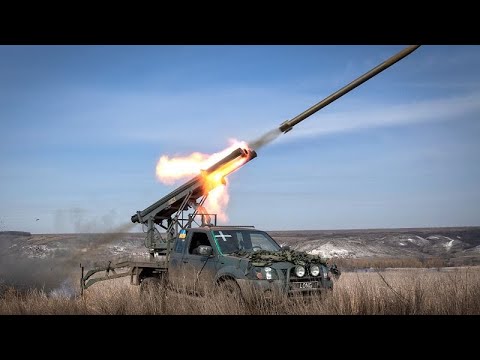
The confrontation became markedly more dangerous in February, when Pakistani attacks reached Kabul and Kandahar and Defence Minister Khawaja Asif described relations as an open war. Subsequent exchanges, including Afghan drone attacks and further Pakistani airstrikes, widened the conflict beyond isolated frontier incidents. Temporary pauses have interrupted the violence without resolving its cause. The central disagreement remains whether Kabul will dismantle the networks that Pakistan says sustain attacks on its territory.
Those networks cannot be understood by treating every group called Taliban as one organisation. The Afghan Taliban govern Afghanistan. Tehrik-e-Taliban Pakistan, usually known as the TTP, is a separate movement fighting the Pakistani state. Its relationship with Afghanistan’s rulers rests on ideological affinities, personal connections and cooperation during earlier wars. Pakistan’s demand is therefore politically more difficult than a request to arrest an unrelated criminal organisation. It asks Kabul to act against militants linked to parts of its own movement’s history.
For Pakistan, this represents the failure of a long-standing strategic assumption. Its support for the Afghan Taliban was expected to produce a friendly government and greater influence in Kabul. Instead, the Taliban’s return to power in 2021 was followed by a resurgence of the TTP. Past sponsorship has not delivered dependable control. An Afghan movement that benefited from Pakistani sanctuary now governs a country whose sovereignty it invokes against Pakistani pressure.
Military superiority gives Islamabad considerable destructive power, but no automatic route to a political settlement. Pakistan possesses a modern combat air fleet and substantially larger conventional forces. The Taliban have no comparable fighter capability. That disparity makes bases, equipment and fixed infrastructure vulnerable to attack. It says much less about whether scattered militant networks can be dismantled, whether local commanders will obey an agreement or whether cross-border violence will resume after aircraft return to base.
A campaign intended to weaken the Taliban could also strengthen their political position in particular circumstances. Foreign attacks allow the leadership to present resistance as a defence of Afghanistan, an argument that can reach beyond committed supporters. Civilian casualties may deepen hostility towards Pakistan and make concessions harder to justify internally. This is a strategic risk, not evidence that every Afghan supports the Taliban or that the movement benefits from every escalation.
Kabul nevertheless has vulnerabilities. Unrest in Badakhshan and Herat during 2026 has exposed friction between central authority, local communities and armed opponents. Disputes over mining revenues and the treatment of local leaders show how economic grievances can become security problems. Yet these episodes have remained localised. Armed opposition groups have not demonstrated the capacity for a sustained nationwide challenge, while Islamic State Khorasan remains a threat without becoming a credible replacement government.
The distinction matters when assessing predictions of collapse. A government’s inability to protect its airspace does not establish that it is losing control of its administration or armed forces. A more persuasive warning would be a combination of sustained territorial losses, major defections, disruption of revenue collection and a breakdown in command. Those are the developments that would turn military pressure into an existential crisis. Individual strikes and unverified claims of enemy losses cannot substitute for that assessment.
Pakistan faces constraints of its own. On 11 October, the federal authorities imposed emergency rule in Khyber Pakhtunkhwa and suspended the provincial government led by Imran Khan’s party, citing worsening militancy. The party rejected that justification and described the move as political. Detentions followed. Whatever the competing explanations, the episode demonstrates that insecurity along the Afghan frontier is entangled with a bitter domestic contest over authority. Air operations across the border cannot resolve that contest or replace effective policing and administration at home.
Economic pressure carries similarly uncertain returns. Border restrictions disrupt commercial activity, while the forced return of large numbers of Afghans places additional demands on communities already struggling to provide work and basic services. Such measures can increase the costs of confrontation for Kabul. They can also damage the livelihoods and local cooperation on which durable border security depends. Pressure on a population and pressure on the decisions of its rulers are not interchangeable.
The most plausible route out of repeated escalation remains a security arrangement that both sides can test in practice. That would require specific commitments on militant activity, a functioning channel for investigating incidents and a way to distinguish an unauthorised attack from a deliberate breach by the other government. Earlier mediation by Qatar, Türkiye and Saudi Arabia shows that diplomatic channels exist. Their value will depend on whether they can produce enforceable steps rather than another short pause.
A settlement would still leave difficult questions about the TTP, Afghan sovereignty and the disputed frontier. Nor would diplomatic engagement excuse the Taliban’s restrictions on women and girls or its repression of dissent. Security negotiations address an immediate danger; they do not confer approval on the government involved. Keeping those questions distinct is necessary if civilian protection is to remain an objective rather than a bargaining instrument.
Pakistan’s war has revealed the limits of its former influence in Kabul. It has also exposed the Taliban’s inability to shield Afghanistan from a stronger neighbour. Neither finding establishes that the movement is about to lose power. For now, the more defensible assessment is that both governments possess ways to hurt the other and lack a reliable means of securing the concessions they want. The danger is an enduring conflict in which political control survives while civilian security steadily deteriorates.