GSK
0.0100

The first thing Mexico noticed was not the announcement, but the smoke. Within hours, major roads were choked by improvised barricades; vehicles burned where they stood; shops and depots were torched to force shutters down; travellers were stranded; families turned back mid-journey. In several states, classrooms emptied and businesses fell silent. The death of Nemesio Rubén Oseguera Cervantes — “El Mencho” — has not brought the catharsis that authorities once promised would follow the removal of a cartel chief. It has done what Mexico’s most violent criminal organisations have learnt to do with brutal efficiency: turn a single operational blow into a national stress test.
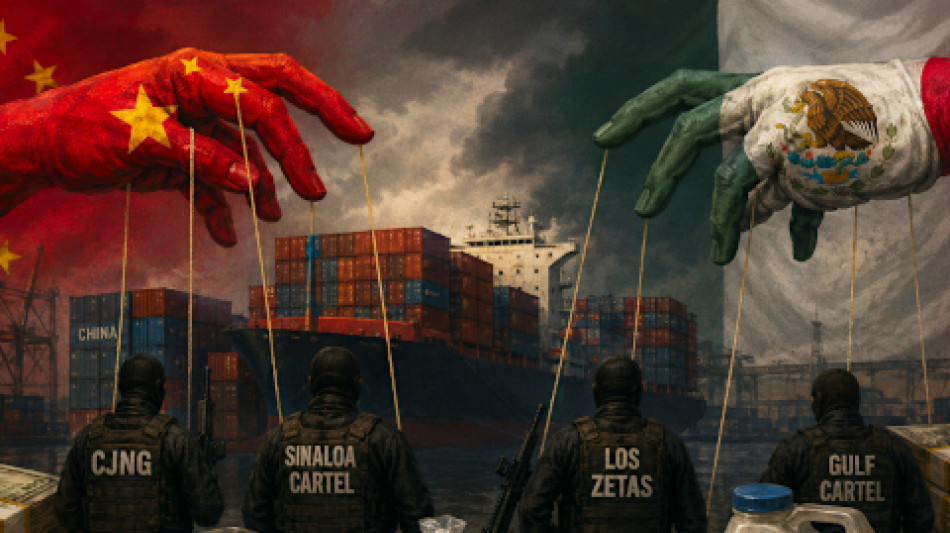
El Mencho, long regarded as the leader and symbolic centre of the Cártel de Jalisco Nueva Generación (CJNG), was mortally wounded during a military operation aimed at capturing him in Jalisco. Officials say he died shortly afterwards, as security forces attempted to move him to Mexico City. The reaction was immediate, coordinated, and deliberately theatrical: a wave of roadblocks and arson attacks that spread far beyond CJNG’s home ground, showing the cartel’s reach not by a map in a briefing room, but by paralysis on the asphalt.
The message in the flames
CJNG has, for years, relied on a tactic that is as simple as it is effective: seize vehicles, set them ablaze, and use the fire to close the country. These “narcoblockades” are not mere disorder. They are a form of coercion designed to make normal life hostage to a cartel’s fortunes.
The logic is political, not merely criminal. When highways are blocked, supply chains stall. When airports jitter, tourism bleeds. When schools close, fear becomes personal. A cartel’s grievance — an arrest, a raid, an incursion — is translated into public pressure on governors, mayors, and federal leaders. The state may win a gunfight; the cartel tries to win the narrative of who can make daily life impossible.
That is why El Mencho’s removal is such an inflection point. CJNG’s retaliation is not only revenge; it is insurance. It is the cartel’s attempt to raise the cost of “decapitation” so high that future operations are politically harder to sustain.
A victory that can destabilise
From a law-enforcement perspective, the elimination of a cartel leader is always a headline victory. El Mencho was among the most wanted fugitives on the continent for years, and CJNG has been accused by governments of trafficking synthetic drugs — including fentanyl — as well as running extortion, weapons flows, and other illicit markets.
Yet Mexico’s experience over two decades suggests that removing a leader can be a destabiliser rather than a solution. The problem is not that “kingpins” do not matter; it is that cartels are not conventional hierarchies. Many have evolved into adaptive networks — part command structure, part franchise system, part local protection racket — and their cohesion depends as much on money and fear as on charisma.
When a central figure disappears, three forces often collide at once:
- Internal succession pressure: lieutenants compete, alliances shift, and a cartel’s internal discipline can fracture.
- External opportunism: rivals test borders, local groups defect, and “independent” cells rush to fill any vacuum.
- State escalation: authorities, sensing weakness, surge forces — which can trigger further cartel violence to prove resilience.
CJNG’s rapid nationwide response is itself evidence of a network that still functions. But it also raises the core question that now haunts Mexico’s security planners: if CJNG can coordinate this level of disruption without El Mencho directing it, then what, precisely, has been removed?
CJNG was never only Jalisco
CJNG’s rise reshaped Mexico’s criminal geography. Unlike older cartels that were built around a single corridor or a small number of plazas, CJNG expanded through a blend of aggression and pragmatism: absorbing splinter groups, forging local arrangements, and projecting force where negotiations failed.
Its footprint matters because fragmentation rarely stays local. If CJNG’s structure begins to splinter, the violence may spread in unpredictable patterns — not only in traditional trafficking areas, but in places where the cartel’s income comes from extortion, cargo theft, fuel theft, migrant smuggling, and control of local markets. In those settings, the “business model” is territorial intimidation. A succession fight there is not an internecine argument; it is a competition to decide who has the right to tax, threaten, and punish communities.
What Mexico has witnessed in the days since El Mencho’s death is the cartel demonstrating national reach. What Mexico fears for the months ahead is the cartel losing cohesion in ways that make violence more chaotic and less controllable — because it is driven by smaller groups with less to lose and fewer restraints.
- The succession problem: unity, fractures, and the myth of the single heir
- The question “Who replaces him?” is compelling — and often misleading.
Modern cartels rarely hand leadership to a single successor in a clean transfer. They evolve through bargaining among powerful regional operators, financial managers, and armed chiefs. In some cases, a cartel stabilises under a new central figure; in others, it becomes a patchwork of competing factions that still use the cartel brand but no longer obey a unified chain of command.
CJNG’s immediate ability to mobilise suggests there are still functioning command-and-control mechanisms. But the longer-term outcome will depend on whether key commanders accept a shared order — and whether that order can hold under pressure from rivals and the state.
Two risks stand out:
Franchise violence: local cells compete over “tax” revenue and territory, leading to violence that looks less like cartel warfare and more like predation by armed gangs. Symbolic escalation: factions prove legitimacy by performing brutality — spectacular attacks, intimidation of officials, and public disruption — because fear becomes the currency of leadership. If this sounds abstract, it is because Mexico has lived it before. “Decapitation” can degrade an organisation’s ability to plan and negotiate. It can also multiply the number of armed actors on the street.
A new era of “cartel terrorism” policy
The geopolitical context is different now than it was during earlier cycles of kingpin takedowns. In the United States, CJNG has been treated increasingly through the lens of national security, not only criminal justice. Washington has expanded the use of terrorism-related designations and sanctions against international cartels and their facilitators, bringing tools that go beyond narcotics enforcement. That shift changes incentives on both sides of the border.
For Mexico’s government, cooperation can bring intelligence, technology, and pressure relief. It can also sharpen sovereignty anxieties and domestic politics, especially when foreign officials frame cartel violence as a threat that justifies more assertive action.
For CJNG and other cartels, terrorist designations raise the legal and financial risks of doing business — not only for traffickers, but for facilitators, money launderers, and front companies. The policy aim is to widen the net: make it harder to convert criminal profit into legitimate wealth, and riskier for anyone to help.
But that same shift may also harden cartel violence in the short term. When an organisation believes it is being targeted for “total elimination”, it may act like an actor with little left to bargain. In that environment, retaliation is not simply spite; it is deterrence.
The “iron river” and the cartel’s firepower problem
The violence that followed El Mencho’s death has revived another uncomfortable reality: Mexico’s cartels are armed at a level that ordinary policing cannot match. Mexican officials have repeatedly argued that a significant share of the weapons used by cartels originate outside Mexico, trafficked across the border through a steady, illicit flow.
The debate is not merely about blame; it is about capability. A state can dismantle leadership repeatedly, but if armed groups can replenish weapons and recruits at speed, the cycle continues. The immediate aftermath of El Mencho’s killing — attacks on security forces, rapid mobilisation across multiple states — underscores how deeply militarised organised crime has become.
The human cost: ordinary life as collateral
The rhetoric surrounding cartel leaders often turns them into characters — villains in a national drama. The reality is less cinematic and more grinding. When CJNG blocks highways, it is commuters and truck drivers who are trapped first. When arson attacks spread, it is shop workers and families who lose income. When violence spikes, it is hospitals that strain, local journalists that fall silent, and parents who calculate daily routes as if planning a border crossing.
In the immediate aftermath of El Mencho’s death, the government moved to clear roadblocks and restore basic mobility. But clearing barricades is not the same as restoring confidence. Mexico’s central challenge is not whether it can win a raid. It is whether it can prevent the next wave of coercion — and protect communities from being used as leverage.
World Cup pressure: the global spotlight arrives early
The timing could hardly be more politically charged. Mexico is preparing to host part of the 2026 FIFA World Cup, with international attention fixed on security and stability. The violence triggered by El Mencho’s death has brought that scrutiny forward.
Tourism hubs and major transport routes are not only economic engines; they are reputational terrain. When images of blocked roads and burning vehicles circulate internationally, the damage is measured in cancelled trips, nervous airlines, and raised insurance costs — even after calm returns. For CJNG, disruption in such places is strategically valuable: it translates cartel conflict into diplomatic and commercial pressure on the Mexican state.
The government now faces a dilemma: intensify operations to show strength, or calibrate to avoid provoking further nationwide reprisals — a calculation that cartels have exploited for years.
- What “turning everything upside down” really means
- El Mencho’s death is not the end of CJNG; it is a pivot point in Mexico’s security landscape. The upheaval comes from three overlapping realities.
- First, CJNG has already demonstrated that it can punish the state quickly and visibly. That capability does not vanish with one man.
- Second, succession is rarely orderly. Even if CJNG remains unified at the top, local dynamics may become more volatile as commanders reposition.
Third, the policy environment is hardening. Terrorism designations, expanded sanctions, and deeper cross-border coordination may increase the pressure on cartel finances — but also increase the cartel’s incentive to escalate intimidation to deter further strikes. Mexico’s “burning” is therefore not only literal. It is institutional: a confrontation between a state trying to assert monopoly over force, and criminal organisations that have learnt to turn governance gaps into revenue.
El Mencho is gone. The question now is whether the state can use this moment to weaken CJNG’s structure — its finances, protection networks, recruitment pipeline, and local coercion — or whether the country will enter another chapter in which decapitation produces not peace, but a more fragmented and unpredictable violence.