RYCEF
0.1000

On Europe’s exposed north‑eastern flank, Poland is recasting its security doctrine around a stark premise: deterrence rests on hard power that is visible, ready and overwhelmingly national. Alliances still matter in Warsaw, but the country’s leaders are behaving as if, in the final analysis, neither Brussels nor Washington can be relied upon to act as swiftly—or as single‑mindedly—as Polish interests might require.
At the heart of this shift is an unprecedented build‑up of fixed and mobile defences on the frontier with Belarus and Russia’s Kaliningrad exclave. The multi‑year East Shield programme, announced in 2024 and now well under way, blends traditional fortifications and obstacles with modern surveillance, electronic warfare and rapid‑reaction infrastructure along the entire eastern border. In mid‑2025, authorities confirmed the addition of minefields to parts of the project, underscoring a move from symbolic fencing towards denial‑by‑engineering designed to slow and channel any hostile incursion long enough for Polish artillery, air defence and ground forces to engage.
This is not theory. Over the past 18 months, Polish airspace has been violated by Russian missiles and, most recently, waves of drones transiting from Belarus. In September 2025, Polish and allied aircraft shot down intruding drones—widely noted as the first kinetic engagement inside NATO territory linked to the war on Ukraine. Warsaw temporarily closed crossings with Belarus during Russia‑led military exercises and then reopened them once the drills ended, a sign of a government calibrating economic realities against a more volatile air‑and‑border threat picture. The message, repeated in official statements, is that incursions will be met with force when they are “clear‑cut” violations.
The second pillar of Poland’s doctrine is money—lots of it. Poland now spends the highest share of GDP on defence in the Alliance, around the mid‑4% range in 2025, with plans signalled to push towards the high‑4s in 2026. That places Warsaw well beyond NATO’s post‑Hague summit ambition of substantially increasing “core defence” outlays across the Alliance in the coming decade. Crucially, a larger slice of Poland’s budget goes to kit rather than salaries: air‑and‑missile defences, long‑range fires, armour, and the infrastructure to sustain them.
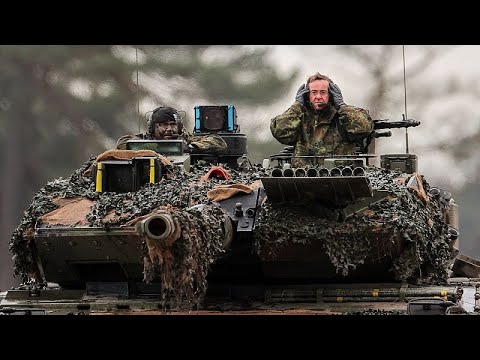
Procurement lists read like an order‑of‑battle overhaul. Deliveries of Abrams tanks from the United States are ongoing, alongside large tranches of K2 tanks and K9 self‑propelled howitzers from South Korea, with a follow‑on K2 order establishing long‑term assembly and manufacturing in Poland. The first Polish F‑35s are in training pipelines with in‑country deliveries scheduled to begin next year, while the Aegis Ashore ballistic‑missile defence site at Redzikowo has been declared operational and integrated into NATO’s shield. The permanent U.S. V Corps (Forward) headquarters in Poznań and a standing U.S. Army garrison in Poland anchor allied command‑and‑control on the Vistula. Yet, strikingly, Warsaw is not content to import its way to security; it is racing to on‑shore the industrial sinews of war, pouring billions of złoty into domestic production of 155 mm artillery shells and selecting foreign partners to build new ammunition plants that can feed both Polish units and European supply lines.
Manpower policy is being re‑engineered with equal ambition. The government has set out plans to make large‑scale, publicly accessible military training available—ultimately to every adult male—while expanding volunteer pathways and aiming to train 100,000 people annually by 2027. This push complements growth targets for the active force and reserves, all intended to ensure that Poland can surge trained personnel quickly if the strategic weather turns.
Where does Brussels fit into this? Relations have thawed on rule‑of‑law disputes, unlocking access to long‑delayed EU funds. But Warsaw has made plain it will not implement elements of the EU’s new migration pact that would compel acceptance of relocated migrants; it has also reintroduced temporary border checks with Germany and Lithuania, citing organised crime and irregular migration. On the security side, Poland is an enthusiastic driver of the emerging “drone wall” concept along the EU’s eastern frontier. Taken together, these choices sketch a posture of selective integration: take European money when it aligns with national priorities, but reserve sovereign latitude on borders and internal security.
Nor is the reliance on force simply a European story. Across the Atlantic, U.S. signals have been mixed in recent years—from remarks that appeared to cast doubt on automatic protection for “delinquent” NATO members, to renewed assurances in 2025 that American troops will remain in Poland and might even increase. Polish officials welcome tangible U.S. deployments and capabilities, but they are plainly hedging against political oscillation in Washington by accelerating self‑reliance in their defence industry, stockpiles and training base. The governing logic is straightforward: alliances deter best when the ally in harm’s way can fight immediately and hold ground.
Domestic politics amplify this course. The election of Karol Nawrocki as president in August 2025 has added a sovereigntist accent to Warsaw’s foreign‑policy soundtrack. In his inaugural framing, Poland is “in the EU” but will not be “of” the EU in any way that dilutes competences crucial to national security and identity. That stance intersects with hard security in one especially consequential area: mines. Alongside the Baltic states, Poland announced its intention in 2025 to withdraw from the Ottawa (anti‑personnel mine) treaty, arguing that Russia’s conduct and the geography of the Suwałki corridor demand maximum defensive optionality. Humanitarian advocates warn of the risks; the government replies that modern doctrine, marking and command arrangements can mitigate them.
All of this costs money—and fiscal stress is visible. Ratings agencies have flagged high deficits and debt dynamics, shaped in part by defence outlays. Warsaw recently chose to trim the loan component of its EU recovery‑fund package, prioritising grants as deadlines loom. The balancing act is delicate: sustain deterrence at scale while keeping public finances credible and an economy already carrying the weight of war‑time disruptions competitive.
Yet step back from the line items, and a coherent doctrine comes into view. Poland is not repudiating its alliances; it is re‑weighting the bargain. The country is building a fortified frontier and a war‑capable society on the assumption that credible force—owned, stationed and manufactured at home—will decide what happens in the first hours and days of any crisis. If Brussels and Washington arrive with reinforcements, all the better. But the governing bet in Warsaw is brutally simple: only hard power keeps the peace on the Bug and the Vistula.