The Japan Times - Nobel physics winner's pride at pioneering AI role

EUR -
AED 4.114368
AFN 72.810821
ALL 91.573476
AMD 405.855626
ANG 2.005494
AOA 1027.186117
ARS 1699.886049
AUD 1.607708
AWG 2.016286
AZN 1.912001
BAM 1.957826
BBD 2.256204
BDT 137.982755
BGN 1.885721
BHD 0.422356
BIF 3360.476698
BMD 1.120159
BND 1.434084
BOB 13.44211
BRL 5.599125
BSD 1.120144
BTN 108.335632
BWP 15.486022
BYN 3.435454
BYR 21955.114424
BZD 2.252931
CAD 1.596798
CDF 2595.967996
CHF 0.932846
CLF 0.02771
CLP 1094.176401
CNY 7.510214
CNH 7.506835
COP 3631.084684
CRC 511.422261
CUC 1.120159
CUP 26.884815
CVE 109.831391
CZK 24.407479
DJF 199.074426
DKK 7.474535
DOP 67.601838
DZD 150.721676
EGP 58.666755
ERN 16.802383
ETB 180.345957
FJD 2.520693
FKP 0.843691
GBP 0.847406
GEL 2.884411
GGP 0.843691
GHS 13.195811
GIP 0.843691
GMD 82.891463
GNF 9801.390218
GTQ 8.555737
GYD 234.287161
HKD 8.791293
HNL 30.071111
HRK 7.533629
HTG 146.691765
HUF 365.501693
IDR 20063.166043
ILS 3.44135
IMP 0.843691
INR 108.372629
IQD 1467.408158
IRR 1940283.237615
ISK 137.006299
JEP 0.843691
JMD 177.954109
JOD 0.794198
JPY 176.896658
KES 145.766257
KGS 97.956215
KHR 4550.649139
KMF 490.629059
KPW 1008.143365
KRW 1498.425468
KWD 0.347642
KYD 0.933566
KZT 500.731344
LAK 25181.172044
LBP 100366.236878
LKR 370.613431
LRD 191.547389
LSL 18.516182
LTL 3.307538
LVL 0.677573
LYD 7.202881
MAD 11.165184
MDL 19.950641
MGA 5040.714903
MKD 61.633765
MMK 2351.990521
MNT 4029.201044
MOP 9.055369
MRU 44.985129
MUR 53.100584
MVR 17.261773
MWK 1950.19664
MXN 20.109103
MYR 4.577976
MZN 71.581461
NAD 18.560506
NGN 1485.846574
NIO 41.076394
NOK 10.725197
NPR 173.341658
NZD 1.998554
OMR 0.430721
PAB 1.120159
PEN 3.860348
PGK 4.984627
PHP 70.235095
PKR 310.283863
PLN 4.37669
PYG 6535.791002
QAR 4.081186
RON 5.354246
RSD 117.501251
RUB 95.776121
RWF 1652.234376
SAR 4.201497
SBD 9.034127
SCR 15.629217
SDG 673.771828
SEK 11.196128
SGD 1.432896
SHP 0.845116
SLE 27.645573
SLL 23489.162941
SOS 640.173242
SRD 42.4215
STD 23185.027621
STN 24.81152
SVC 9.802054
SYP 14564.306292
SZL 18.560996
THB 37.679967
TJS 10.339397
TMT 3.920556
TND 3.357172
TOP 2.697074
TRY 55.106555
TTD 7.59876
TWD 35.66743
TZS 2951.618593
UAH 50.263602
UGX 4564.661403
USD 1.120159
UYU 44.926079
UZS 13212.274364
VES 977.646291
VND 29102.28828
VUV 134.623399
WST 3.11932
XAF 655.957
XAG 0.018692
XAU 0.000272140176
XCD 3.027285
XCG 2.018862
XDR 0.79201
XOF 655.957
XPF 119.331742
YER 264.609504
ZAR 18.596173
ZMK 10082.775193
ZMW 22.281052
ZWL 360.690709
SSP 6438.382624
MXV 2.272818
  • RYCEF

    0.1000

    19.81

    +0.5%

  • VOD

    -0.2500

    16.33

    -1.53%

  • CMSC

    -0.2800

    20.12

    -1.39%

  • RBGPF

    -2.0000

    65

    -3.08%

  • RIO

    -0.2500

    94.16

    -0.27%

  • BTI

    -1.2000

    54.85

    -2.19%

  • NGG

    -0.3000

    74.94

    -0.4%

  • GSK

    -0.3500

    49.35

    -0.71%

  • BCE

    -0.4200

    20.14

    -2.09%

  • CMSD

    -0.3400

    19.93

    -1.71%

  • BP

    -0.9100

    43.52

    -2.09%

  • RELX

    0.1700

    33.24

    +0.51%

  • BCC

    -0.6200

    75.97

    -0.82%

  • AZN

    -1.9400

    164.21

    -1.18%

  • JRI

    0.0000

    10.77

    0%

Nobel physics winner's pride at pioneering AI role
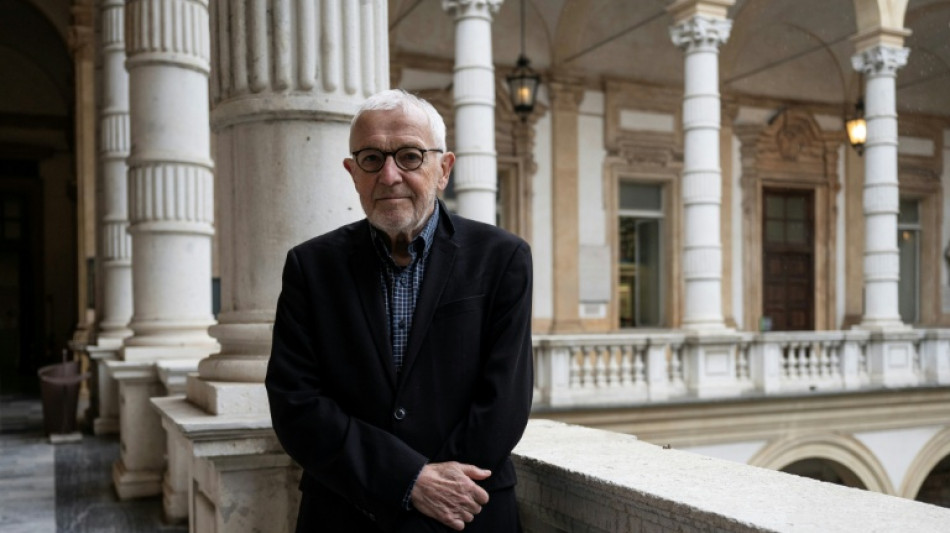
Nobel physics winner's pride at pioneering AI role / Photo: Marco Bertorello - AFP

Nobel physics winner's pride at pioneering AI role

Nobel Prize for physics winner Francis Halzen spoke with pride on Wednesday about his early promotion of artificial intelligence in his research on neutrinos.

Text size:

Halzen, 82, a professor at the University of Wisconsin-Madison, was visiting the city of Turin in northern Italy and spoke to reporters there a day after the Nobel announcement.

The US-Belgian physicist is the mind behind the IceCube neutrino observatory, made up of 5,484 optical modules used as sensors deep in the Antarctic ice.

"In fact, the first neural nets appeared in the late 1980s, and I am very proud that I wrote a paper in 1991 proposing to use AI to analyse the data of part of the classical physics experiment," Halzen said.

"We kind of used neural nets occasionally. And that changed a few years ago, when these very powerful neural nets came along."

Neural networks are computer programs that try to mimic the way the human brain recognises patterns in data.

Halzen's research on neutrinos -- rare subatomic particles originating in the distant cosmos -- has provided insight into the far reaches of space.

- 'Tour de France' dream -

He said the IceCube observatory had "solved a very interesting problem for the AI".

"When you look at the sky normally, you see the Milky Way. But when you look at the sky of neutrinos, you see other galaxies, you don't see the Milky Way," he said.

"It was only after we used neural nets and machine learning techniques that we finally began to see the Milky Way in our data, which we now have extracted convincingly," he said.

At a time when applied technologies dominate research, the Nobel announcement is "clear recognition of the importance of fundamental research" for "understanding our nature and our origins", said Antonio Zoccoli, president of Italy's National Institute for Nuclear Physics, with which Halzen collaborates.

Halzen said that "doing science is more difficult" now because of funding issues, although "universities are surviving".

But he said he was the "wrong person" to talk about funding cuts since his observatory had been spared.

Halzen's project has received some $250 million (224 million euros) from the US National Science Foundation.

He joked that he has been writing a proposal and hoped the Nobel announcement would help to get it funded.

Asked if he had always dreamt about winning the Nobel prize for physics, he said he preferred cycling as a child.

"I'm from Belgium, I wanted to win the Tour de France," he joked.

K.Hashimoto--JT