The Japan Times - North America 'heat dome' left winners and losers: study

EUR -
AED 4.260595
AFN 74.248426
ALL 94.805306
AMD 427.068748
ANG 2.077106
AOA 1059.336376
ARS 1658.112806
AUD 1.639405
AWG 2.090009
AZN 1.997737
BAM 1.954433
BBD 2.336865
BDT 142.422199
BGN 1.961647
BHD 0.4376
BIF 3468.633057
BMD 1.160133
BND 1.487585
BOB 8.017494
BRL 5.892665
BSD 1.160288
BTN 109.833052
BWP 15.567377
BYN 3.212208
BYR 22738.613511
BZD 2.333508
CAD 1.622191
CDF 2662.50625
CHF 0.92068
CLF 0.026314
CLP 1035.639582
CNY 7.855845
CNH 7.841904
COP 4051.7773
CRC 527.83981
CUC 1.160133
CUP 30.743534
CVE 110.187435
CZK 24.154223
DJF 206.179351
DKK 7.474681
DOP 68.193466
DZD 154.373163
EGP 58.414342
ERN 17.402
ETB 187.057149
FJD 2.595448
FKP 0.865632
GBP 0.863911
GEL 3.080173
GGP 0.865632
GHS 12.879156
GIP 0.865632
GMD 84.689611
GNF 10164.020419
GTQ 8.844926
GYD 242.742264
HKD 9.089407
HNL 31.026694
HRK 7.534485
HTG 151.646519
HUF 350.141021
IDR 20540.160827
ILS 3.367397
IMP 0.865632
INR 109.717696
IQD 1519.956254
IRR 1596201.363311
ISK 144.390229
JEP 0.865632
JMD 183.911331
JOD 0.822544
JPY 185.933423
KES 150.122479
KGS 101.453824
KHR 4662.818163
KMF 494.216561
KPW 1044.120414
KRW 1756.824732
KWD 0.357495
KYD 0.96694
KZT 567.949992
LAK 25548.456006
LBP 103904.849072
LKR 385.786745
LRD 211.165904
LSL 18.767493
LTL 3.425572
LVL 0.701753
LYD 7.377965
MAD 10.726303
MDL 20.182228
MGA 4820.710419
MKD 61.648728
MMK 2435.224478
MNT 4149.436187
MOP 9.362811
MRU 46.318393
MUR 54.665199
MVR 17.935794
MWK 2011.927091
MXN 19.962472
MYR 4.698893
MZN 74.135817
NAD 18.767413
NGN 1575.76234
NIO 42.700678
NOK 11.061262
NPR 175.733082
NZD 1.990464
OMR 0.446073
PAB 1.160203
PEN 3.94589
PGK 5.081401
PHP 69.949661
PKR 322.804476
PLN 4.250786
PYG 7103.968656
QAR 4.229914
RON 5.235213
RSD 117.350945
RUB 84.05819
RWF 1704.436918
SAR 4.35293
SBD 9.333938
SCR 15.890144
SDG 696.589428
SEK 10.882758
SGD 1.487952
SHP 0.866157
SLE 28.596858
SLL 24327.420374
SOS 663.047546
SRD 43.525852
STD 24012.417887
STN 24.482871
SVC 10.152029
SYP 128.231972
SZL 18.764196
THB 37.768125
TJS 10.755514
TMT 4.072068
TND 3.395595
TOP 2.793323
TRY 53.693061
TTD 7.875626
TWD 36.574946
TZS 3051.148371
UAH 52.017304
UGX 4310.05888
USD 1.160133
UYU 47.057888
UZS 13899.215866
VES 675.148694
VND 30499.905571
VUV 138.637141
WST 3.182818
XAF 655.50969
XAG 0.016565
XAU 0.000268
XCD 3.135318
XCG 2.091064
XDR 0.81601
XOF 655.50969
XPF 119.331742
YER 276.768569
ZAR 18.796364
ZMK 10442.584941
ZMW 20.395994
ZWL 373.562463
  • CMSC

    0.0100

    22.34

    +0.04%

  • RBGPF

    0.0000

    60.72

    0%

  • RIO

    0.5400

    105.89

    +0.51%

  • RELX

    -0.9000

    32.84

    -2.74%

  • RYCEF

    0.4600

    17.5

    +2.63%

  • GSK

    -0.8100

    52.23

    -1.55%

  • CMSD

    0.0600

    22.32

    +0.27%

  • BCE

    -0.2369

    24.04

    -0.99%

  • JRI

    0.1135

    12.78

    +0.89%

  • NGG

    -0.2700

    81.57

    -0.33%

  • VOD

    -0.5300

    15

    -3.53%

  • BCC

    0.4500

    71.59

    +0.63%

  • AZN

    -1.4800

    177.27

    -0.83%

  • BP

    -1.1900

    41.59

    -2.86%

  • BTI

    -1.2600

    61.06

    -2.06%

North America 'heat dome' left winners and losers: study
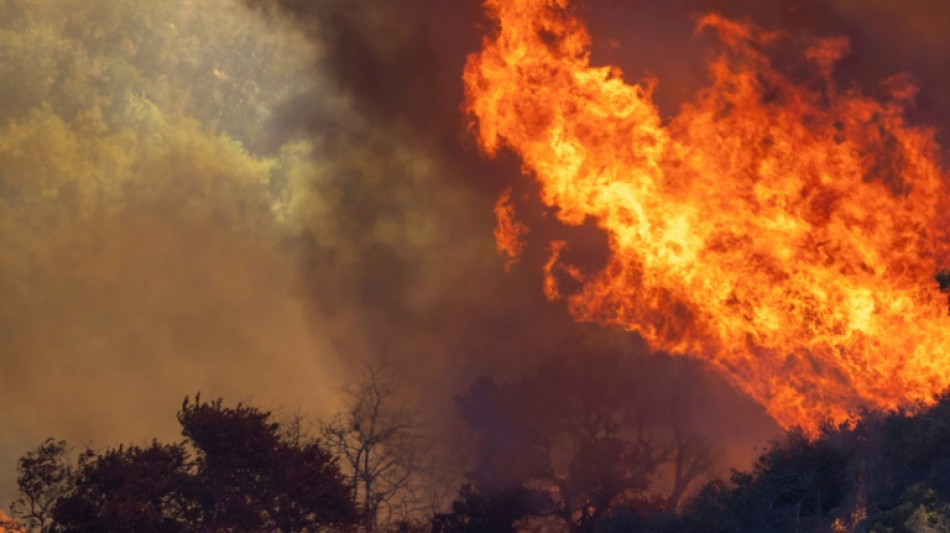
North America 'heat dome' left winners and losers: study / Photo: DAVID MCNEW - GETTY IMAGES NORTH AMERICA/AFP

North America 'heat dome' left winners and losers: study

Billions of mussels scorched and baby birds dropping from sweltering nests: North America's 2021 heatwave caused a cascade of ecological damage, some of it catastrophic, some unexpected, a new study showed Wednesday.

Text size:

The "heat dome" that hit the western United States and Canada, fuelled by human-induced climate change, was among the most extreme ever recorded globally, with temperatures sometimes exceeding 50C.

"The heatwave had widespread ecological effects, including an almost 400-percent increase in wildfire activity and negatively affecting more than three-quarters of the species studied," said study co-author Diane Srivastava, professor at the University of British Columbia.

To assess the heatwave's impact, researchers combined weather, ecological and hydrological data with information on wildfires and scientific models.

Of the 49 terrestrial and marine species studied, over 75 percent were negatively affected, according to the study published in the journal Nature Ecology and Evolution.

But the effects were highly variable: some populations fell by nearly 99 percent, while others increased by up to 89 percent.

The variability depends on factors such as vegetation cover, a species' intrinsic heat tolerance and behaviour -- especially the ability to seek shade.

More than half the thatched barnacle population died as well as 92 percent of Bay mussels.

The number of surf scoters, a native sea duck, dropped by 56 percent while daily camera trap detections of caribou fell by half.

"Basically, any animal that couldn't escape the heat was hard hit by it," said Julia Baum, the lead author and biology professor at the University of Victoria.

"This included mobile animals at vulnerable stages of life, such as baby birds that couldn't yet fly and were trapped in their heat-retaining nests," she said.

Some species thrived.

Sea lettuce benefited from the die-off of other algae and expanded, increasing its coverage on beaches by 65 percent after the heatwave.

Moose returned to the same level of daily camera trap sightings after the heatwave as they had before.

"We know from previous studies that moose are sensitive to high temperatures, so it's possible they were able to avoid the hottest areas by selecting cooler microclimates, such as sites with denser forest cover," said co-author Cole Burton, an associate professor at UBC.

K.Yamaguchi--JT