Fight to save last forests of the Comoros unites farmers, NGOs / Photo: MARCO LONGARI - AFP

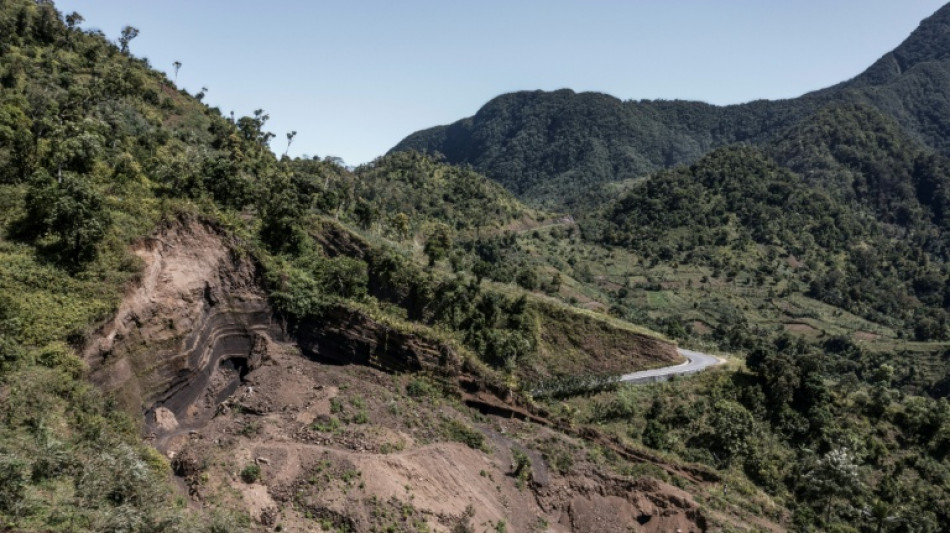
Strips of bare land scar the lush and green mountainsides towering above Mutsamudu, the capital of the Indian Ocean island of Anjouan.
On the most mountainous and densely populated island in the Comoros, only the most remote forests have escaped decades of deforestation -- ravages which several NGOs are now trying to repair.
"We lost 80 percent of our natural forests between 1995 and 2014," Abubakar Ben Mahmoud, environment minister of the country off northern Mozambique, told AFP in a recent interview.
The clearing of the forest for cultivation has compounded damage caused by the production of ylang-ylang essential oil, used in luxury perfumes, and the manufacture of traditional carved wooden doors for which the island is renowned.
With a high population density of more than 700 residents per square kilometre, "Deforestation has been intensified as farmers are looking for arable land for their activities," the minister said.
The brown and barren patches on the slopes are starkly visible from the headquarters of Dahari, a leading organisation in the fight against deforestation, based in the hills of Mutsamudu.
The NGO last year launched a reforestation programme, working hand-in-hand with local farmers who are called "water guardians".
Under a five-year conservation contract, the farmers commit to replanting their land or leaving it fallow in exchange for financial compensation, said one of the project's managers, Misbahou Mohamed.
The first phase has included 30 farmers, with compensation paid out after inspection of the plots.
- Perfume and smoke -
Another significant contributor to deforestation on Anjouan, the ylang-ylang essential oil industry, has in recent years heeded calls to limit its impact.
The Comoros is among the world's top producers of the delicate and sweet-smelling yellow flower, prized for its supposed relaxing properties and widely used in perfumes like the famous Chanel No 5.
The production of ylang-ylang, vanilla and cloves makes up a large part of the archipelago's agricultural output, which represents a third of its GDP.
The country has around 10,000 ylang-ylang producers, most based on Anjouan, according to a report commissioned by the French Development Agency for a project to support Comoran agricultural exports.
Burning wood is the cheapest source of fuel for the distillation process, the report highlighted, with 250 kilogrammes (550 pounds) needed to produce one litre of essential oil.
Some producers are trying to limit their use of wood, such as Mohamed Mahamoud, 67, who said he halved consumption by upgrading his equipment.
"I now use third-generation stainless steel alembics, with an improved oven equipped with doors and chimneys," said Mahamoud, who has grown and distilled ylang-ylang near the town of Bambao Mtsanga for nearly 45 years.
To avoid encroaching on the forest, most of his wood now comes from mango and breadfruit trees he grows himself.
- Drying rivers -
Some producers have in recent years switched to crude oil to fuel their stills.
But that costs twice as much wood, said one ylang-ylang exporter, who asked to remain anonymous.
And high electricity prices in Comoros mean that using electrical energy would cost 10 times more, "not to mention the long periods of power cuts", he said.
Part of the drive to reduce wood consumption comes from an alarming observation: not only is deforestation stripping Anjouan's mountains, it is also drying up its rivers.
Forests are essential for "the infiltration of water that feeds rivers and aquifers... like a sponge that retains water and releases it gradually", said hydroclimatologist Abdoul Oubeidillah.
"In 1925, there were 50 rivers with a strong year-round flow of water," said Bastoini Chaambani, from the environmental protection NGO Dayima. "Today, there are fewer than 10 rivers that flow continuously."
The Comoros government has meanwhile announced it also intends to take part in reforestation efforts.
"We will do everything we can to save what little forest we have left," said the environment minister.
S.Yamada--JT