Nations to review harrowing catalogue of climate impacts

Nearly 200 nations kick off a virtual UN meeting Monday to finalise what is sure to be a harrowing catalogue of climate change impacts -- past, present and future.
Species extinction, ecosystem collapse, mosquito-borne disease, deadly heat, water shortages, and reduced crop yields are already measurably worse due to global heating.
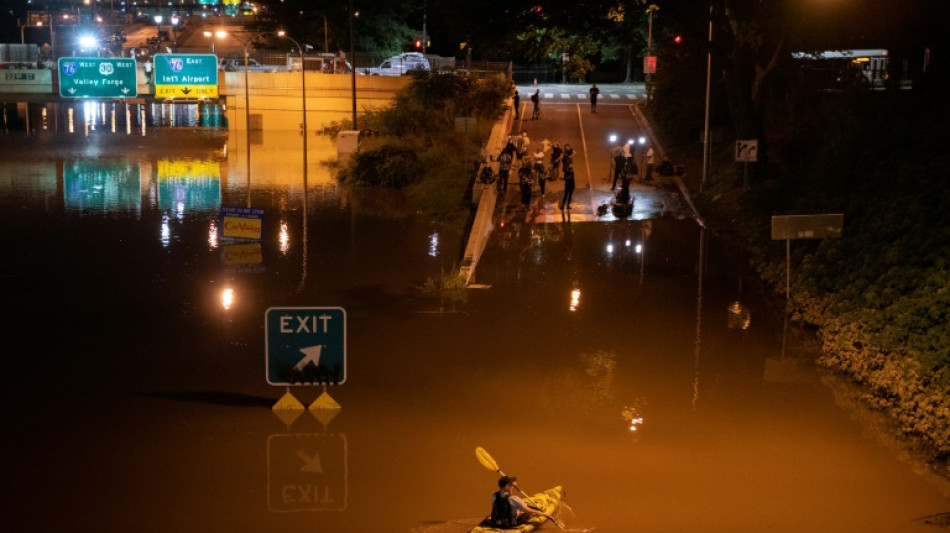
Just in the last year, the world has seen a cascade of unprecedented floods, heatwaves and wildfires across four continents.
All these impacts will accelerate in the coming decades even if the carbon pollution driving climate change is rapidly brought to heel, the Intergovernmental Panel on Climate Change (IPCC) report is likely to warn.
A crucial, 40-page Summary for Policymakers -- distilling underlying chapters totalling thousands of pages, and reviewed line-by-line -- is to be made public on February 28.
"This is a real moment of reckoning," said Rachel Cleetus, Climate and energy policy director at the Union of Concerned Scientists.
"This not just more scientific projections about the future," she told AFP. "This is about extreme events and slow-onset disasters that people are experiencing right now."
The report will also underscore the urgent need for "adaptation" -- climate-speak which means preparing for devastating consequences that can no longer be avoided, according to an early draft seen by AFP in 2021.
In some cases this means that adapting to intolerably hot days, flash flooding and storm surges has become a matter of life and death.
- Billions in damages -
"Even if we find solutions for reducing carbon emissions, we will still need solutions to help us adapt," said Alexandre Magnan, a researcher at the Institute for Sustainable Development and International Relations in Paris and a co-author of the report, without commenting on its findings.
IPCC assessments -- this will be the sixth since 1990 -- are divided into three sections, each with its own volunteer "working group" of hundreds of scientists.
In August 2021, the first instalment on physical science found that global heating is virtually certain to pass 1.5 degrees Celsius (2.7 degrees Fahrenheit), probably within a decade.
Earth's surface has warmed 1.1 degrees Celsius since the 19th century.
The 2015 Paris deal calls for capping global warming at "well below" 2C, and ideally 1.5C.
This report is sure to reinforce this more ambitious goal.
It will likewise underscore that vulnerability to extreme weather events -- even when they are made worse by global warming -- can be reduced by better planning and preparation, according to the draft seen by AFP.
This is not only true in the developing world, noted Imperial College professor Friederike Otto, pointing to massive flooding in Germany last year that killed scores and caused billions in damage.
- Finite set of choices -
"Even without global warming there would have been a huge rainfall event in a densely populated geography where the rivers flood very easily," said Otto, a pioneer in the science of quantifying the extent to which climate change makes extreme weather events more likely or intense.
The report will zero in on how climate change is widening already yawning gaps in inequality, both between regions and within nations.
The simple fact is that the people least responsible for climate change are the ones suffering the most from its impacts.
Not only is this unjust, experts and advocates say, it is a barrier to tackling the problem.
"I do not think there are pathways to sustainable development that do not substantively address equity issues," said Clark University professor Edward Carr, a lead author of one of the report's chapters.
The report is also likely to highlight dangerous "tipping points", invisible temperature trip wires in the climate system for irreversible and potentially catastrophic change.
Some of them -- such as the melting of permafrost housing twice as much carbon as in the atmosphere -- could fuel global warming all on their own.
"There is a finite set of choices we can make that would move us productively into the future," said Carr. "Every day we wait and delay, some of those choices get harder or go away."
The third and final instalment of the IPCC assessment currently unfolding, due out in early April, examines options for curbing carbon emissions and removing carbon from the atmosphere.
S.Suzuki--JT