CMSC
-0.0600

Part of a SpaceX rocket approximately the size of a bus slammed into the Moon as predicted, scientists said Wednesday, after a telescope in Chile captured evidence of a stream of debris.
The collision, which was not intentional, posed no danger to Earth, and is expected to have left a lunar crater in its wake that space agencies including NASA still hope to document.
Scientists anticipated the Falcon 9 upper stage was going to strike the lunar surface at approximately 0635 GMT on Wednesday.
And it did, the European Southern Observatory said on social media Wednesday, based on observations recorded by its Very Large Telescope.
The telescope "detected spectral lines," the observatory said, what it called "chemical fingerprints" of "sodium and lithium gas in the impact plume lasting for 5-10 minutes after impact."
"The sodium likely originated from the lunar soil, whereas the lithium could come from the rocket itself," the post continued, adding that the team would offer more details following fuller analysis.
Scientific observers had deemed the 5,400 miles per hour (8,690 kilometers per hour) crash inevitable.
"I have Sir Isaac Newton's personal assurance that it did indeed hit the moon, there's no way for it to have escaped," Jonathan McDowell, an astrophysicist and space analyst, told AFP.
NASA and its Lunar Reconnaissance Orbiter probe and South Korea's Pathfinder Lunar Orbiter were planning to take images of the site after impact, but it could take days to receive that information.
Linking to the European Southern Observatory's post, Benjamin Fernando of Los Alamos National Laboratory in New Mexico told AFP "I can confirm that the impact did occur."
Fernando was the lead author of a recent paper on the anticipated impact, which had estimated the spacecraft weighed approximately 8,800 pounds (4,000 kilograms) on impact, assuming all of its propellant was spent.
Prior to the collision NASA had emphasized "there is no danger to Earth."
"NASA scientists are planning to collect lunar data from the event and refine techniques for tracking objects in space," the US agency said.
- 'Space junk' -
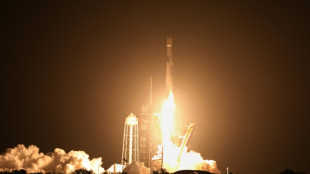
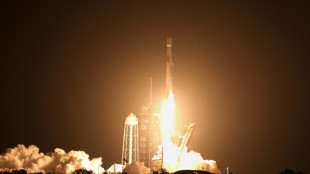
The Falcon 9 rocket from Elon Musk's SpaceX launched in January 2025 carrying two lunar landers. Its booster returned to Earth, but the upper stage stayed in space to push the landers onward.
Generally on such missions SpaceX performs a maneuver to make sure the second stage "is safe per the appropriate rules and regulations," said Julianna Scheiman, director of NASA Science and Dragon Programs at SpaceX, at a Monday news conference.
"We did that," she continued, but "what has happened is essentially a mixture of solar activity and gravity forces have put it on a path towards the Moon."
Space-trackers like Bill Gray knew it would be tough to observe evidence of the impact from Earth.
"Admittedly, about what we expected" played out in that regard, he told AFP. "But it would have been very nice to be proven wrong, and entirely possible."
NASA hopes to soon establish a sustained human presence on the Moon, making it critical to better understand space debris in lunar orbit.
The rocket stage had been just one of tens of thousands of pieces of "space junk" orbiting Earth.
The Moon routinely weathers impact from space debris including meteoroids. Artificial collisions are less common.
In the 1970s, the US space agency carried out deliberate crashes during its Apollo program to collect seismic data.
Some experts have warned that amassing too much space junk around Earth could lead to a dangerous chain reaction of collisions known as the "Kessler syndrome."
S.Yamada--JT