The Japan Times - Seaweed and 3D printers: Chile's innovative approach to feeding kids

EUR -
AED 4.229626
AFN 72.557604
ALL 96.200283
AMD 434.304194
ANG 2.061644
AOA 1056.111273
ARS 1608.366971
AUD 1.624462
AWG 2.075944
AZN 1.961012
BAM 1.959872
BBD 2.316914
BDT 141.153259
BGN 1.968616
BHD 0.434975
BIF 3415.570318
BMD 1.151703
BND 1.471489
BOB 7.977574
BRL 6.023521
BSD 1.150395
BTN 106.10737
BWP 15.685657
BYN 3.42682
BYR 22573.37436
BZD 2.313607
CAD 1.577706
CDF 2608.606438
CHF 0.906401
CLF 0.026516
CLP 1047.036065
CNY 8.011532
CNH 7.927786
COP 4266.390788
CRC 540.339027
CUC 1.151703
CUP 30.520123
CVE 110.495044
CZK 24.447537
DJF 204.846478
DKK 7.472351
DOP 70.218019
DZD 152.293142
EGP 60.314344
ERN 17.275542
ETB 181.205966
FJD 2.548085
FKP 0.865883
GBP 0.864249
GEL 3.132339
GGP 0.865883
GHS 12.521068
GIP 0.865883
GMD 84.64982
GNF 10085.259587
GTQ 8.817357
GYD 240.800286
HKD 9.024915
HNL 30.45433
HRK 7.536975
HTG 150.776526
HUF 390.904627
IDR 19546.066035
ILS 3.578709
IMP 0.865883
INR 106.404091
IQD 1506.930794
IRR 1521456.949262
ISK 143.444364
JEP 0.865883
JMD 180.956741
JOD 0.816554
JPY 183.182895
KES 149.25565
KGS 100.716474
KHR 4612.683422
KMF 494.080561
KPW 1036.583062
KRW 1717.137006
KWD 0.353285
KYD 0.958592
KZT 555.504113
LAK 24686.288142
LBP 103012.919266
LKR 358.214225
LRD 210.506434
LSL 19.352807
LTL 3.400679
LVL 0.696653
LYD 7.373351
MAD 10.807353
MDL 20.015584
MGA 4788.970338
MKD 61.646389
MMK 2418.752297
MNT 4116.758787
MOP 9.277475
MRU 45.865285
MUR 53.692156
MVR 17.805285
MWK 1994.352117
MXN 20.347536
MYR 4.512364
MZN 73.59289
NAD 19.352807
NGN 1574.711229
NIO 42.33015
NOK 11.076035
NPR 169.776624
NZD 1.970322
OMR 0.442828
PAB 1.15039
PEN 3.97095
PGK 4.960413
PHP 68.687266
PKR 321.348828
PLN 4.260298
PYG 7466.7073
QAR 4.204854
RON 5.092139
RSD 117.408061
RUB 94.300137
RWF 1678.895356
SAR 4.324546
SBD 9.273119
SCR 15.398642
SDG 692.173095
SEK 10.712771
SGD 1.471444
SHP 0.864075
SLE 28.332368
SLL 24150.643776
SOS 656.266306
SRD 43.271205
STD 23837.922132
STN 24.551755
SVC 10.065913
SYP 127.696075
SZL 19.338261
THB 37.263379
TJS 11.043195
TMT 4.036718
TND 3.397774
TOP 2.773023
TRY 50.912745
TTD 7.801208
TWD 36.762926
TZS 3005.944222
UAH 50.714084
UGX 4343.023049
USD 1.151703
UYU 46.76696
UZS 13908.897074
VES 513.943044
VND 30289.782943
VUV 137.728848
WST 3.172031
XAF 657.325511
XAG 0.014343
XAU 0.00023
XCD 3.112535
XCG 2.073207
XDR 0.817502
XOF 657.325511
XPF 119.331742
YER 274.684228
ZAR 19.245057
ZMK 10366.706959
ZMW 22.402543
ZWL 370.847823
  • CMSD

    0.0350

    22.985

    +0.15%

  • BCC

    1.2650

    72.985

    +1.73%

  • CMSC

    -0.0100

    22.98

    -0.04%

  • BCE

    0.3250

    26.225

    +1.24%

  • RIO

    0.9050

    90.765

    +1%

  • RYCEF

    0.3800

    16.78

    +2.26%

  • RBGPF

    0.1000

    82.5

    +0.12%

  • NGG

    0.3000

    91.19

    +0.33%

  • GSK

    0.0650

    53.835

    +0.12%

  • VOD

    0.1750

    14.775

    +1.18%

  • RELX

    0.4600

    34.93

    +1.32%

  • BTI

    0.1250

    61.065

    +0.2%

  • JRI

    0.0410

    12.581

    +0.33%

  • BP

    1.2100

    44.11

    +2.74%

  • AZN

    0.7640

    192.774

    +0.4%

Seaweed and 3D printers: Chile's innovative approach to feeding kids
Seaweed and 3D printers: Chile's innovative approach to feeding kids / Photo: Martin BERNETTI - AFP

Seaweed and 3D printers: Chile's innovative approach to feeding kids

Some dehydrated "cochayuyo" seaweed, some instant mashed potatoes and hot water: these are the ingredients for a nutritious menu of 3D printed food that nutritional experts in Chile hope will revolutionize the food market, particularly for children.

Text size:

With a 3D food printer and a modern twist on the traditional use of cochayuyo, an algae typically found in Chile, New Zealand and the South Atlantic, Roberto Lemus, a professor at the University of Chile and several students, have managed to create nutritious and edible figures that they hope kids will love to eat.

Pokemon figures, or any type of animal imaginable, are all fed into the 3D printer, together with the gelatinous mixture, and the food is "printed" out seven minutes later.

"We looking for different figures, fun figures...visual, colors, taste, flavors, smells," Lemus told AFP.

But, he stressed, the main focus is on nutritional content. "The product has to be highly nutritious for people, but it also has to be tasty," he said.

3D food printers are expensive, costing from $4,000 to more than $10,000, but Lemus hopes that as technology advances, their cost will come down and reach more people.

The technology is developing in the culinary field in dozens of countries, and 3D food printers are used to design sweets, pasta and other foods.

NASA already tested it in 2013 with the idea of expanding the variety of foods that astronauts dine on in space.

- Superpower algae -

Chile is making progress with cochayuyo seaweed, one of the typical ingredients of the coastal nation's cuisine, and which is rich amino acids, minerals and iodine, according to Alonso Vasquez, a 25-year-old postgraduate student who is writing his thesis on the subject.

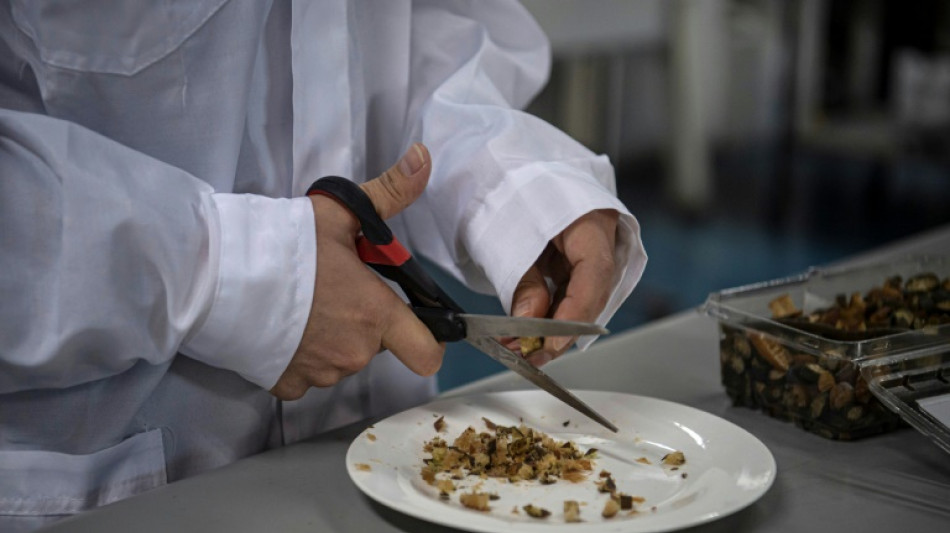
The young researcher takes dehydrated cochayuyo, cuts it and grinds it to create cochayuyo flour which he then mixes with instant mashed potato powder.

He then adds hot water to the mixture to create a gelatinous and slimy substance that he feeds into the printer.

"It occurred to me to use potatoes, rice flour, all of which have a lot of starch. The starch of these raw materials combined with the cochayuyo alginate is what generates stabilization within the 3D printing," he says, waiting for the printer to finish creating a Pikachu figure of about two centimeters (just under one inch) and a taste of mashed potatoes and the sea.

The project has been underway for two years and is still in its infancy, but the idea is to apply ingredients such as edible flowers or edible dyes to the menu to make them more attractive to children.

Y.Mori--JT