Dark energy seems to be changing, rattling our view of universe / Photo: Handout - ESA/Euclid/Euclid Consortium/NASA/AFP/File

Dark energy, the mysterious force thought to be driving the ever-faster expansion of the universe, appears to be changing over time, according to new observations released Wednesday.
If dark energy is in fact weakening, it would likely mean that science's understanding of how the universe works will need to be rewritten.
The new findings come from the Dark Energy Spectroscopic Instrument (DESI), which sits on a telescope at the Kitt Peak National Observatory in the US state of Arizona.
"What we are seeing is deeply intriguing," said Alexie Leauthaud-Harnett, a spokesperson for the DESI collaboration which brings together 70 institutions across the world.
"It is exciting to think that we may be on the cusp of a major discovery about dark energy and the fundamental nature of our universe," she said in a statement.
The DESI instrument's thin optical fibres can simultaneously observe 5,000 galaxies or quasars -- blazing monsters with a black hole at their heart -- for 20 minutes.
This allows scientists to calculate the age and distance of these objects, and create a map of the universe so they can detect patterns and trace its history.
- 'Tensions' emerging -
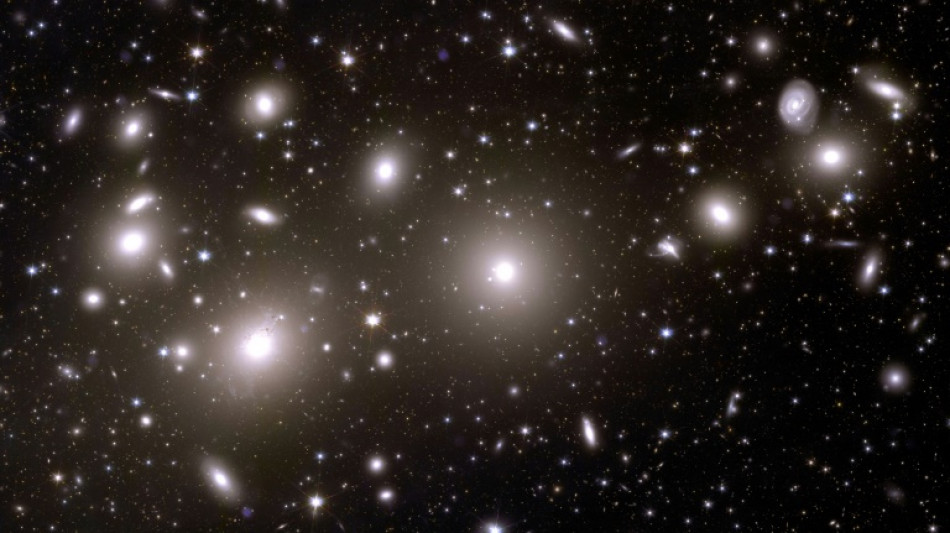
Scientists have known for a century that the universe is expanding, because massive clusters of galaxies have been observed moving away from each other.
In the late 1990s, scientists shocked the field by discovering that the universe's expansion has been speeding up over time.
The name dark energy was given to the phenomenon driving this acceleration, the effects of which seem to be partially offset by ordinary matter -- and an also unknown thing called dark matter.
The universe is thought to be made of 70 percent dark energy, 25 percent dark matter -- and just five percent normal matter.
Science's best understanding of how the universe works, which is called the standard cosmological model, refers to dark energy as being constant -- meaning it does not change.
The idea was first introduced by Albert Einstein in his theory of relativity.
Arnaud de Mattia, a French physicist involved in analysing the DESI data, told AFP that the standard model is "satisfactory" but some "tensions" are emerging between observations.
There are several different ways of measuring the expansion of the universe, including looking at the lingering radiation from after the Big Bang, exploding stars called supernovae and how gravity distorts the light of galaxies.
When the DESI team combined their new data with other measurements, they found "signs that the impact of dark energy may be weakening over time", according to a statement.
"When we combine all the cosmological data, it favours that the universe's expansion was accelerating at a slightly higher rate around seven billion years ago," de Mattia said.
But for the moment there is "absolutely not certainty" about this, he added.
- 'Inflection point' -
French physicist Etienne Burtin was confident that "we should have a clearer picture within five years".
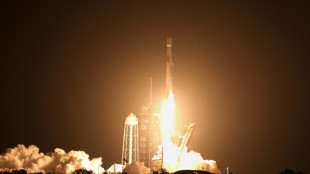
This is because there is loads of new data expected from DESI, Europe's Euclid space telescope, NASA's upcoming Nancy Grace Roman space telescope and the Vera Rubin Observatory in Chile.
"This new generation of surveys -- in the next few years -- will nail this," Joshua Frieman, a theoretical astrophysicist at the University of Chicago, told AFP.
But for now, "we're at this interesting inflection point", added Frieman, a dark energy expert and former DESI member.
Burtin said confirming the "evolving dark energy" theory would be a "revolution on the level of the discovery of accelerated expansion", which itself was the subject of a physics Nobel.
"The standard cosmological model would have to be different," he added.
The DESI research, which involved three years' worth of observations of 15 million galaxies and quasars, was presented at a conference of the American Physical Society in California.
T.Ikeda--JT