A brief history of famous Moon landings -- and failures / Photo: - - TASS/AFP/File

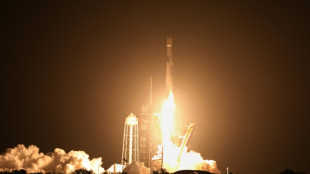
A spaceship built by a company in Texas is poised for lunar touchdown on Thursday, returning America to the Moon after more than five decades in what promises to be a historic first for the private sector.
Here's a look back at notable attempts -- both successful and unsuccessful -- at landing on Earth's cosmic companion.
- First survivable landing -
The Soviet Union led the United States early on in their Cold War space race, achieving numerous firsts including putting the first satellite in orbit and first man in space.
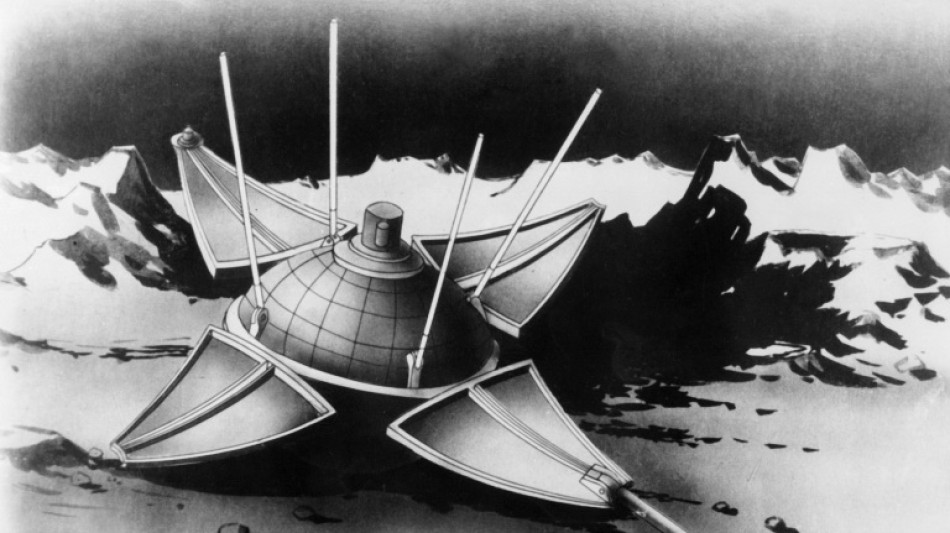
On February 3, 1966 it added to this impressive list the first soft touchdown on lunar soil with its Luna 9 probe, which used retrograde thrusters and inflatable airbags to cushion its landing.
Equipped with a radiation detector and panoramic camera, Luna 9 sent the first images back from the Moon's surface.
Writing on Russianspaceweb.com, space historian Anatoly Zak recalled that "astronomers at Jodrell Bank observatory near Manchester, UK, were the first to publish intercepted images from Luna-9 on February 4, though in distorted form," beating the official release by several days.
Despite its early wins, the Soviet space program was beset by mismanagement and bureaucratic gridlock, eventually falling behind the better run and funded American program. Half a century after its last Moon mission, Russia failed in a 2023 attempt to land a robot, underscoring its decline as a space power.
- Project Apollo -
In 1961, president John F. Kennedy proposed to Congress that the US "should commit itself to achieving the goal, before this decade is out, of landing a man on the Moon and returning him safely to the Earth."
The result was Apollo, which cost $300 billion adjusted for inflation, employed 400,000 people at its peak and landed a total of six spacecraft and 12 astronauts between 1969 and 1972.
Apollo 11 was the first crewed touchdown on July 20, 1969 with astronaut Neil Armstrong proclaiming his "giant leap for mankind" as he stepped off the Eagle lander's ladder onto the Sea of Tranquility.
Apollo 13 was meant to be the third, but an onboard explosion -- accompanied by the famous words "Houston, we've had a problem here" -- forced the crew to shelter in their Lunar Module, slingshot around the Moon and rapidly return to Earth.
Nevertheless, the "successful failure" of Apollo 13 "engaged worldwide interest, demonstrated the capability of the crew and mission support teams, and came to represent a defining moment in NASA history," according to the nonprofit Planetary Society.
- China rising -
China achieved the first soft lunar landing, as opposed to a hard impact with a probe, in 37 years with its Chang'e-3 mission in 2013.
Named after the Chinese goddess of the Moon, it was followed up in 2019 with Chang'e-4, the world's first successful landing on the far side of the Moon, while in 2020, Chang'e-5 carried out China's first lunar sample return mission from a region known as Oceanus Procellarum, or the Ocean of Storms.
China's astonishing successes in space have proved concerning for the United States, with NASA administrator Bill Nelson declaring the dawn of a new space race and suggesting China wants to annex lunar territory in the guise of scientific discovery.
China is targeting 2030 for its first crewed mission. Though the US wants to return astronauts in 2026, its timeline threatens to drag, while China has in recent years kept to its space promises.
India and Japan, meanwhile, are the latest members of the lunar soft landing club, with the former's Chandrayaan-3 mission to the south pole costing just $75 million.
- Water bears on the Moon? -
Houston-based Intuitive Machines is the fourth private moon shot. In January, Astrobotic's Peregrine lander sprung a leak early on its journey and was brought back to burn up in Earth's atmosphere.
Attempts by an Israeli nonprofit in 2019 and a Japanese company in 2023 both ended in crash landings.
In the case of Israel's Beresheet probe, there may well have been survivors: thousands of microscopic animals called tardigrades that can withstand extreme radiation, sizzling heat, the coldest temperatures of the universe, and decades without food.
Also known as water bears, they were placed in suspended animation encased in an epoxy, meaning it might be possible to revive them in the future.
Y.Kimura--JT