Fly less? Go vegan? How people can take climate action

Individuals along with economy-wide efficiencies can make a major difference in the drive to avert the worst of global warming, UN climate experts say, estimating that sharp cuts to demand for energy-guzzling services could slash emissions up to 70 percent by 2050.
Avoiding airplanes, eating less meat, insulating your home could all make a dent, particularly when broad swathes of societies embrace change, says the United Nations Intergovernmental Panel on Climate Change.
While research often focuses on cutting emissions in the supply of goods and services -- energy generation, transport, agriculture, construction -- the IPCC has for the first time dedicated a whole chapter of its climate solutions report to the demand that drives these industries.
"Having the right policies, infrastructure and technology in place to enable changes to our lifestyles and behaviours can result in a 40-70 percent reduction in greenhouse gas emissions by 2050," said Priyadarshi Shukla co-chair of IPCC working group that produced the 3,000 page report.
But where can "this untapped potential", as Shukla calls it, be found?
- Day-to-day choices -
"Avoid, shift, improve" -- these are the key ways to curb demand, the report says.
You can avoid energy-intensive behaviour, switch to low-carbon technologies and improve the efficiency of existing tech.
In general, there are plenty of opportunities for improvement in the ways people travel from point A to point B.
You can change an internal combustion engine car to an electric one ("improve"), or even "shift" your daily commute to cycling or walking.
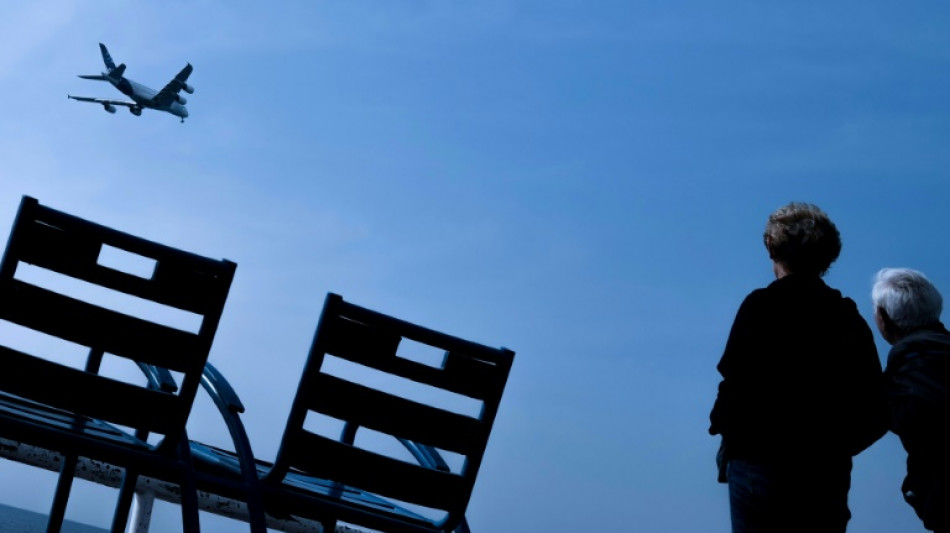
The biggest potential for avoidance is reducing long-haul flights. If people took fewer long distance flights and took the train where possible, overall aviation emissions could be reduced by 10 to 40 percent by 2040.
Meanwhile, increasing energy efficiency in homes and other buildings takes first place in the "improve" category.
And the most important "shift" you can make is to adopt a plant-based diet. But becoming a vegetarian or even vegan would have less of an emissions impact than cutting out one long-haul flight a year.
The report also highlights the need to reduce all types of waste, from energy or food for example.
"Choosing low-carbon options, such as car-free living, plant-based diets without or very little animal products, low-carbon sources of electricity and heating at home as well as local holiday plans," can reduce an individual's carbon footprint by up to nine tonnes of CO2 equivalent, says the IPCC.
- Unequal -
Most people in the world never take long-haul flights in the first place and do not have access to nutritious food.
Billions of people have a carbon footprint far below nine tonnes of CO2 equivalent.
For example, the average carbon footprint per inhabitant in Afghanistan is less than one tonne, according to the report, while in most western developed nations it is well over 10 tonnes.
And within countries there can also be an enormous split between the lavish energy consumption of the rich and the meagre carbon footprint of poorer people.
In fact, about half of the world's emissions can be attributed to the consumption of the richest 10 percent of the global population, the report said.
At the bottom of the wealth pyramid, the poorest half of the world contributes around 10 percent of consumption emissions.
"Wealthy individuals contribute disproportionately to higher emissions and have a high potential for emissions reductions while maintaining decent living standards and well-being," the report said.
- Beyond behaviour -
The responsibility for transforming the world's energy use and economic system to deal with climate change cannot be borne on the shoulders of individuals alone, the report stresses.
While people can make a difference with their lifestyle choices, the IPCC says transformative change involves more than just individuals' consumption choices.
There also need to be shifts in culture and social norms, business investment, political drivers from institutions, and changes in infrastructure.
K.Abe--JT