CMSC
0.0300

A private US lunar lander mission is doomed to fail, and NASA pushes back plans to return astronauts to the Moon.
The twin developments Tuesday represent blows to America's ambitions to stimulate a commercial space economy, develop a lasting presence on Earth's nearest neighbor, and use it as a jump off point for Mars.
China meanwhile is looming in the rear view mirror, targeting 2030 for a crewed landing.
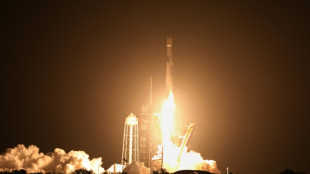
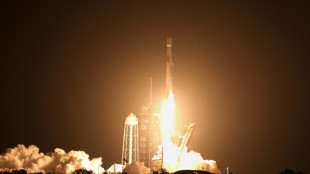
Astrobotic's Peregrine Lunar Lander blasted off Monday from Florida's Cape Canaveral Space Force Station, then successfully separated from its rocket.
Just hours later, though, Astrobotic reported an inability to orient Peregrine's solar panel towards the Sun and keep its battery topped up. A propulsion system glitch was found to be causing a critical loss of fuel and damaging the spacecraft's exterior.
The company said Monday the mission had "no chance of soft landing" -- dashing hopes for the first ever successful landing by a non-government mission, and America's first soft touchdown on the Moon since Apollo 17 in 1972.
NASA has paid Astrobotic more than $100 million to ship scientific hardware to the Moon to answer questions about surface composition and radiation, as the US space agency prepares to send astronauts back for long term missions.
The failure doesn't mean the strategy of ramping up commercial partnerships is innately flawed, Michael Lembeck, a former NASA official turned associate professor in aerospace engineering at the University of Illinois told AFP.
"It's a balance of making progress versus accepting risk -- and I think in the long term these failures are just as informative success," he said, adding NASA's contracts with other companies, including Houston-based Intuitive Machines, which will attempt to launch a lander next month, helped spread such risks.
- Artemis safety issues -
But, further spoiling the mood for space watchers, NASA Administrator Bill Nelson announced the agency was pushing back its planned return of astronauts to the lunar surface from December 2025 to September 2026, citing safety issues with the Orion crew capsule.
And few analysts believe the new date for American boots on the Moon is credible.
In a briefing Tuesday, NASA officials went into new detail about concerns linked to the Orion capsule built by Lockheed Martin.
First, the uncrewed Artemis 1 mission revealed the heat shield lost some of its material during its fiery reentry to the atmosphere.
Second, a design flaw has been uncovered during new testing in Orion's ability to open and shut valves connected to the life support system -- described by Amit Kshatriya, deputy associate administrator for the Moon to Mars program -- as "unacceptable."
Third, when engineers put the vehicle under stress testing to simulate an emergency ejection from the Space Launch Systems (SLS) rocket, they found a battery became disconnected, meaning Orion might not be able to maintain power as it floats back to the ground.
- SpaceX complications -
While it's back to the drawing board for Orion, its issues are dwarfed by the fact that the Artemis 3 lander, a modified version of SpaceX's next-gen Starship rocket, is nowhere near ready, having exploded in its two orbital test flights to date.
Even once Starship stops blowing up, SpaceX will have to succeed in its own uncrewed lunar landing ahead of Artemis 3.
Its complex plans involve launching a spaceship to serve as a fuel depot, having 10 more Starships launch and fuel up the depot, then having yet another Starship collect that fuel and journey to the Moon, where it would dock with an Orion capsule and fly down to the surface.
Given these constraints, the new deadline is far from realistic, said Lembeck, stressing that compared to the Apollo years, NASA is working to a much tighter budget, in a more risk-averse era, without a national imperative to beat the Soviet Union.
K.Nakajima--JT