The Japan Times - Mouse embryos grown in space for first time: Japan researchers

EUR -
AED 4.209885
AFN 73.365394
ALL 95.800427
AMD 434.810135
ANG 2.052024
AOA 1051.183724
ARS 1598.50641
AUD 1.626713
AWG 2.063391
AZN 1.947207
BAM 1.953378
BBD 2.323185
BDT 141.504531
BGN 1.95943
BHD 0.433007
BIF 3420.030365
BMD 1.146329
BND 1.472863
BOB 7.970021
BRL 6.020654
BSD 1.153501
BTN 106.960496
BWP 15.642741
BYN 3.51583
BYR 22468.039124
BZD 2.319889
CAD 1.57482
CDF 2602.165752
CHF 0.907972
CLF 0.026582
CLP 1049.612476
CNY 7.878773
CNH 7.9149
COP 4250.987392
CRC 538.737696
CUC 1.146329
CUP 30.377706
CVE 110.140913
CZK 24.490508
DJF 205.406504
DKK 7.472199
DOP 69.737212
DZD 152.109771
EGP 59.887707
ERN 17.194928
ETB 180.107514
FJD 2.543471
FKP 0.860518
GBP 0.863971
GEL 3.112258
GGP 0.860518
GHS 12.573834
GIP 0.860518
GMD 84.828354
GNF 10109.448326
GTQ 8.835046
GYD 241.308138
HKD 8.982372
HNL 30.529135
HRK 7.53562
HTG 151.172215
HUF 393.484721
IDR 19465.804713
ILS 3.571696
IMP 0.860518
INR 106.909466
IQD 1510.897797
IRR 1507422.012458
ISK 143.210624
JEP 0.860518
JMD 181.110967
JOD 0.812738
JPY 182.425616
KES 148.540909
KGS 100.246273
KHR 4619.178761
KMF 490.628658
KPW 1031.681894
KRW 1716.839053
KWD 0.351705
KYD 0.961167
KZT 556.431947
LAK 24750.842591
LBP 103308.072843
LKR 359.160429
LRD 211.072202
LSL 19.253652
LTL 3.38481
LVL 0.693402
LYD 7.36035
MAD 10.79374
MDL 20.111097
MGA 4804.006802
MKD 61.678772
MMK 2406.99123
MNT 4110.55331
MOP 9.311709
MRU 46.037948
MUR 53.315552
MVR 17.722448
MWK 2000.12111
MXN 20.429093
MYR 4.509088
MZN 73.24617
NAD 19.253652
NGN 1562.365449
NIO 42.445698
NOK 10.962603
NPR 171.151362
NZD 1.970192
OMR 0.44076
PAB 1.153401
PEN 3.938916
PGK 4.976805
PHP 68.88116
PKR 322.223587
PLN 4.278385
PYG 7455.251146
QAR 4.194175
RON 5.097377
RSD 117.455107
RUB 99.295938
RWF 1683.742604
SAR 4.304888
SBD 9.222488
SCR 15.618637
SDG 688.943139
SEK 10.766085
SGD 1.470602
SHP 0.860043
SLE 28.257533
SLL 24037.948451
SOS 659.211952
SRD 42.843994
STD 23726.686075
STN 24.474455
SVC 10.091982
SYP 126.702276
SZL 19.258983
THB 37.545686
TJS 11.032071
TMT 4.01215
TND 3.394076
TOP 2.760083
TRY 50.805882
TTD 7.818737
TWD 36.621185
TZS 2980.431311
UAH 50.726176
UGX 4339.111483
USD 1.146329
UYU 46.707379
UZS 14065.153958
VES 516.928642
VND 30148.440253
VUV 136.881277
WST 3.132022
XAF 655.273063
XAG 0.016044
XAU 0.000244
XCD 3.09801
XCG 2.078676
XDR 0.814953
XOF 655.275918
XPF 119.331742
YER 273.48536
ZAR 19.420295
ZMK 10318.333563
ZMW 22.556555
ZWL 369.117318
  • RBGPF

    0.1000

    82.5

    +0.12%

  • CMSC

    -0.1200

    22.83

    -0.53%

  • GSK

    -1.3500

    52.06

    -2.59%

  • RIO

    -2.0800

    87.72

    -2.37%

  • NGG

    -3.0200

    87.4

    -3.46%

  • BCC

    -1.0800

    71.84

    -1.5%

  • BCE

    -0.2600

    25.75

    -1.01%

  • CMSD

    0.0100

    22.89

    +0.04%

  • AZN

    -2.8700

    188.42

    -1.52%

  • RELX

    -0.4300

    33.86

    -1.27%

  • RYCEF

    -0.2100

    16.6

    -1.27%

  • BTI

    -2.4600

    58.09

    -4.23%

  • JRI

    -0.1370

    12.323

    -1.11%

  • BP

    0.7600

    44.61

    +1.7%

  • VOD

    -0.3800

    14.37

    -2.64%

Mouse embryos grown in space for first time: Japan researchers
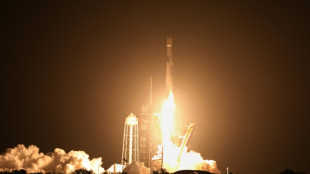
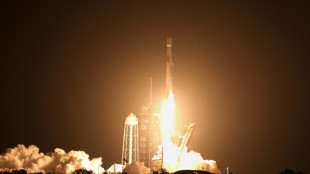
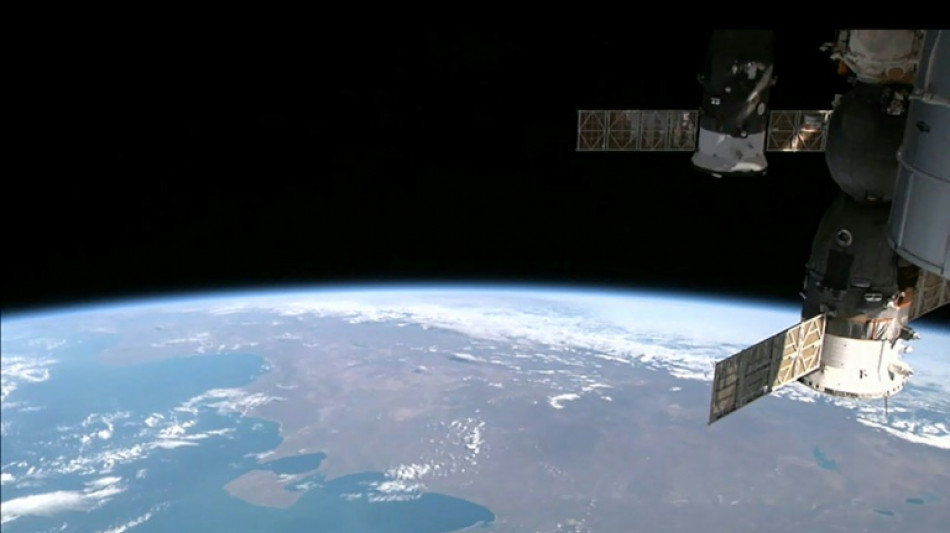
Mouse embryos grown in space for first time: Japan researchers / Photo: HANDOUT - NASA/AFP/File

Mouse embryos grown in space for first time: Japan researchers

Mouse embryos have been grown on the International Space Station and developed normally in the first study indicating it could be possible for humans to reproduce in space, a group of Japanese scientists said.

Text size:

The researchers, including Teruhiko Wakayama, professor of University of Yamanashi's Advanced Biotechnology Centre, and a team from the Japan Aerospace Space Agency (JAXA), sent frozen mouse embryos on board a rocket to the ISS in August 2021.

Astronauts thawed the early-stage embryos using a special device designed for this purpose and grew them on the station for four days.

"The embryos cultured under microgravity conditions developed" normally into blastocysts, cells that develop into the foetus and placenta, the scientists said.

The experiment "clearly demonstrated that gravity had no significant effect," the researchers said in a study that was published online in the scientific journal iScience on Saturday.

They also said there were no significant changes in condition of the DNA and genes, after they analysed the blastocysts that were sent back to their laboratories on Earth.

This is "the first-ever study that shows mammals may be able to thrive in space," University of Yamanashi and national research institute Riken said in a joint statement on Saturday.

It is "the world's first experiment that cultured early-stage mammalian embryos under complete microgravity of ISS," the statement said.

"In the future, it will be necessary to transplant the blastocysts that were cultured in ISS's microgravity into mice to see if mice can give birth" to confirm that the blastocysts are normal, it added.

Such research could be important for future space exploration and colonisation missions.

Under its Artemis programme, NASA plans to send humans back to the Moon in order to learn how to live there long-term to help prepare a trip to Mars, sometime towards the end of the 2030s.

H.Hayashi--JT