The Japan Times - US lab repeats nuclear fusion feat, with higher yield

EUR -
AED 4.314542
AFN 75.188798
ALL 95.50232
AMD 434.685711
ANG 2.102802
AOA 1078.489545
ARS 1630.405842
AUD 1.624089
AWG 2.116154
AZN 1.993494
BAM 1.949611
BBD 2.366876
BDT 144.460797
BGN 1.959729
BHD 0.44332
BIF 3495.105967
BMD 1.174826
BND 1.487771
BOB 8.120188
BRL 5.802815
BSD 1.175164
BTN 111.18856
BWP 15.725014
BYN 3.318651
BYR 23026.580489
BZD 2.363487
CAD 1.602303
CDF 2720.895706
CHF 0.915212
CLF 0.026764
CLP 1053.372149
CNY 8.00203
CNH 8.004193
COP 4378.351553
CRC 536.195574
CUC 1.174826
CUP 31.132877
CVE 110.37469
CZK 24.334868
DJF 208.790327
DKK 7.472707
DOP 69.961202
DZD 155.382461
EGP 61.915423
ERN 17.622383
ETB 184.568176
FJD 2.566348
FKP 0.865403
GBP 0.864337
GEL 3.148722
GGP 0.865403
GHS 13.216825
GIP 0.865403
GMD 86.349359
GNF 10314.968458
GTQ 8.970485
GYD 245.818607
HKD 9.203877
HNL 31.28559
HRK 7.534036
HTG 153.776315
HUF 358.465708
IDR 20345.27617
ILS 3.411229
IMP 0.865403
INR 111.156703
IQD 1539.021451
IRR 1542545.927372
ISK 143.822247
JEP 0.865403
JMD 185.163777
JOD 0.832907
JPY 183.775631
KES 151.764066
KGS 102.703834
KHR 4715.158829
KMF 492.252176
KPW 1057.347088
KRW 1701.535284
KWD 0.361787
KYD 0.979287
KZT 544.180193
LAK 25810.917201
LBP 105007.19832
LKR 376.204145
LRD 215.668583
LSL 19.425704
LTL 3.468954
LVL 0.71064
LYD 7.448633
MAD 10.806633
MDL 20.200787
MGA 4887.273818
MKD 61.631388
MMK 2466.604066
MNT 4205.463669
MOP 9.484551
MRU 46.876208
MUR 54.958548
MVR 18.156884
MWK 2046.546491
MXN 20.277785
MYR 4.611196
MZN 75.083439
NAD 19.425749
NGN 1600.100479
NIO 43.139817
NOK 10.921119
NPR 177.901497
NZD 1.973319
OMR 0.451734
PAB 1.175164
PEN 4.067833
PGK 5.096687
PHP 71.453152
PKR 327.511976
PLN 4.233128
PYG 7192.168576
QAR 4.281086
RON 5.264978
RSD 117.363844
RUB 87.82084
RWF 1715.245281
SAR 4.399984
SBD 9.421433
SCR 16.370032
SDG 705.481542
SEK 10.860381
SGD 1.490037
SHP 0.877126
SLE 28.958762
SLL 24635.499555
SOS 671.414277
SRD 43.951417
STD 24316.516614
STN 24.906301
SVC 10.282315
SYP 130.644943
SZL 19.431953
THB 37.888297
TJS 10.981891
TMT 4.117764
TND 3.374685
TOP 2.828698
TRY 53.1421
TTD 7.963686
TWD 36.90538
TZS 3045.36277
UAH 51.524613
UGX 4418.953297
USD 1.174826
UYU 47.220101
UZS 14186.018073
VES 579.772213
VND 30927.282213
VUV 138.92362
WST 3.198563
XAF 653.87849
XAG 0.015197
XAU 0.00025
XCD 3.175025
XCG 2.117968
XDR 0.818182
XOF 654.96451
XPF 119.331742
YER 280.342738
ZAR 19.278928
ZMK 10574.840667
ZMW 22.240304
ZWL 378.293343
  • RBGPF

    0.0800

    63.18

    +0.13%

  • AZN

    3.6800

    184.92

    +1.99%

  • RYCEF

    1.0500

    17.5

    +6%

  • CMSC

    0.1300

    23.01

    +0.56%

  • RIO

    5.0100

    105.51

    +4.75%

  • NGG

    0.2100

    87.85

    +0.24%

  • GSK

    0.1500

    50.53

    +0.3%

  • BCE

    0.1300

    24.23

    +0.54%

  • VOD

    0.3900

    16.13

    +2.42%

  • RELX

    -0.4100

    35.75

    -1.15%

  • CMSD

    0.1300

    23.42

    +0.56%

  • BTI

    0.1600

    59.56

    +0.27%

  • JRI

    0.1300

    13.17

    +0.99%

  • BCC

    2.1100

    74.24

    +2.84%

  • BP

    -1.8700

    44.63

    -4.19%

US lab repeats nuclear fusion feat, with higher yield
US lab repeats nuclear fusion feat, with higher yield / Photo: Handout - Lawrence Livermore National Laboratory/AFP/File

US lab repeats nuclear fusion feat, with higher yield

US scientists responsible for a historic nuclear fusion breakthrough say they have repeated the feat -- this time achieving a greater yield of energy.

Text size:

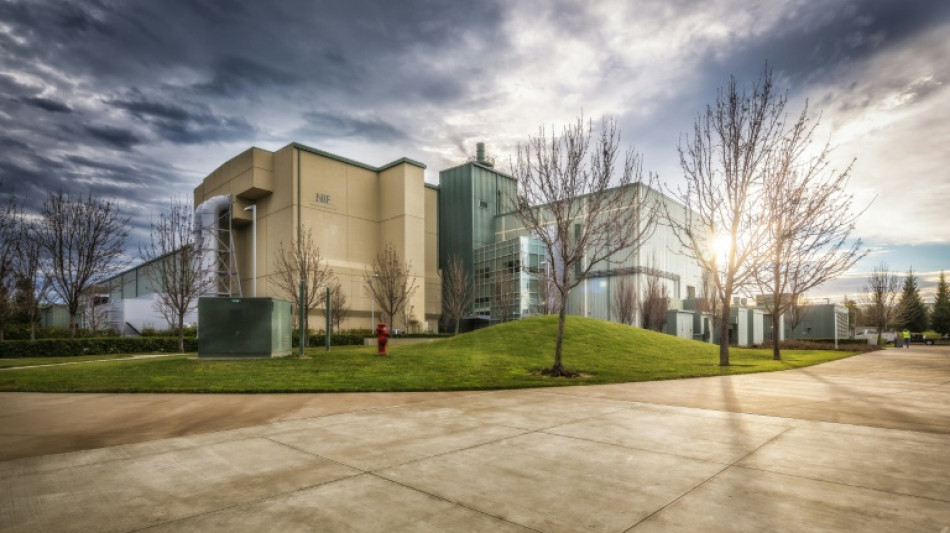
The Lawrence Livermore National Laboratory stunned the world in December when it announced it had carried out an experimental nuclear reaction that put out more energy than was put into it, a holy grail of science in the quest for unlimited, clean power to end the era of fossil fuels.

"We can confirm the experiment produced a higher yield than the December 2022 experiment," public information officer Paul Rhien said Monday in an emailed statement, without disclosing specific figures.

He added the California lab planned to report the results at upcoming scientific conferences and in peer-reviewed publications.

The new development was first reported by the Financial Times.

Nuclear fusion has been touted by its supporters as a clean, abundant and safe source of energy that could eventually allow humanity to break its dependence on coal, crude oil, natural gas and other hydrocarbons driving a global climate crisis.

However, there is still a long way to go before fusion is viable on an industrial scale, providing power to homes and businesses.

Nuclear power plants around the world currently use fission -- the splitting of a heavy atom's nucleus -- to produce energy.

Fusion on the other hand combines two light hydrogen atoms to form one heavier helium atom, releasing a large amount of energy in the process.

That is what occurs inside stars, including our Sun.

On Earth, fusion reactions can be provoked by heating hydrogen to extreme temperatures inside specialized devices.

Like fission, fusion is carbon-free during operation, and has additional critical advantages: it poses no risk of nuclear disaster and produces much less radioactive waste.

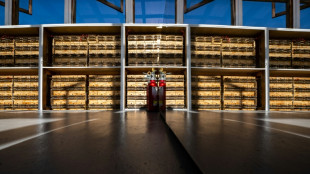
During December's experiment, the lab used 192 ultra-powerful lasers to deliver 2.05 megajoules of energy to a tiny capsule smaller than a pea containing isotopes of hydrogen. It produced 3.15 megajoules of fusion energy output.

While the result was a net energy gain, 300 megajoules of energy was needed from the electrical grid to power the lasers.

T.Maeda--JT