CMSD
0.0000

A Japanese startup attempting the first private landing on the Moon said Wednesday it had lost communication with its spacecraft and assumed the lunar mission had failed.
Ispace said that it could not establish communication with the unmanned Hakuto-R lunar lander after its expected landing time, a frustrating end to a mission that began with a launch from the United States over four months ago.
"We have not confirmed communication with the lander," a company official told reporters about 25 minutes after the point when the landing was supposed to have taken place.
"We have to assume that we could not complete the landing on the lunar surface," the official said.
Officials said they would continue to try and establish contact with the spacecraft, which was carrying payloads from several countries, including a lunar rover from the United Arab Emirates.
"Further information on the status of the lander will be announced as it becomes available," a company statement said.
Ispace founder and CEO Takeshi Hakamada said after the apparent failed landing that they had acquired data from the spacecraft all the way up to the planned landing and would be examining that for signs of what happened.
- Pioneering private space effort-
The lander, standing just over two metres (6.5 feet) tall and weighing 340 kilogrammes (750 pounds), has been in lunar orbit since last month.
Its descent and landing were fully automated and the craft was supposed to reestablish communication as soon as it touched down.
So far only the United States, Russia and China have managed to put a spacecraft on the lunar surface, all through government-sponsored programmes.
In April 2019, Israeli organisation SpaceIL watched their lander crash into the Moon's surface.
India also attempted to land a spacecraft on the moon in 2016, but it crashed.
Two US companies, Astrobotic and Intuitive Machines, are scheduled to attempt Moon landings later this year.
"We congratulate the ispace inc team on accomplishing a significant number of milestones on their way to today's landing attempt," Astrobotic said in a tweet.
"We hope everyone recognizes -- today is not the day to shy away from pursuing the lunar frontier, but a chance to learn from adversity and push forward."
- Plans for settling the Moon -
Ispace, which listed its shares on the Tokyo Stock Exchange Growth Market earlier this month, was already planning its next mission before the failure of Hakuto-R.
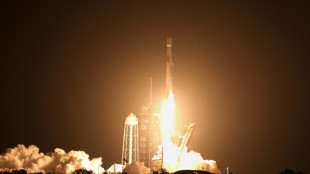
The spacecraft, whose name references the Moon-dwelling white rabbit in Japanese folklore, was launched from Cape Canaveral, Florida on December 11 on one of SpaceX's Falcon 9 rockets.
The lander carried several lunar rovers, including a round, baseball-sized robot jointly developed by Japan's space agency and toy manufacturer Takara Tomy, the creator of the Transformer toys.
It also had the 10-kilogram (22-pound) chair-sized Rashid rover developed by the United Arab Emirates, and an experimental imaging system from Canadensys Aerospace.
With just 200 employees, ispace has said it "aims to extend the sphere of human life into space and create a sustainable world by providing high-frequency, low-cost transportation services to the Moon."
Hakamada touted the mission as laying "the groundwork for unleashing the Moon's potential and transforming it into a robust and vibrant economic system."
The firm believes the Moon will support a population of 1,000 people by 2040, with 10,000 more visiting each year.
It plans a second mission, tentatively scheduled for next year, involving both a lunar landing and the deployment of its own rover.
Y.Ishikawa--JT