Judge shopping: It's all-American, but is it fair? / Photo: Moisés ÁVILA - AFP/File

It's an open secret in the United States that lawyers go "judge shopping" for favorable decisions, but the practice of filing suits in select jurisdictions has come under renewed scrutiny following an abortion case with national ramifications.
Plaintiffs have always tried to choose an advantageous court when working within the judicial system -- at which point a case might land before any number of judges.
However the strategy of going before a court with only one judge -- whose viewpoints are well documented -- is the practice known as judge shopping that is raising eyebrows.
When actor Johnny Depp sued his ex-wife Amber Heard after she described herself as a victim of domestic abuse in the Washington Post, Depp did not take the matter to court in California, where he lives.
The actor instead filed his suit in Virginia, where defamation law is more favorable to the plaintiff -- a strategic decision made possible by the fact that the paper's servers and printing facilities are located in that state.
"The plaintiff will choose the most favorable forum, based on any of several factors, including how the relevant procedures, convenience, and how receptive the judges are," Bruce Green of Fordham Law School told AFP.
While plaintiffs can choose their court, they are not supposed to be able to choose a judge, particularly at the federal level.
Federal judges are generalists, and the cases that arrive in their courts are supposed to be distributed at random.
But in some places, like the Lone Star state, geography has introduced interesting possibilities: "There are a lot of places in Texas that are very remote thereby there is really only enough demand for one judge," said Joshua Blackman, a constitutional law professor at South Texas College of Law.
"So we have these single-judge divisions."
- 'Activist judge' -
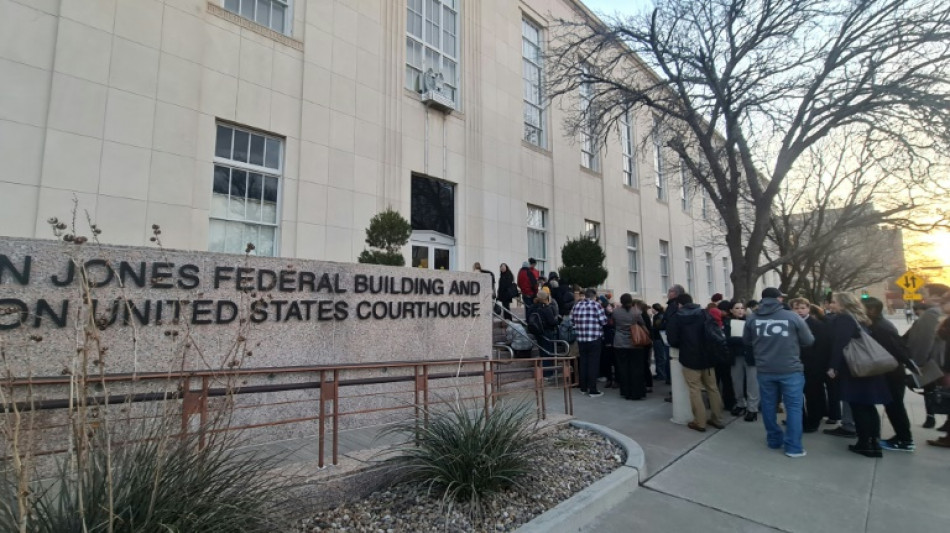
Such is the case in Amarillo, a city in the Texas Panhandle where the only federal judge, Matthew Kacsmaryk, was appointed by former president Donald Trump.
Kacsmaryk brought to the bench an ultraconservative track record and background serving as a lawyer for conservative Christian organizations.
Abortion opponents strategically formed a new association in Amarillo, the Alliance for Hippocratic Medicine, and three months later filed a suit challenging the legality of the abortion pill mifepristone, confident it would land on Kacsmaryk's desk.
On Friday, he ruled as expected on the side of the association, which as of April 15 could effectively suspend US authorization of the drug.
His decision elicited strong reactions on the left, with Democratic Senate Majority Leader Chuck Schumer describing it as a ruling from an "extremist judge who is vehement in his desire to take women’s rights away."
Judge shopping has happened for a long time, but the focus has recently shifted to issues of national interest with drastic consequences, thus raising new concerns, Green said.
The far-reaching nature of Kacsmaryk's decision was not the first time in recent history that a judge has issued such a sweeping order. Other judges have issued national injunctions to block policies adopted by Trump, Barack Obama and Joe Biden.
- 'Handpicked' outliers -
For Blackman, two factors have fueled this trend.
In 2014, facing Republican roadblocks, the Democratic Party-controlled US Senate changed its rules for confirming presidents' picks for federal judgeships -- stipulating that a nominee could be approved by a simple majority instead of the prior three-fifths requirement.
Since presidents no longer needed broader support, they were free to "appoint judges who are further from the center... judges who have more of an ideological background," Blackman said.
At the same time, state attorneys general -- elected officials themselves -- have become more aggressive against administrations of the opposite party.
Texas Attorney General Ken Paxton, who has filed 26 lawsuits against the Biden administration over just two years -- including seven in Amarillo -- epitomizes the excesses of judge shopping, says law professor Steve Vladeck.
The practice is an old problem, but Paxton "has made the loophole into an art form," he wrote in a New York Times editorial.
If nothing is done, he said, "handpicked, outlier district judges for whom nobody voted are increasingly able to dictate federal policies on a nationwide basis."
K.Yoshida--JT