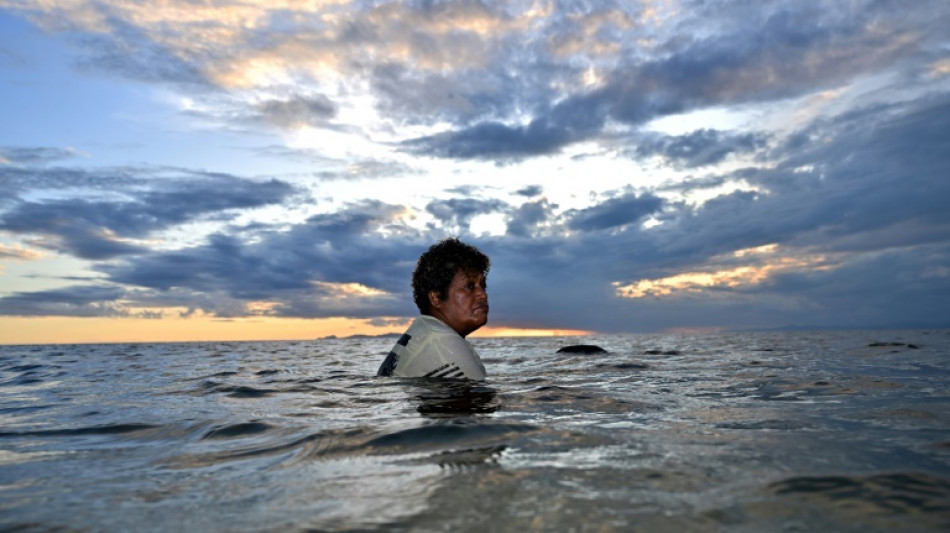
Graves sink, fisheries shrink as climate change hits Fiji / Photo: Saeed KHAN - AFP

The sea has already swallowed the village graveyard in Togoru, Fiji, and long-time resident Lavenia McGoon is dreading the day it claims her house.
She piles old rubber car tyres under the coconut trees that line the beachfront, hoping this makeshift seawall will at least buy some time.
The 70-year-old believes climate change, and the creeping ocean, will inevitably force her family to leave.
"Nobody can stop it," she tells AFP, as the tide sweeps in and crabs scuttle over the headstones.
"Nobody can stop water."
Togoru is a small settlement on the south coast of Fiji's largest island, Viti Levu.
It is one of dozens of coastal villages in the Pacific archipelago now confronting the reality of climate change.
McGoon, called "Big Nana" by locals, has spent almost 60 years here -- living on the shoreline in a basic wooden house without power or running water.
"We used to have a plantation right in front," McGoon says, pointing towards the sea.
"After 20 to 30 years we have lost almost 55 metres (60 yards) of land."
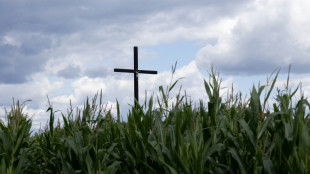
About 200 people were once buried in the Togoru graveyard, but McGoon says most of the remains have since been moved inland.
For now she refuses to follow, clinging on to her small piece of paradise.
"Relocation to me at this age, it's a bit too... sickening," she says.
- 'A big difference' -
Fiji has been meticulously preparing for the day it needs to relocate coastal villages because of climate change.
The scale of the challenge is enormous -- the government estimates more than 600 communities could be forced to move, including 42 villages under urgent threat.
More than 70 percent of the country's 900,000 people live within five kilometres (three miles) of the coast.
According to Australia's Monash University, sea levels have been rising in the western Pacific Ocean two to three times faster than the global average.
Entire low-lying nations such as Kiribati and Tuvalu could become uninhabitable within the next 30 years.
Fiji is fortunate that its highland regions make relocation a feasible option.
The settlement of Vunidogoloa, on the northern island of Vanua Levu, moved to higher ground in 2014 -- making it one of the first villages in the world to relocate because of rising sea levels.
Other villages, such as Veivatuloa, are exhausting their options for adaptation before abandoning their homes.
Veivatuloa lies about 40 kilometres west of the capital Suva and has a population of around 200 people.
The village's stilted houses sit in rows facing the water, while decaying wooden planks bridge the pools of seawater collecting on the ground at low tide.
The corrosive sea salt has eaten small holes into the walls of some buildings.
Veivatuloa has been lobbying the Fijian government to strengthen its old seawall, which is now regularly breached by waves.
Provincial spokesman Sairusi Qaranivalu says relocation is a painful idea for a village such as Veivatuloa, where customs are linked to the land.
"Once we take them away from the villages, it's like we are disconnecting them from the traditional duties they have to perform to their chiefs," he tells AFP.
"It's like deconstructing the traditional living and the way we live together."
The ocean is inching closer to the village, but elder Leone Nairuwai says he has to travel further out to sea to catch fish.
"When you used to go out to the sea you just go, I think, 20 yards (and) you catch the fish," he says.
"But now you take the outboard, it's a mile, and then you'll get a fish. There's a big difference."
- Shrinking catch -
About half of Fiji's rural population relies on fishing for survival, according to the United Nations Food and Agriculture Organisation.
But the country's fisheries are under pressure on multiple fronts.
Warmer seas are disrupting coastal ecosystems, while stocks of valuable species such as tuna have been plundered by foreign vessels.
Local guide and subsistence fisherman Abaitia Rosivulavula ekes out a living selling his catch to the restaurants around Pacific Harbour, a tourist hotspot dotted with luxury resorts.
He uses the sawn-off bottom of a plastic milk bottle to scoop water from his fibreglass boat before gunning the outboard motor towards a nearby reef.
Most of his bait is taken by sharks, and the handful of fish he manages to reel in before sunset are too small to get his hopes up.
"Before, it's plenty (of) fish," he tells AFP before casting his line again.
"Before, the size of the fish is big, now it's just like this," he adds, making a shrinking gesture with his hands.
Fiji is ranked 12 on the Nature Conservancy's Fisheries at Risk Index, which looks at "climate-related risk to coastal fisheries" in 143 countries.
Four other Pacific nations -- Micronesia, Solomon Islands, Vanuatu and Tonga -- sit inside the top 10.
Back in the settlement of Togoru, "Big Nana" McGoon says small countries like Fiji are being left to foot the bill while others refuse to reduce their emissions.
"They only think of money coming in," she says. "They never think of other people, the ones who will be suffering."
While McGoon wants to stay next to the sea for as long as she can, she's resigned to watching her grandchildren leave.
"I love this place. It's beautiful," she says.
"The only thing I'm telling my grandchildren... go to school and achieve your goals. Aim for overseas.
"Because the water will always take its course."
T.Ueda--JT