The Japan Times - All regions experienced water extremes in 2021: UN

EUR -
AED 4.236702
AFN 76.139772
ALL 93.404971
AMD 420.508216
AOA 1059.0311
ARS 1713.661212
AUD 1.63963
AWG 2.076532
AZN 1.962383
BAM 1.954883
BBD 2.315524
BDT 141.963408
BHD 0.4335
BIF 3411.614467
BMD 1.153629
BND 1.475533
BOB 13.651774
BRL 5.854781
BSD 1.149646
BTN 109.600014
BWP 15.675715
BYN 3.344346
BYR 22611.125577
BZD 2.312225
CAD 1.618391
CDF 2624.505383
CHF 0.932219
CLF 0.02698
CLP 1065.31818
CNY 7.788498
CNH 7.787895
COP 3616.94948
CRC 522.159592
CUC 1.153629
CUP 30.571165
CVE 110.214734
CZK 24.214094
DJF 204.724855
DKK 7.474886
DOP 66.699291
DZD 153.293567
EGP 58.192036
ERN 17.304433
ETB 183.716918
FJD 2.552346
FKP 0.855699
GBP 0.856068
GEL 3.016724
GGP 0.855699
GHS 13.43987
GIP 0.855699
GMD 84.786541
GNF 10092.309643
GTQ 8.771999
GYD 240.490318
HKD 9.047098
HNL 30.804684
HRK 7.534469
HTG 150.326652
HUF 363.349217
IDR 20756.090376
ILS 3.51227
IMP 0.855699
INR 109.803029
IQD 1506.086997
IRR 1586383.88046
ISK 142.000089
JEP 0.855699
JMD 182.003837
JOD 0.817881
JPY 180.461587
KES 149.281774
KGS 100.885006
KHR 4652.039611
KMF 492.599566
KRW 1645.294067
KWD 0.35714
KYD 0.958055
KZT 544.766822
LAK 26036.125512
LBP 102955.451897
LKR 385.94398
LRD 207.511761
LSL 19.016027
LTL 3.406366
LVL 0.697819
LYD 7.355582
MAD 10.739802
MDL 20.090837
MGA 4916.714978
MKD 61.544411
MMK 2422.255061
MNT 4145.598238
MOP 9.287503
MRU 46.204727
MUR 54.151159
MVR 17.835214
MWK 1993.473542
MXN 19.964874
MYR 4.725243
MZN 73.728591
NAD 19.015862
NGN 1569.177788
NIO 42.310336
NOK 10.953826
NPR 175.358503
NZD 1.960171
OMR 0.443565
PAB 1.149636
PEN 3.896172
PGK 5.147608
PHP 70.29042
PKR 319.287413
PLN 4.304212
PYG 6854.814255
QAR 4.202683
RON 5.245898
RSD 117.399053
RUB 91.49872
RWF 1687.715641
SAR 4.317605
SBD 9.322596
SCR 16.983364
SDG 692.177424
SEK 10.961147
SGD 1.478047
SLE 28.492096
SOS 656.988972
SRD 43.585831
STD 23877.788151
STN 24.488619
SVC 10.059325
SZL 19.013164
THB 38.436617
TJS 10.611177
TMT 4.049237
TND 3.379759
TRY 54.839941
TTD 7.806372
TWD 37.25057
TZS 3051.585927
UAH 51.312553
UGX 4317.0311
USD 1.153629
UYU 46.258101
UZS 13761.604354
VES 860.256886
VND 30326.018551
VUV 137.339694
WST 3.154588
XAF 655.652288
XAG 0.019843
XAU 0.000284
XCD 3.11774
XCG 2.071937
XDR 0.815421
XOF 655.652288
XPF 119.331742
YER 274.905073
ZAR 18.977552
ZMK 10384.038595
ZMW 21.595963
ZWL 371.468021
  • RBGPF

    0.0000

    69.21

    0%

  • CMSC

    0.0300

    21.84

    +0.14%

  • BCC

    1.0000

    76.38

    +1.31%

  • RIO

    -0.3300

    96.85

    -0.34%

  • GSK

    -0.3800

    51.69

    -0.74%

  • NGG

    -0.4200

    79.97

    -0.53%

  • BTI

    -1.0400

    60.65

    -1.71%

  • AZN

    -1.7000

    169.64

    -1%

  • BCE

    -0.0200

    21.68

    -0.09%

  • BP

    1.0000

    45.22

    +2.21%

  • RELX

    -1.1900

    35.42

    -3.36%

  • JRI

    0.0900

    12.96

    +0.69%

  • CMSD

    0.0900

    22.11

    +0.41%

  • RYCEF

    -0.3100

    19.55

    -1.59%

  • VOD

    -0.3600

    15.78

    -2.28%

All regions experienced water extremes in 2021: UN
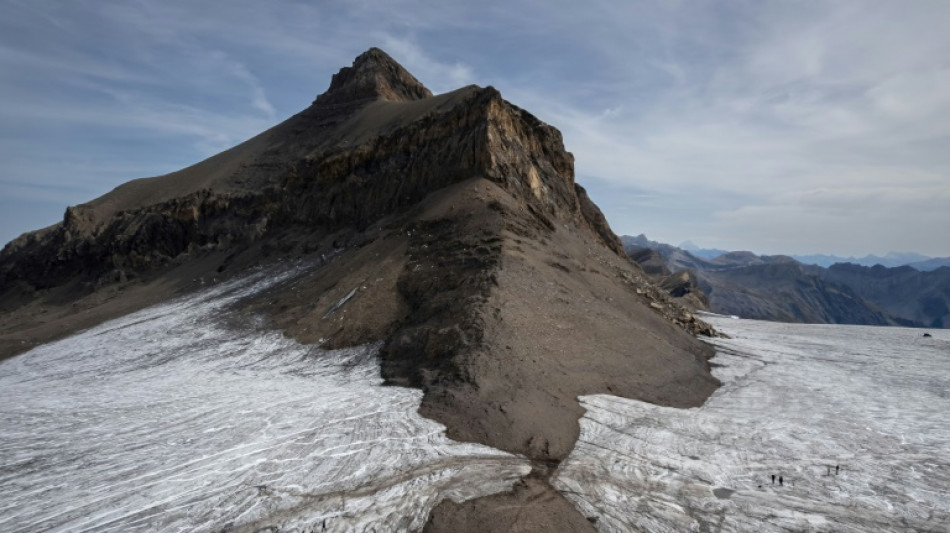
All regions experienced water extremes in 2021: UN / Photo: Fabrice COFFRINI - AFP

All regions experienced water extremes in 2021: UN

All regions of the world saw water extremes last year -- both floods and droughts -- and billions of people had insufficient freshwater, the United Nations said on Tuesday.

Text size:

Large areas of the planet recorded drier than normal conditions in 2021, the UN's World Meteorological Organization said in its first annual State of Global Water Resources report.

The report assesses the effects of changes in the climate, environment and society on the Earth’s freshwater resources -- limited supplies that are under growing demand -- so they can be managed better.

"The impacts of climate change are often felt through water -- more intense and frequent droughts, more extreme flooding, more erratic seasonal rainfall and accelerated melting of glaciers -- with cascading effects on economies, ecosystems and all aspects of our daily lives," said WMO head Petteri Taalas.

"And yet there is insufficient understanding of changes in the distribution, quantity and quality of freshwater resources."

Some 3.6 billion people face inadequate access to freshwater at least one month per year. That is forecast to rise to more than five billion by 2050, the report said.

Between 2001 and 2018, 74 percent of all natural disasters were water-related, according to UN studies.

In 2021, all regions saw devastating water extremes, the report said.

There were record-breaking floods in western Europe and the Amazon, while water levels in rivers in Paraguay and southern Brazil dropped to an all-time low.

The report assessed streamflow -- the volume of water flowing through a river -- over a 30-year period.

Drops in water volumes were twice as widespread as rises.

Major river basins in the Americas and central Africa saw water volumes shrink. Rivers in northern India and southern Africa saw above average increases.

- Frozen resources -

Terrestrial water storage -- all water on the land surface and in the subsurface -- shrank more than it grew, the report said.

Negative hotspots included Patagonia, the Ganges and Indus headwaters, and the southwestern United States.

"Some of the hotspots are exacerbated by (over-extraction) of groundwater for irrigation. The melting of snow and ice also has a significant impact in several areas, including Alaska, Patagonia and the Himalayas," the WMO said.

The world’s biggest natural reservoir of freshwater is the cryosphere -- glaciers, snow cover, ice caps and permafrost -- and changes to this reservoir affect food production, health and the natural world, the report said.

Around 1.9 billion people live in areas where drinking water is supplied by glaciers and snow melt but these glaciers are melting increasingly fast, it stressed.

It urged authorities to speed up the introduction of drought and flood early warning systems to help reduce the impact of water extremes.

S.Fujimoto--JT