The Japan Times - OPEC+ boosts September production by 188,000 barrels/day

EUR -
AED 4.188346
AFN 72.397212
ALL 91.863029
AMD 414.753085
ANG 2.041582
AOA 1046.810584
ARS 1733.141772
AUD 1.621837
AWG 2.053424
AZN 1.945944
BAM 1.95503
BBD 2.294787
BDT 140.200338
BGN 1.919655
BHD 0.429499
BIF 3431.684419
BMD 1.140316
BND 1.455684
BOB 13.963054
BRL 5.906607
BSD 1.139296
BTN 109.104353
BWP 15.513756
BYN 3.442381
BYR 22350.19505
BZD 2.291488
CAD 1.613125
CDF 2634.129976
CHF 0.944404
CLF 0.02776
CLP 1096.140118
CNY 7.65306
CNH 7.665535
COP 3828.953313
CRC 518.016507
CUC 1.140316
CUP 27.343235
CVE 110.225955
CZK 24.344494
DJF 202.888132
DKK 7.475479
DOP 67.755999
DZD 152.488795
EGP 59.037548
ERN 17.104741
ETB 184.830529
FJD 2.562576
FKP 0.862937
GBP 0.860557
GEL 2.981875
GGP 0.862937
GHS 13.233312
GIP 0.862937
GMD 83.794715
GNF 10020.450527
GTQ 8.700918
GYD 238.385558
HKD 8.944491
HNL 30.580168
HRK 7.533498
HTG 149.107183
HUF 365.354419
IDR 20465.25258
ILS 3.459206
IMP 0.862937
INR 109.250776
IQD 1492.571297
IRR 1567449.967068
ISK 136.613062
JEP 0.862937
JMD 180.249039
JOD 0.808526
JPY 179.712102
KES 147.781491
KGS 99.718593
KHR 4633.358758
KMF 493.756659
KPW 1026.284829
KRW 1544.75229
KWD 0.351936
KYD 0.949418
KZT 504.673698
LAK 25555.947499
LBP 102028.459187
LKR 376.175204
LRD 195.970583
LSL 18.588815
LTL 3.367057
LVL 0.689766
LYD 7.284132
MAD 10.933427
MDL 20.222861
MGA 5030.218182
MKD 61.55118
MMK 2394.092104
MNT 4103.8065
MOP 9.204696
MRU 45.834358
MUR 54.199553
MVR 17.617848
MWK 1975.600197
MXN 20.182973
MYR 4.645673
MZN 72.877494
NAD 18.588815
NGN 1512.561427
NIO 41.925149
NOK 10.841931
NPR 174.567164
NZD 2.010976
OMR 0.438445
PAB 1.139296
PEN 3.86783
PGK 5.076202
PHP 71.275491
PKR 315.703181
PLN 4.371487
PYG 6715.621173
QAR 4.153029
RON 5.27362
RSD 117.392132
RUB 96.099733
RWF 1683.822337
SAR 4.275965
SBD 9.123112
SCR 15.729463
SDG 685.899716
SEK 11.29244
SGD 1.456332
SHP 0.860941
SLE 28.10932
SLL 23911.848655
SOS 651.169341
SRD 42.9842
STD 23602.240442
STN 24.491325
SVC 9.969469
SYP 14826.389884
SZL 18.584417
THB 38.023264
TJS 10.510477
TMT 4.002509
TND 3.372772
TOP 2.745607
TRY 55.833068
TTD 7.749255
TWD 36.216858
TZS 3016.166809
UAH 51.018828
UGX 4462.419309
USD 1.140316
UYU 45.642431
UZS 13483.809864
VES 972.041285
VND 29620.850338
VUV 135.134765
WST 3.153524
XAF 655.957
XAG 0.017582
XAU 0.000264913781
XCD 3.081761
XCG 2.053139
XDR 0.806263
XOF 655.957
XPF 119.331742
YER 269.855618
ZAR 18.581382
ZMK 10264.209889
ZMW 22.225127
ZWL 367.181311
SSP 6514.160368
MXV 2.287172
  • BCC

    -0.3700

    75.73

    -0.49%

  • RBGPF

    -1.0100

    65.99

    -1.53%

  • NGG

    -0.3900

    74.84

    -0.52%

  • GSK

    -0.5350

    49.115

    -1.09%

  • RIO

    -0.4700

    94

    -0.5%

  • CMSD

    0.0290

    20.399

    +0.14%

  • RYCEF

    0.0000

    19.67

    0%

  • CMSC

    -0.0200

    20.49

    -0.1%

  • JRI

    -0.1800

    10.99

    -1.64%

  • RELX

    0.0200

    33.53

    +0.06%

  • VOD

    0.0750

    16.565

    +0.45%

  • BCE

    -0.2100

    21.09

    -1%

  • BTI

    -0.7800

    55.24

    -1.41%

  • BP

    -0.0250

    44.385

    -0.06%

  • AZN

    1.6500

    166.21

    +0.99%

OPEC+ boosts September production by 188,000 barrels/day
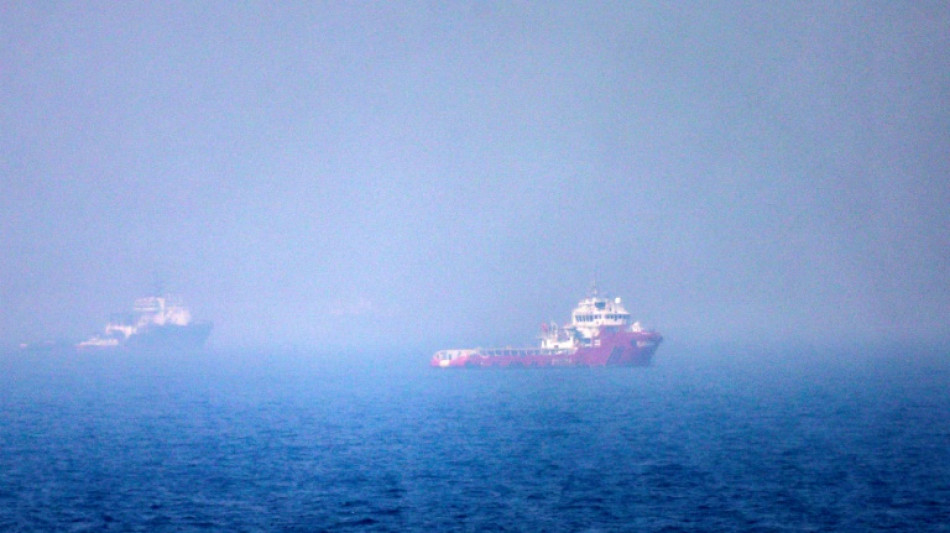
OPEC+ boosts September production by 188,000 barrels/day / Photo: - - AFP/File

OPEC+ boosts September production by 188,000 barrels/day

Saudi Arabia, Russia and five other key members of OPEC+ agreed in an online meeting Sunday to boost oil production by 188,000 barrels a day from September, against a backdrop of disruption caused by the Mideast war.

Text size:

"The seven participating countries decided to implement a production adjustment of 188 thousand barrels per day," they said in a joint statement.

The increase, decided by the key countries in the enlarged Organisation of the Petroleum Exporting Countries, was widely expected by analysts.

"OPEC+ has finished unwinding its voluntary cuts. The next challenge is managing the surplus that could emerge as export flows normalise," said Jorge Leon, analyst at Rystad Energy.

He warned, however, that "today's decision changes little in the near term because (the Strait of) Hormuz remains constrained. The real market impact will come when normal export flows resume."

The Gulf countries have struggled to increase exports due to the near-paralysis of the Strait of Hormuz orchestrated by Iran during the war in the Middle East -- despite a brief upswing in shipping traffic after a US-Iran memorandum of understanding was signed in June.

Many OPEC+ members cannot produce as much oil as their official targets allow due to a "decline in production capacity", so increasing targets has become less meaningful, said Giovanni Staunovo, an analyst at UBS.

- Future pause foreseen -

The September increase, agreed by OPEC+ countries Saudi Arabia, Russia, Iraq, Kuwait, Kazakhstan, Algeria, and Oman, completes the unwinding of the second of the three production-cut packages introduced by organisation.

"Having completed the restoration campaign, OPEC+ has little incentive to rush into further supply changes. Our base case is a fourth-quarter pause while the group prepares for the 2027 quota negotiations," said Rystad Energy's Leon.

"For now, geopolitics is masking the scale of the supply increase. That will become much clearer once export flows normalise," he said.

It remains unclear when the group will actually be able to increase its oil volumes. Some member countries, such as Iraq, have expressed a desire to significantly boost production.

Russia, though, is confronted with repeated Ukrainian drone attacks on its oil infrastructure that have crimped production, currently hovering around nine million barrels per day -- compared with a target of 9.8 million barrels per day.

OPEC+ "faces potentially difficult talks over new production quotas" starting next year following the September increase, according to analysts at DNB Carnegie.

Between late 2022 and 2023, OPEC+ became concerned that oil prices were falling, and agreed to cut oil production in three separate rounds, reducing total output by nearly six million barrels per day.

But Saudi Arabia, Russia, Iraq, Kuwait, Kazakhstan, Algeria, Oman and the United Arab Emirates -- before the latter's exit from the group on May 1 -- then changed their strategy by gradually upping production starting in 2025.

"I don't think cohesion is at risk at this very moment," said Leon, warning, however, that the UAE's withdrawal from the group in May has highlighted a weakness in this area.

Y.Kimura--JT