The Japan Times - Germany plans 10-bn-euro inflation relief tax package

EUR -
AED 4.048396
AFN 71.653352
ALL 90.750248
AMD 397.442801
ANG 1.973656
AOA 1011.960474
ARS 1704.382464
AUD 1.618965
AWG 1.984235
AZN 1.878376
BAM 1.951036
BBD 2.220877
BDT 137.480376
BGN 1.95499
BHD 0.417001
BIF 3319.209083
BMD 1.102353
BND 1.423304
BOB 12.873388
BRL 6.246268
BSD 1.102607
BTN 104.113285
BWP 15.450042
BYN 3.311509
BYR 21606.119128
BZD 2.223106
CAD 1.573113
CDF 2551.947633
CHF 0.923202
CLF 0.028075
CLP 1104.973024
CNY 7.354624
CNH 7.359975
COP 3659.778945
CRC 495.301355
CUC 1.102353
CUP 26.528073
CVE 110.401089
CZK 24.405329
DJF 196.830539
DKK 7.476493
DOP 67.240184
DZD 151.259414
EGP 58.978161
ERN 16.535295
ETB 181.421296
FJD 2.507137
FKP 0.834359
GBP 0.833065
GEL 2.855525
GGP 0.834359
GHS 12.925133
GIP 0.834359
GMD 81.574515
GNF 9793.0268
GTQ 8.429301
GYD 230.683524
HKD 8.648736
HNL 29.723081
HRK 7.531237
HTG 144.950397
HUF 364.882711
IDR 20101.848202
ILS 3.545943
IMP 0.834359
INR 103.891816
IQD 1675.704586
IRR 2109614.310597
ISK 136.615035
JEP 0.834359
JMD 174.650478
JOD 0.781612
JPY 176.084403
KES 143.361434
KGS 96.384792
KHR 4497.600695
KMF 492.752185
KPW 992.118101
KRW 1471.994453
KWD 0.34335
KYD 0.921103
KZT 492.691348
LAK 24881.068091
LBP 98983.270882
LKR 367.641006
LRD 187.910514
LSL 18.686451
LTL 3.254962
LVL 0.666803
LYD 7.125019
MAD 10.95393
MDL 20.078055
MGA 5022.013743
MKD 61.545168
MMK 2315.243938
MNT 3974.71339
MOP 8.933124
MRU 44.703122
MUR 52.494468
MVR 16.980358
MWK 1916.705245
MXN 20.433771
MYR 4.504329
MZN 70.444469
NAD 18.686451
NGN 1481.088858
NIO 40.680111
NOK 10.552253
NPR 166.581456
NZD 1.994668
OMR 0.424511
PAB 1.102607
PEN 3.76101
PGK 5.044014
PHP 70.506912
PKR 305.654336
PLN 4.405592
PYG 6843.288459
QAR 4.01725
RON 5.348511
RSD 117.465677
RUB 91.30685
RWF 1635.304475
SAR 4.217282
SBD 8.926521
SCR 15.295042
SDG 663.069392
SEK 11.106249
SGD 1.419063
SHP 0.830054
SLE 25.409646
SLL 23115.795624
SOS 631.701729
SRD 41.327623
STD 22816.481805
STN 24.500067
SVC 9.672026
SYP 14332.794295
SZL 18.681051
THB 37.34225
TJS 10.196728
TMT 3.858236
TND 3.316433
TOP 2.654202
TRY 55.485621
TTD 7.503021
TWD 36.257938
TZS 2926.90801
UAH 50.255138
UGX 4553.879273
USD 1.102353
UYU 44.690863
UZS 13292.036376
VES 1006.315196
VND 28358.582532
VUV 132.635217
WST 3.098258
XAF 655.957
XAG 0.022553
XAU 0.000284217451
XCD 2.979165
XCG 1.992105
XDR 0.779421
XOF 655.957
XPF 119.331742
YER 260.762006
ZAR 18.713826
ZMK 9922.503926
ZMW 22.599062
ZWL 354.957222
SSP 6553.90889
MXV 2.294737
  • RYCEF

    0.1000

    19.81

    +0.5%

  • VOD

    -0.2500

    16.33

    -1.53%

  • CMSC

    -0.2800

    20.12

    -1.39%

  • RBGPF

    -2.0000

    65

    -3.08%

  • RIO

    -0.2500

    94.16

    -0.27%

  • BTI

    -1.2000

    54.85

    -2.19%

  • NGG

    -0.3000

    74.94

    -0.4%

  • GSK

    -0.3500

    49.35

    -0.71%

  • BCE

    -0.4200

    20.14

    -2.09%

  • CMSD

    -0.3400

    19.93

    -1.71%

  • BP

    -0.9100

    43.52

    -2.09%

  • RELX

    0.1700

    33.24

    +0.51%

  • BCC

    -0.6200

    75.97

    -0.82%

  • AZN

    -1.9400

    164.21

    -1.18%

  • JRI

    0.0000

    10.77

    0%

Germany plans 10-bn-euro inflation relief tax package
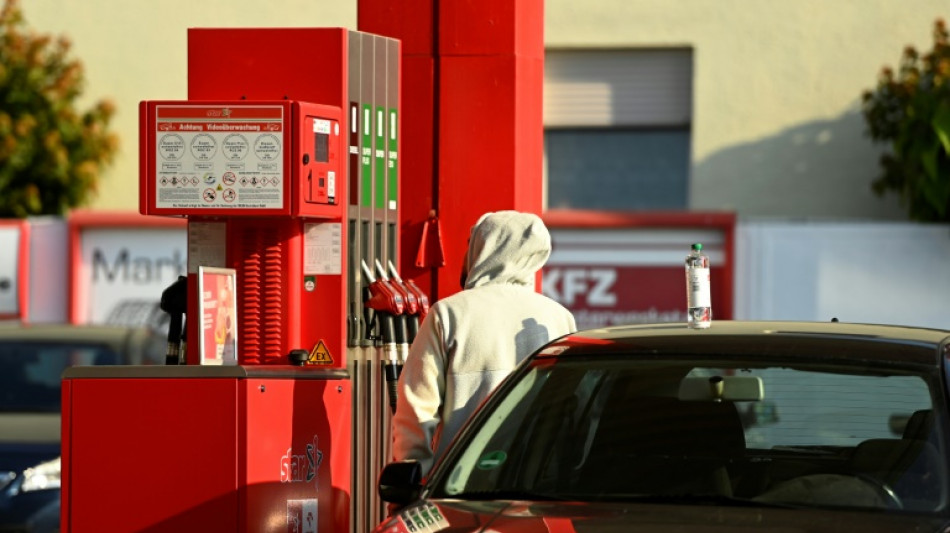
Germany plans 10-bn-euro inflation relief tax package / Photo: Ina FASSBENDER - AFP/File

Germany plans 10-bn-euro inflation relief tax package

Germany will offer tax relief worth 10 billion euros ($10.2 billion) to help workers cope with soaring inflation, Finance Minister Christian Lindner said Wednesday.

Text size:

The package will raise base tax-free allowance as well as bring up the level from which the top income tax rate of 42 percent will apply. Families will also benefit from higher tax exemptions for dependent children.

Inflation in Germany reached 7.5 percent in July, fractionally lower than the 7.6 percent recorded in June, fuelled mainly by energy prices that soared following Russia's invasion of Ukraine.

Lindner said his plan is aimed primarily at fighting the problem of employees who find themselves with a higher tax burden because they have received a pay increase to combat inflation.

As a result, the gain the workers have received is wiped out essentially by the higher taxes due.

The phenomenon, called "cold progression", also typically hits lower incomes harder.

Lindner said 48 million Germans would be facing higher taxes from January 2023 if no relief was offered.

"For the state to benefit at a time when daily life is becoming more expensive... that is not fair and also dangerous for economic development," said Lindner.

- Double whammy -

The tax relief measures come on top of a 30 billion euro package unleashed by Chancellor Olaf Scholz earlier this year to help consumers beat inflation.

The earlier package included a fuel tax cut and a public transport ticket valid across Germany priced at just 9 euros a month for June, July and August.

But it is clear that the clouds hanging over Europe's biggest economy are only darkening as the country heads into the colder months.

The Ukraine conflict has derailed Germany's hopes of finally shaking off the coronavirus pandemic and roaring back to growth.

With its export-oriented industries, Germany has been particularly vulnerable to the supply chain bottlenecks and raw material shortages caused by the pandemic.

But now, Germans are also staring down the barrel of doubling energy bills, after Russia drastically curtailed its supply following its invasion of Ukraine.

The power crunch is not only nibbling away at consumers' purchasing power but also hurting German industry, much of which relies on cheap energy supplies to manufacture exports.

Employees in Europe's biggest economy are therefore facing the double whammy of higher costs and a growing threat of job losses as major companies mull idling some factories because it may no longer be cost effective to keep production lines running.

German growth stagnated in the second quarter of the year, but analysts have warned that a recession in the second half will be inevitable.

At their last forecast in March, the German government's economic advisers estimated that gross domestic product will expand by 1.8 percent for 2022.

Y.Ishikawa--JT



