The Japan Times - US first-quarter growth rebounds less than expected as inflation surges

EUR -
AED 4.172533
AFN 72.147498
ALL 94.446414
AMD 416.184199
ANG 2.034179
AOA 1042.422579
ARS 1680.653568
AUD 1.647772
AWG 2.046503
AZN 1.94392
BAM 1.955726
BBD 2.283813
BDT 139.474705
BGN 1.921105
BHD 0.427682
BIF 3384.726811
BMD 1.136157
BND 1.473025
BOB 7.835703
BRL 5.898359
BSD 1.133957
BTN 107.303926
BWP 15.513343
BYN 3.195765
BYR 22268.674564
BZD 2.280513
CAD 1.618018
CDF 2577.93958
CHF 0.92244
CLF 0.026512
CLP 1043.424184
CNY 7.715077
CNH 7.737728
COP 3912.924245
CRC 516.17586
CUC 1.136157
CUP 30.108157
CVE 110.260814
CZK 24.23576
DJF 201.922334
DKK 7.475582
DOP 66.466892
DZD 151.638316
EGP 56.387922
ERN 17.042353
ETB 182.81205
FJD 2.549762
FKP 0.863423
GBP 0.862287
GEL 2.999539
GGP 0.863423
GHS 12.700518
GIP 0.863423
GMD 82.315257
GNF 9935.491624
GTQ 8.649672
GYD 237.190995
HKD 8.907186
HNL 30.341581
HRK 7.53283
HTG 148.262414
HUF 355.156486
IDR 20372.428755
ILS 3.386037
IMP 0.863423
INR 107.388181
IQD 1485.443605
IRR 1562272.497635
ISK 144.201475
JEP 0.863423
JMD 178.592434
JOD 0.805539
JPY 183.862032
KES 147.133961
KGS 99.356303
KHR 4555.766892
KMF 493.092633
KPW 1022.541577
KRW 1752.283149
KWD 0.351572
KYD 0.944964
KZT 551.82905
LAK 24890.055042
LBP 101555.797479
LKR 382.555476
LRD 206.542159
LSL 18.852084
LTL 3.354776
LVL 0.68725
LYD 7.292723
MAD 10.661295
MDL 20.082149
MGA 4736.79932
MKD 61.61368
MMK 2385.400948
MNT 4071.785272
MOP 9.158352
MRU 45.340079
MUR 54.75128
MVR 17.553658
MWK 1966.216699
MXN 20.011357
MYR 4.672335
MZN 72.612193
NAD 18.852084
NGN 1557.212948
NIO 41.727865
NOK 11.203075
NPR 171.684971
NZD 2.012912
OMR 0.43686
PAB 1.133957
PEN 3.845754
PGK 4.974745
PHP 69.666849
PKR 315.373439
PLN 4.286618
PYG 6916.737404
QAR 4.122343
RON 5.235068
RSD 117.349115
RUB 85.096665
RWF 1665.72943
SAR 4.25752
SBD 9.148281
SCR 16.823661
SDG 681.693902
SEK 11.076051
SGD 1.473794
SHP 0.848256
SLE 28.173786
SLL 23824.645554
SOS 648.072544
SRD 42.560928
STD 23516.153224
STN 24.498746
SVC 9.921623
SYP 125.581802
SZL 18.849201
THB 37.950477
TJS 10.5286
TMT 3.976549
TND 3.370872
TOP 2.735594
TRY 52.848676
TTD 7.688708
TWD 36.145468
TZS 2977.510374
UAH 50.898944
UGX 4183.841159
USD 1.136157
UYU 45.268281
UZS 13635.482325
VES 705.272766
VND 29915.578347
VUV 136.135153
WST 3.155989
XAF 655.929211
XAG 0.019883
XAU 0.000285
XCD 3.070521
XCG 2.043622
XDR 0.815765
XOF 655.932097
XPF 119.331742
YER 271.115476
ZAR 18.81311
ZMK 10226.774941
ZMW 20.439224
ZWL 365.842047
  • CMSC

    -0.0450

    22.065

    -0.2%

  • RBGPF

    0.0000

    61.3

    0%

  • VOD

    -0.2400

    13.81

    -1.74%

  • BCC

    5.8600

    77.66

    +7.55%

  • NGG

    1.2600

    82.83

    +1.52%

  • AZN

    2.0000

    183.02

    +1.09%

  • BCE

    0.1600

    23.2

    +0.69%

  • RYCEF

    -0.1600

    18

    -0.89%

  • RIO

    -1.5500

    94.03

    -1.65%

  • JRI

    -0.0600

    12.57

    -0.48%

  • GSK

    -0.9800

    51.09

    -1.92%

  • CMSD

    0.0600

    22.02

    +0.27%

  • RELX

    -0.0600

    31.15

    -0.19%

  • BP

    -1.4700

    37.86

    -3.88%

  • BTI

    0.6500

    61.39

    +1.06%

US first-quarter growth rebounds less than expected as inflation surges
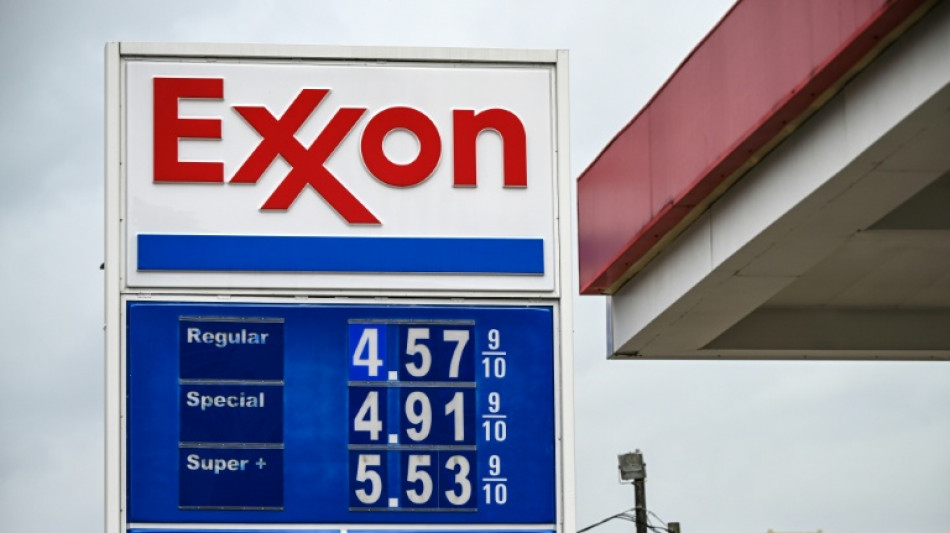
US first-quarter growth rebounds less than expected as inflation surges / Photo: RONALDO SCHEMIDT - AFP/File

US first-quarter growth rebounds less than expected as inflation surges

US economic growth rebounded less than expected in the first quarter as consumer spending cooled, while inflation surged in March with fallout from the Middle East war beginning to bite, government data showed Thursday.

Text size:

While the world's biggest economy appears to remain resilient, some analysts warn of reliance on an AI investment boom, while consumers are showing fatigue that could intensify as the energy shock from the war worsens.

Gross domestic product rose at an annual rate of 2.0 percent in the January to March period, according to an advance estimate released by the Commerce Department.

This was significantly higher than the 0.5 percent figure in the final three months of 2025, but still below the 2.2 percent expansion that analysts predicted.

An uptick in government spending and investment boosted the GDP figure, but this was "partly offset by a deceleration in consumer spending," the department said.

A separate Commerce Department report on Thursday showed that the Federal Reserve's preferred inflation gauge surged in March as energy costs skyrocketed over the war.

The personal consumption expenditures (PCE) price index jumped 3.5 percent from a year ago, up notably from 2.8 percent in February.

Excluding food and energy, the PCE price index was up 3.2 percent from a year prior.

Energy costs have soared since US-Israeli strikes targeting Iran on February 28 triggered Tehran's retaliation in virtually blocking off the Strait of Hormuz.

The waterway is a key route of transit for energy and fertilizers, sending global costs up.

This has caused prices at US gasoline stations to spike, with the average price of a gallon (3.78 liters) of regular gasoline hitting $4.30 according to data from the AAA motor club.

Steeper costs are expected to weigh on households and create steep political risks for US President Donald Trump's Republican Party heading into the November midterm elections.

"The big picture is that growth already was sluggish ahead of the energy shock, with the economy's underlying momentum anemic outside the continued surge in AI-related capital expenditure," said Oliver Allen, senior US economist at Pantheon Macroeconomics.

While there was a jump in government spending, boosting GDP growth, this was "entirely due to a sharp rebound in federal government spending following the shutdown in the fourth quarter," he said.

Allen added that consumer spending in the first three months this year was also weaker than its average pace over the past four quarters.

"The subdued labor market, depressed confidence, meager real income growth, and exhaustion of pandemic-era excess savings all are starting to weigh on households," he warned.

Chris Zaccarelli, chief investment officer at Northlight Asset Management, expects the US economy can withstand short-term global economic shocks.

"But we are becoming more concerned that the global economy is going to have a much more difficult time weathering the upcoming storm," Zaccarelli added.

H.Nakamura--JT