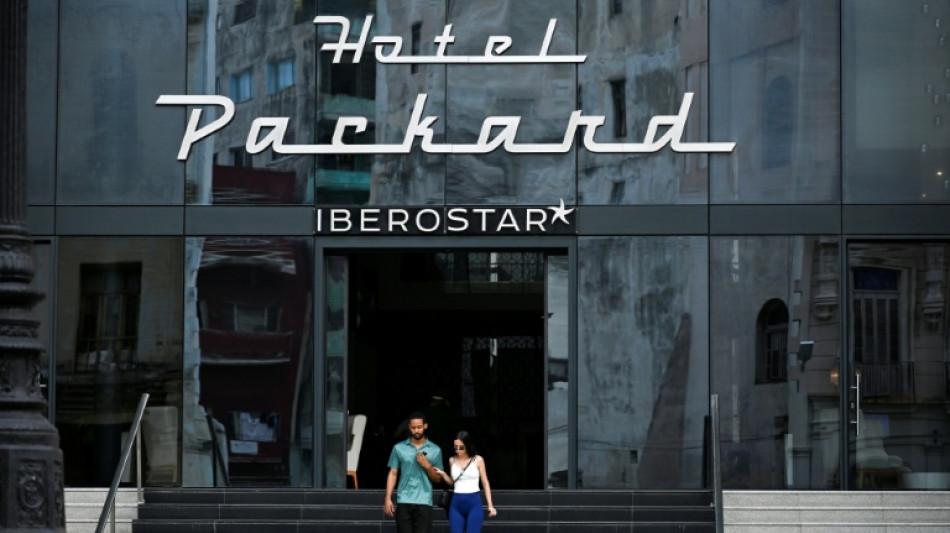
Tourism plummets in US-blockaded Cuba / Photo: YAMIL LAGE - AFP/File

Tourist trips to Cuba almost halved since the beginning of the year, Havana's statistics office said Monday, as a US fuel blockade pummels the island and international flights remain suspended.
Cuba has weathered severe economic difficulties since the imposition of a US trade embargo in 1962, but President Donald Trump's fuel blockade of the island nation since January marks a new economic low, with regular blackouts now part of daily life.
The harsh measures have not spared Cuba's tourism sector, usually its second-biggest source of foreign currency and an employer of over 300,000 people.
Between January and March, the island received 298,057 foreign visitors -- 48 percent fewer than the same period in 2025, figures published by the national statistics office ONEI showed.
March saw a record-breaking drop, when just 35,561 foreign tourists visited Cuba.
The decline affected markets across the board, with 54.2 percent fewer visits from Canada and 37.5 percent fewer Russian tourists.
Tourists from the Cuban community living abroad, mostly based in the United States, meanwhile fell by 42.8 percent.
Tourism in Cuba previously flourished somewhat thanks to a diplomatic rapprochement between Havana's communist government and former US president Barack Obama.
But the Covid-19 pandemic hampered growth, with Cuba's tourism revenues declining by 70 percent between 2019 and 2025.
Tougher US sanctions under Trump followed, and even before the ongoing fuel blockade was imposed, tourism had fallen by 17.8 percent.
Fuel shortages have pushed several international airlines to temporarily halt flights to the island.
The island's medical services, nickel and tobacco exports have also suffered severely under the US fuel blockade.
Havana has been bracing for a possible attack following repeated warnings from Trump that Cuba is "next" on his list after the ouster of Venezuelan leader Nicolas Maduro and US-Israeli attacks on Iran.
Y.Kimura--JT