US consumers' inflation expectations surge on Mideast war / Photo: Frederic J. BROWN - AFP

Inflation expectations among US consumers surged in March to levels last seen around seven months ago, following rocketing energy prices due to war in the Middle East, survey data showed Tuesday.
But overall, the Conference Board's Consumer Confidence Index beat analyst expectations to inch up this month to 91.8 from 91.0 in February.
Economists had forecast a drop in consumer confidence to 87.5.
The increase came as respondents' views of current business and job market conditions improved, though their outlooks for the future were gloomier.
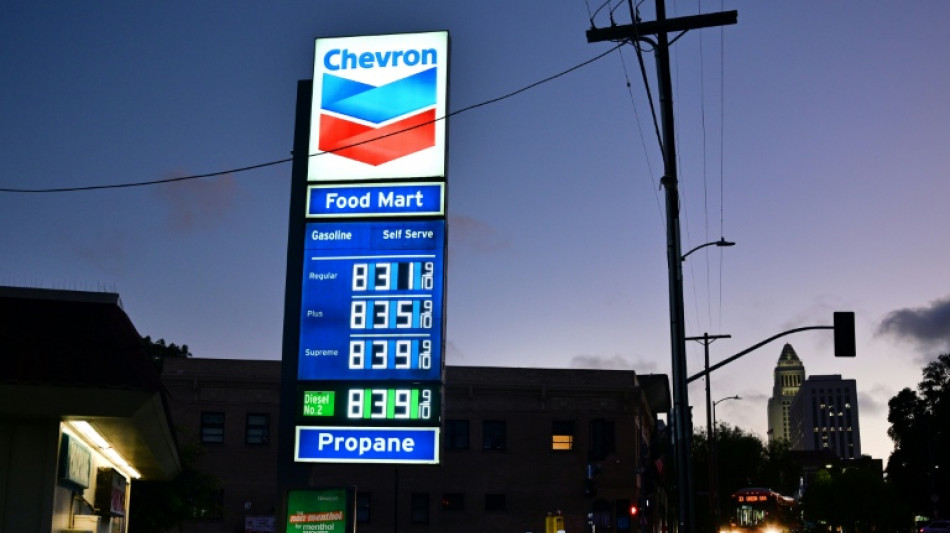
The report is being monitored for how American households respond to price pressures as gasoline costs jump after US-Israeli strikes on Iran plunged the region into war.
On Monday, US Federal Reserve Chair Jerome Powell said that even if the central bank could look past the energy shock from the conflict, it might have to act if rising costs change the public's expectations about inflation.
Since the conflict started, Tehran's retaliation has sharply restricted access to the Strait of Hormuz, a critical shipping route for energy resources.
Global oil prices have jumped as fighting enters a fifth week.
"Unsurprisingly given the Iran war oil shock, consumers' average and median 12-month inflation expectations surged in March to levels last seen in August 2025," The Conference Board said.
Back then, households were waiting for more tariff announcements from President Donald Trump.
"Americans are clearly worried about rising gas prices and a prolonged war in Iran," said Heather Long, chief economist at Navy Federal Credit Union.
- 'Strain is starting to show' -
Even though consumer confidence edged up overall, details show "growing concern about rising prices, especially gas prices, and a hesitancy to make big purchases," Long said.
"The strain is starting to show, especially as gas hits $4 a gallon nationwide," she added. A key worry is demand destruction due to the oil shock.
"It's almost certainly going to be a muted second quarter for spending and GDP growth as the worst of the inflation shock hits consumers," she warned.
The Conference Board's chief economist Dana Peterson added that respondents' comments about prices suggest that costs of living remained top-of-mind.
War on Iran "overlapped significantly with the survey sample period," and comments on oil and gas spiked, she said.
"Consequently, the percentage of consumers stating that interest rates over the next 12 months will be higher on net skyrocketed from 34.9 percent to 42.4 percent," the report said.
Y.Hara--JT