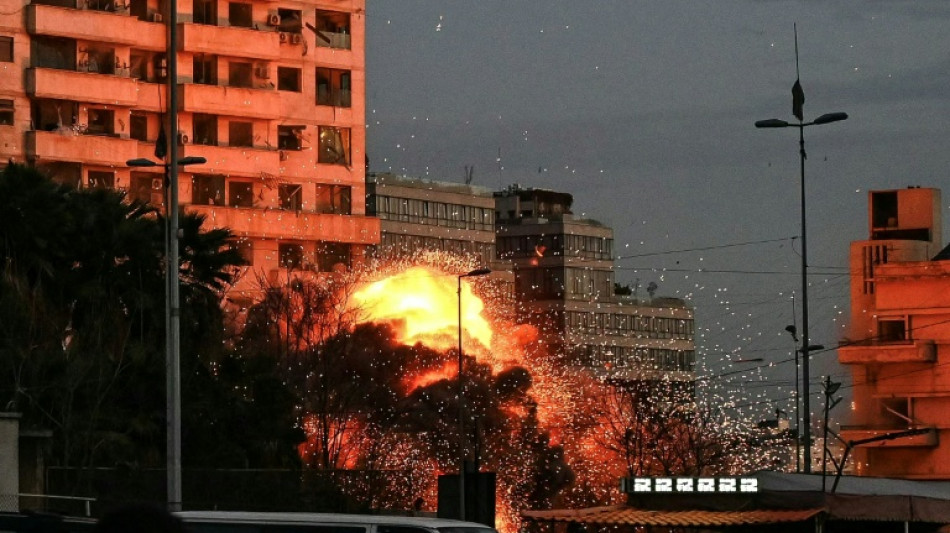
Lebanon at risk of 'humanitarian catastrophe': UN / Photo: FADEL itani - AFP/File

Nearly a month into the Middle East war, Lebanon is facing a deepening humanitarian crisis that now risks teetering over into a catastrophe, the United Nations refugee agency warned Friday.
Since March 2, more than a million people -- one in five residents -- have been forced to flee their homes, said the UNHCR.
With the numbers continuing to rise, "it is really a deepening humanitarian crisis that we here on the ground are seeing in Lebanon", said Karolina Lindholm Billing, the agency's representative in the country.
"The situation remains extremely worrying and the risk of a humanitarian catastrophe... is real," she told reporters in Geneva, speaking from Beirut.
Lebanon was drawn into the Middle East war on March 2 when Tehran-backed Hezbollah began firing rockets into Israel to avenge the killing of Iranian supreme leader Ayatollah Ali Khamenei.
"More than 136,000 displaced people are staying in 660 collective shelters, most of them schools, filled far beyond capacity," she said. There was limited access to sanitation, and older people were struggling to sleep on classroom floors.
In southern Lebanon, Israel's destruction of key bridges has left more than 150,000 people isolated and severely limited humanitarian access, said Lindholm Billing.
UNHCR is appealing for more than $60 million to scale up its response, and warned that needs were rising faster than resources.
"Lebanon was already facing multiple crises, and this massive displacement is adding immense pressure on families and services," Lindholm Billing said.
"Again and again, people tell me the same thing: they simply want to go home."
- Families torn apart -
The UN Women agency said pregnant women were giving birth in temporary shelters with limited access to care.
The shelters, such as school classrooms, are not set up for long-term displacement, said the agency's Lebanon representative Gielan El Messiri.
"Women describe constant fear, sleeplessness and exhaustion, while also comforting frightened children," she said.
The UN children's agency UNICEF said more than 370,000 children in Lebanon were among those forced to flee their homes -- and there was "no safe place" to go to.
"The speed and scale are staggering," said Marcoluigi Corsi, UNICEF's representative in Lebanon.
"This is a sudden, chaotic mass displacement, tearing families apart and hollowing out entire communities, with consequences that will reverberate long after the violence subsides.
"The mental and emotional exhaustion weighing on the children of Lebanon is devastating."
The World Health Organization has sent a first humanitarian convoy overland to Lebanon, which has now reached Syria.
IFRC spokesman Tommaso Della Longa said the LRC was the main ambulance service provider. "Between March 2 and 23, LRC teams conducted 2,754 ambulance missions and 11 urban search and rescue operations," he said.
One LRC volunteer had been killed and several others wounded during ambulance missions, Della Longa added.
"Staff and volunteers are working under extreme pressure while ensuring both their personal safety and the safe evacuation of injured individuals," he said.
T.Sasaki--JT