The Japan Times - UN warns Hormuz standstill will hit world's most vulnerable

EUR -
AED 4.334303
AFN 75.532854
ALL 95.611171
AMD 439.713974
ANG 2.112432
AOA 1083.428501
ARS 1603.267554
AUD 1.642422
AWG 2.121272
AZN 2.003555
BAM 1.954973
BBD 2.370997
BDT 144.768754
BGN 1.968703
BHD 0.445134
BIF 3500.108213
BMD 1.180206
BND 1.497704
BOB 8.134559
BRL 5.891347
BSD 1.177202
BTN 109.945486
BWP 15.795853
BYN 3.359879
BYR 23132.031755
BZD 2.367598
CAD 1.620015
CDF 2720.373835
CHF 0.92209
CLF 0.026539
CLP 1044.482134
CNY 8.046938
CNH 8.043586
COP 4270.538926
CRC 540.289737
CUC 1.180206
CUP 31.275451
CVE 110.218371
CZK 24.329764
DJF 209.631313
DKK 7.473133
DOP 70.152699
DZD 155.848919
EGP 61.367627
ERN 17.703086
ETB 183.816764
FJD 2.614631
FKP 0.870146
GBP 0.869416
GEL 3.175108
GGP 0.870146
GHS 12.996502
GIP 0.870146
GMD 87.335589
GNF 10327.893206
GTQ 9.000192
GYD 246.285806
HKD 9.24251
HNL 31.267832
HRK 7.532194
HTG 154.038748
HUF 363.398905
IDR 20231.14515
ILS 3.524543
IMP 0.870146
INR 110.16099
IQD 1542.147579
IRR 1553298.229553
ISK 143.807732
JEP 0.870146
JMD 185.780062
JOD 0.836793
JPY 187.512265
KES 152.489284
KGS 103.208683
KHR 4715.105105
KMF 493.325782
KPW 1062.187523
KRW 1737.894209
KWD 0.364235
KYD 0.980985
KZT 558.483728
LAK 25973.011849
LBP 105664.174874
LKR 371.402874
LRD 216.608362
LSL 19.315728
LTL 3.484841
LVL 0.713894
LYD 7.447849
MAD 10.887094
MDL 20.130484
MGA 4884.099265
MKD 61.626682
MMK 2478.703965
MNT 4220.867929
MOP 9.500781
MRU 47.006706
MUR 54.526568
MVR 18.234266
MWK 2041.305589
MXN 20.349344
MYR 4.665349
MZN 75.480088
NAD 19.315728
NGN 1586.161342
NIO 43.322773
NOK 11.077115
NPR 175.918538
NZD 1.996477
OMR 0.453712
PAB 1.177202
PEN 3.988912
PGK 5.101971
PHP 70.708481
PKR 328.297774
PLN 4.232902
PYG 7523.816971
QAR 4.292284
RON 5.091381
RSD 117.356095
RUB 89.099516
RWF 1724.021762
SAR 4.42749
SBD 9.498984
SCR 16.961064
SDG 709.303233
SEK 10.794656
SGD 1.498903
SHP 0.881143
SLE 29.092543
SLL 24748.318938
SOS 672.835304
SRD 44.169196
STD 24427.875201
STN 24.490262
SVC 10.300642
SYP 130.512319
SZL 19.303161
THB 37.668037
TJS 11.124594
TMT 4.136621
TND 3.417954
TOP 2.841652
TRY 52.829861
TTD 7.990619
TWD 37.234073
TZS 3068.535305
UAH 51.268848
UGX 4350.15962
USD 1.180206
UYU 47.349968
UZS 14349.929114
VES 564.118109
VND 31067.14479
VUV 140.456327
WST 3.222795
XAF 655.699045
XAG 0.014657
XAU 0.000245
XCD 3.189566
XCG 2.121602
XDR 0.815483
XOF 655.679608
XPF 119.331742
YER 281.592689
ZAR 19.277834
ZMK 10623.264768
ZMW 22.57245
ZWL 380.025754
  • RBGPF

    -13.5000

    69

    -19.57%

  • NGG

    -1.0900

    87.86

    -1.24%

  • BCE

    -0.0300

    23.82

    -0.13%

  • VOD

    -0.0300

    15.59

    -0.19%

  • RYCEF

    -0.2500

    17.54

    -1.43%

  • CMSC

    0.0700

    22.71

    +0.31%

  • GSK

    -1.3700

    57.81

    -2.37%

  • RELX

    0.9700

    35.68

    +2.72%

  • BTI

    -0.8300

    56.68

    -1.46%

  • RIO

    -0.3100

    98.56

    -0.31%

  • BP

    -0.0500

    46.12

    -0.11%

  • BCC

    -2.8100

    78.91

    -3.56%

  • JRI

    0.0935

    12.88

    +0.73%

  • CMSD

    0.2000

    23.03

    +0.87%

  • AZN

    -3.1700

    201.21

    -1.58%

UN warns Hormuz standstill will hit world's most vulnerable
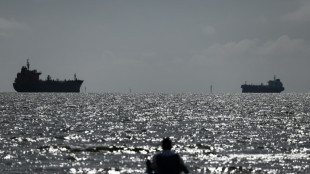
UN warns Hormuz standstill will hit world's most vulnerable / Photo: JULIEN DE ROSA - AFP/File

UN warns Hormuz standstill will hit world's most vulnerable

The standstill in the Strait of Hormuz caused by the Middle East war could hammer some of the world's most vulnerable people, the United Nations warned Tuesday.

Text size:

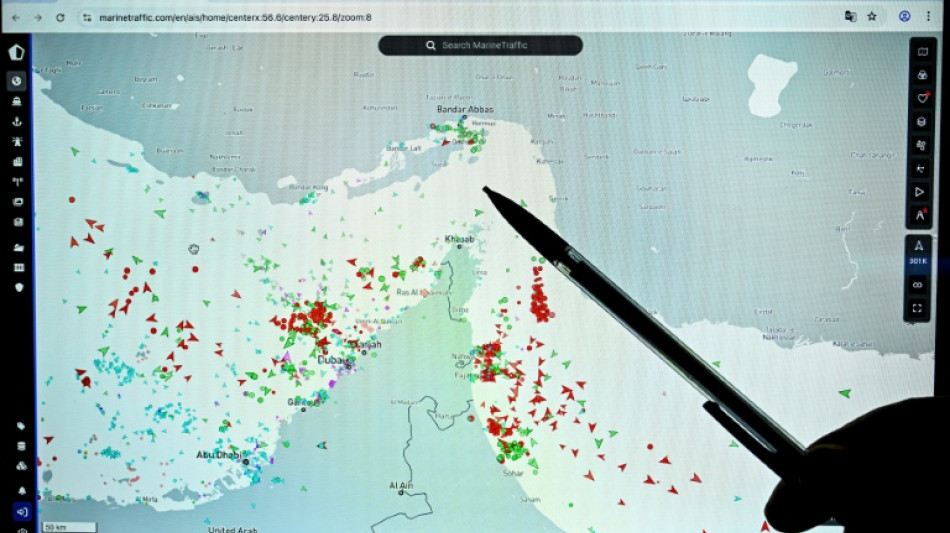
The strait is the only sea passage from the Gulf towards the Indian Ocean, through which nearly a quarter of the world's seaborne oil supplies pass, as well as a significant amount of cargo.

Iran has all but blocked the waterway following the launch of the February 28 US-Israeli airstrikes on the country that triggered the war.

"The current shock comes at a time when many developing economies struggle to service their debt, face a tightening of fiscal space and limited capacity to absorb new price shocks," the UN trade and development agency UNCTAD said.

"Higher energy, fertiliser and transport costs -- including freight rates, bunker fuel prices and insurance premiums -- may increase food costs and intensify cost-of-living pressures, particularly for the most vulnerable," it said.

UNCTAD added that, in terms of seaborne trade volume, in the week before the conflict 38 percent of crude oil, 29 percent of liquified petroleum gas, 19 percent of liquified natural gas and 19 percent refined oil products went through the strait.

But while an average of 129 ship transited daily through the passage between February 1 and 27, that number dropped to just three on March 3.

UNCTAD said the disruptions underscored the vulnerability of critical maritime chokepoints and their potential for disruption to them to send shocks across supply chains and commodity markets.

"Rising energy, transport and food costs could strain public finances and increase pressure on household budgets, potentially heightening economic and social pressures... particularly in economies heavily dependent on imported energy, fertilisers and staple foods," it said.

- Food aid hit -

UN rights chief Volker Turk echoed the alarm for the effect the plunge in commercial shipping activity could have, "particularly for the world's most vulnerable".

"The impact of an oil price surge will have a knock-on effect for macro-economic and social stability in many countries, particularly those already experiencing debt distress," he said.

The UN's World Food Programme said the costs and time lost to the Strait of Hormuz disruptions were already impacting its humanitarian operations.

"This is nothing less than another seminal moment in global supply chain history," Jean-Martin Bauer, the director of WFP's food and nutrition analysis service, told reporters in Geneva.

Speaking from the WFP's Rome headquarters, he said shipping lines were diverting services and adding surcharges, leading to congestion "in places that are very far from Hormuz".

"We're seeing congestion in Asia. It's quite a severe disruption that's taking place right now," Bauer said.

"We're needing to go the long way around the Cape of Good Hope to reach some of our key geographies."

WFP's biggest operation is in Sudan, but now it is facing approximately 25 days of additional shipping time.

"It's basically 50 percent more than we would usually have. So that's really extending the supply chain and adding to cost," said Bauer.

Y.Mori--JT