The Japan Times - EU wants to keep Chinese suppliers out of critical infrastructure

EUR -
AED 4.254039
AFN 72.440766
ALL 95.933853
AMD 435.626678
ANG 2.073543
AOA 1062.206441
ARS 1618.265961
AUD 1.662266
AWG 2.08503
AZN 1.965325
BAM 1.955462
BBD 2.327208
BDT 141.775525
BGN 1.979978
BHD 0.437383
BIF 3427.123166
BMD 1.15835
BND 1.478351
BOB 7.984656
BRL 6.060605
BSD 1.155506
BTN 107.993823
BWP 15.789342
BYN 3.440621
BYR 22703.660648
BZD 2.323909
CAD 1.593096
CDF 2632.929536
CHF 0.913411
CLF 0.026701
CLP 1054.295166
CNY 7.970024
CNH 7.986511
COP 4300.31658
CRC 538.909294
CUC 1.15835
CUP 30.696276
CVE 110.246444
CZK 24.459836
DJF 205.765367
DKK 7.472007
DOP 68.568459
DZD 153.694034
EGP 60.628276
ERN 17.37525
ETB 180.413234
FJD 2.574722
FKP 0.865345
GBP 0.864401
GEL 3.144921
GGP 0.865345
GHS 12.640872
GIP 0.865345
GMD 84.559929
GNF 10128.295263
GTQ 8.85051
GYD 241.739312
HKD 9.075366
HNL 30.583852
HRK 7.532518
HTG 151.344527
HUF 389.20566
IDR 19613.18276
ILS 3.609013
IMP 0.865345
INR 108.466627
IQD 1513.738682
IRR 1523288.210956
ISK 143.588617
JEP 0.865345
JMD 181.999367
JOD 0.821239
JPY 183.823171
KES 149.751724
KGS 101.29835
KHR 4630.220667
KMF 492.298982
KPW 1042.481609
KRW 1739.245175
KWD 0.355104
KYD 0.96293
KZT 556.925778
LAK 24836.819607
LBP 103478.183136
LKR 362.848927
LRD 211.454409
LSL 19.592902
LTL 3.420306
LVL 0.700674
LYD 7.396755
MAD 10.800282
MDL 20.209598
MGA 4809.190544
MKD 61.632498
MMK 2432.10526
MNT 4134.118112
MOP 9.322791
MRU 46.126236
MUR 53.944518
MVR 17.896561
MWK 2003.262822
MXN 20.683452
MYR 4.569113
MZN 74.03046
NAD 19.591127
NGN 1586.418349
NIO 42.522843
NOK 11.314172
NPR 172.789917
NZD 1.985052
OMR 0.445383
PAB 1.155506
PEN 4.019706
PGK 4.98916
PHP 69.466489
PKR 322.55241
PLN 4.264471
PYG 7550.729104
QAR 4.225389
RON 5.095005
RSD 117.498369
RUB 94.898293
RWF 1689.315664
SAR 4.348618
SBD 9.326707
SCR 17.725312
SDG 696.168046
SEK 10.861431
SGD 1.480881
SHP 0.869063
SLE 28.437469
SLL 24290.033558
SOS 660.388847
SRD 43.248734
STD 23975.506985
STN 24.495877
SVC 10.110211
SYP 128.550844
SZL 19.585703
THB 37.829972
TJS 11.040642
TMT 4.054225
TND 3.405227
TOP 2.789028
TRY 51.368209
TTD 7.843969
TWD 37.132646
TZS 3005.918362
UAH 50.734961
UGX 4362.265768
USD 1.15835
UYU 47.082075
UZS 14087.568051
VES 528.791835
VND 30514.994096
VUV 138.374442
WST 3.184159
XAF 655.846612
XAG 0.01723
XAU 0.000266
XCD 3.130499
XCG 2.082432
XDR 0.815663
XOF 655.846612
XPF 119.331742
YER 276.440193
ZAR 19.635944
ZMK 10426.539011
ZMW 22.387232
ZWL 372.988238
  • CMSD

    0.0816

    22.74

    +0.36%

  • JRI

    -0.0900

    11.68

    -0.77%

  • BCC

    3.5800

    71.88

    +4.98%

  • BCE

    -0.0300

    25.76

    -0.12%

  • CMSC

    0.2300

    22.88

    +1.01%

  • RBGPF

    -13.5000

    69

    -19.57%

  • BTI

    0.5500

    57.92

    +0.95%

  • NGG

    0.0700

    82.06

    +0.09%

  • GSK

    0.1500

    51.99

    +0.29%

  • RIO

    2.6900

    85.84

    +3.13%

  • RELX

    0.4500

    33.81

    +1.33%

  • AZN

    0.4700

    184.07

    +0.26%

  • RYCEF

    0.6300

    15.97

    +3.94%

  • BP

    -1.2100

    43.57

    -2.78%

  • VOD

    0.1500

    14.48

    +1.04%

EU wants to keep Chinese suppliers out of critical infrastructure
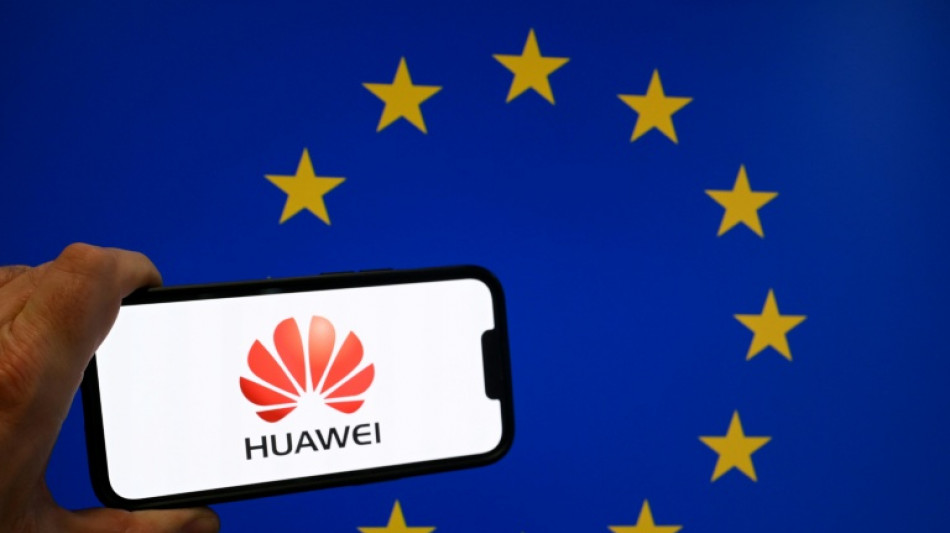
EU wants to keep Chinese suppliers out of critical infrastructure / Photo: Nicolas TUCAT - AFP

EU wants to keep Chinese suppliers out of critical infrastructure

The EU is expected on Tuesday to unveil plans to keep "high-risk" Chinese suppliers away from European critical infrastructure, as the bloc ramps up efforts to reduce dependencies on third countries.

Text size:

Relations between Brussels and Beijing are strained as the European Union has taken an increasingly tough line on trade issues with China.

The EU in particular takes umbrage at what it describes as unfair competition with China, but there are also security concerns -- raised often by Washington.

The European Commission will publish its proposal revising cybersecurity rules in a bid to clamp down on foreign companies seen as posing security risks.

The EU executive in 2023 urged member states to exclude Huawei and ZTE equipment from their mobile networks due to security risks, but now wants to make it a compulsory ban, a European official said.

The rules give national authorities powers to issue restrictions but less than half of EU states have used them to restrict or exclude high-risk vendors.

The United States has long banned Huawei and sought to convince allies to follow suit over fears its products could be used to monitor communications.

Any EU mandatory restrictions could extend to Chinese companies making other products, including solar panels.

The commission may also seek to include "sovereignty" criteria in the scheme certifying the cyber security of cloud services, in a move that would exclude US companies which currently dominate the European market.

France has pushed the issue, but its adoption has stalled because of deep divisions between the 27 member states.

- Revamping telecoms -

The commission will also unveil its proposal on Wednesday for a Digital Networks Act to overhaul Europe's telecoms networks.

The EU wants to bolster its competitiveness and boost investment but critics say that is difficult when key sectors including telecoms and defence are fragmented with different national rules which make it difficult to scale up.

The bigger question is where the money will come from, as Brussels says Europe needs 200 billion euros ($232 billion) to modernise the telecoms network.

In a win for tech giants, a draft document seen by AFP made no mention of "fair share" payments from the world's biggest web companies for the large amounts of bandwidth they use.

Despite being a fervent wish of telecoms firms, the idea was deeply unpopular.

It became even more unlikely after the EU-US tariff deal last year, which the White House said included an EU promise not to adopt fees.

The EU executive will also give member states until 2035 to move off copper telecommunications networks, according to the draft document.

This would mean the industry has more time to switch to faster fibre networks.

Both texts will need to be approved by member states and the EU parliament.

S.Yamada--JT