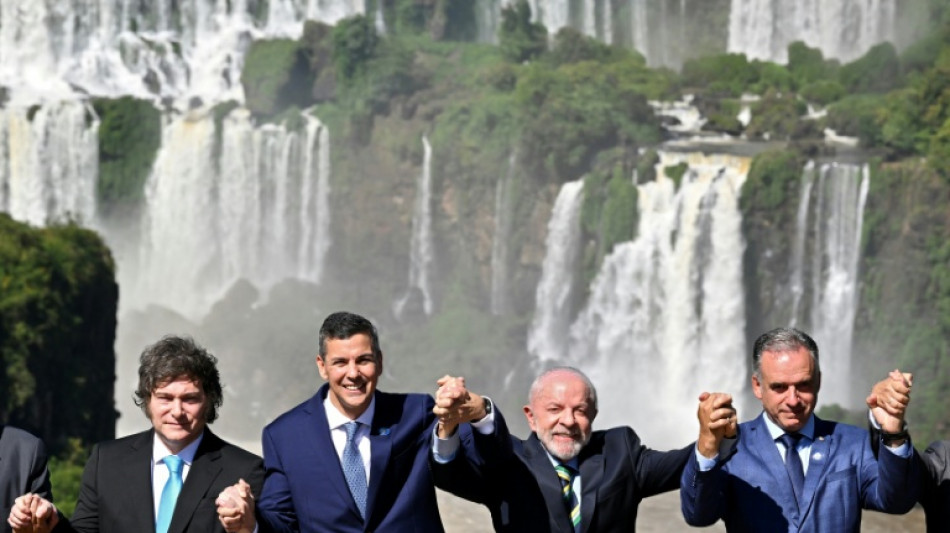
Brazil's Lula, Argentina's Milei clash over Venezuela at Mercosur summit / Photo: Evaristo Sa - AFP

Brazilian President Luiz Inacio Lula da Silva and Argentina's Javier Milei on Saturday openly clashed at a regional summit about the fate of Venezuela, as US President Donald Trump ratchets up the pressure on Caracas.
The comments from Lula and Milei came at a meeting of the South American Mercosur bloc, at which a future trade deal with the European Union was on the agenda.
But the tensions over Venezuela -- once a member of Mercosur but suspended in 2016 -- exploded in the open, with Lula warning that armed conflict could spark a "humanitarian catastrophe," and Milei praising Trump's saber-rattling.
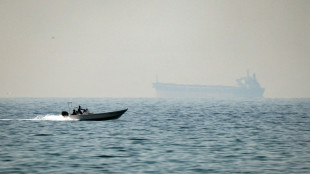
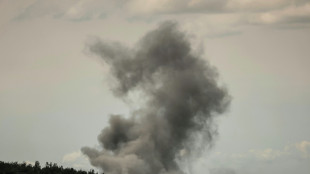
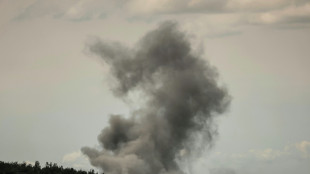
The US military has beefed up its presence in the Caribbean in recent months and carried out air strikes against alleged drug boats in the region and in the Pacific, claiming that it is combatting narcotics trafficking.
But Venezuelan strongman Nicolas Maduro says the campaign is part of a wider effort to carry out regime change in Caracas, and Trump said this week he could not rule out the possibility of war.
"An armed intervention in Venezuela would be a humanitarian catastrophe for the hemisphere and a dangerous precedent for the world," Lula said to open the Mercosur summit in the southern city of Foz do Iguacu.
But Milei -- a Trump ally -- followed with his own take on the situation, saying, "Argentina welcomes the pressure from the United States and Donald Trump to free the Venezuelan people. The time for a timid approach on this matter has run out."
The US government has accused Maduro of leading the "Cartel of the Suns" -- a charge he denies. Trump has also announced a blockade on oil tankers under sanctions that are leaving or arriving in Venezuela.
- Lula asks EU for 'courage' on trade -
Argentina, Brazil, Paraguay and Uruguay had hoped they would on Saturday finally seal a deal with the EU to create the world's largest free trade zone, as did EU Chief Ursula von der Leyen and most of the European bloc's member states.
However, the deal met with fierce opposition from farmers, notably in France and Italy, and has now been postponed to January.
"Without political will and courage on the part of leaders, it will not be possible to conclude negotiations that have dragged on for 26 years," Lula said in his opening speech.
"We have in our hands the opportunity to send the world an important message in defense of multilateralism, and to reinforce our strategic position in a global environment that is more and more competitive," Lula told attendees.
"But, unfortunately, Europe has not yet made its decision."
The leftist Brazilian president said he had received a letter from EU leaders expressing confidence that the deal would be approved in January.
One source in the European Commission and two diplomats who asked not to be named said the new expected signing date was set for January 12 in Paraguay. Negotiations first began in 1999.
But Paraguayan Foreign Minister Ruben Ramirez said neither he nor his Brazilian counterpart Mauro Vieira was aware of any "official communication" on the matter.
The agreement would help the European Union export more vehicles, machinery, wines and spirits to Latin America. In return, it would facilitate the entry into Europe of South American meat, sugar, rice, honey and soybeans.
Some EU nations, such as Germany and Spain, are excited about a pact that could help boost exports at a time of global trade tensions.
But the proposed deal has provoked anxiety among farmers who fear they will be undercut by a flow of cheaper goods from agricultural giant Brazil and its neighbors.
Aside from Lula and Milei, Uruguayan President Yamandu Orsi and Paraguay's Santiago Pena were attending the summit in Foz do Iguacu, home to one of the world's largest waterfall systems on the border with Argentina.
Bolivia is the newest full member of Mercosur, but is not part of the trade deal.
M.Fujitav--JT