The Japan Times - Trump admin weakens limits on 'forever chemicals' in drinking water

EUR -
AED 4.315152
AFN 77.708509
ALL 96.852138
AMD 448.491142
ANG 2.103707
AOA 1077.46608
ARS 1692.867744
AUD 1.766731
AWG 2.114983
AZN 1.996065
BAM 1.958827
BBD 2.365606
BDT 143.531799
BGN 1.957646
BHD 0.442923
BIF 3471.553207
BMD 1.174991
BND 1.516883
BOB 8.115541
BRL 6.345419
BSD 1.17454
BTN 106.215586
BWP 15.56238
BYN 3.462451
BYR 23029.817846
BZD 2.36217
CAD 1.617428
CDF 2631.978985
CHF 0.93526
CLF 0.027299
CLP 1070.885484
CNY 8.288974
CNH 8.27372
COP 4466.84467
CRC 587.522896
CUC 1.174991
CUP 31.137254
CVE 110.435656
CZK 24.285177
DJF 209.15766
DKK 7.470444
DOP 74.667289
DZD 152.34334
EGP 55.789738
ERN 17.624861
ETB 183.52108
FJD 2.648192
FKP 0.879185
GBP 0.877671
GEL 3.168367
GGP 0.879185
GHS 13.482835
GIP 0.879185
GMD 85.774311
GNF 10213.261358
GTQ 8.995863
GYD 245.719709
HKD 9.144171
HNL 30.922442
HRK 7.532747
HTG 153.951832
HUF 385.151393
IDR 19592.088787
ILS 3.766621
IMP 0.879185
INR 106.613135
IQD 1538.577555
IRR 49493.544354
ISK 148.41283
JEP 0.879185
JMD 188.054601
JOD 0.833059
JPY 182.086549
KES 151.515079
KGS 102.752804
KHR 4702.386633
KMF 492.911492
KPW 1057.491268
KRW 1720.480396
KWD 0.36051
KYD 0.978813
KZT 612.546565
LAK 25462.346819
LBP 105176.728999
LKR 362.920819
LRD 207.301224
LSL 19.815521
LTL 3.469442
LVL 0.710741
LYD 6.379995
MAD 10.805297
MDL 19.854766
MGA 5203.151106
MKD 61.58937
MMK 2466.617904
MNT 4166.358748
MOP 9.418054
MRU 47.004836
MUR 53.990968
MVR 18.088629
MWK 2036.690621
MXN 21.126092
MYR 4.808648
MZN 75.093803
NAD 19.815521
NGN 1705.53442
NIO 43.227904
NOK 11.911281
NPR 169.94896
NZD 2.027652
OMR 0.451782
PAB 1.174515
PEN 3.954311
PGK 5.062068
PHP 69.231624
PKR 329.162758
PLN 4.221642
PYG 7889.359242
QAR 4.280496
RON 5.094291
RSD 117.388641
RUB 92.967943
RWF 1709.478019
SAR 4.40866
SBD 9.607607
SCR 17.223335
SDG 706.756952
SEK 10.910905
SGD 1.51451
SHP 0.881547
SLE 28.346692
SLL 24638.971924
SOS 670.04968
SRD 45.293589
STD 24319.935326
STN 24.534259
SVC 10.276881
SYP 12991.498391
SZL 19.808863
THB 36.931722
TJS 10.793679
TMT 4.124217
TND 3.433491
TOP 2.829096
TRY 50.173396
TTD 7.970316
TWD 36.798371
TZS 2916.912694
UAH 49.627044
UGX 4174.450755
USD 1.174991
UYU 46.090635
UZS 14149.865707
VES 314.239221
VND 30925.755393
VUV 142.323844
WST 3.261166
XAF 656.986216
XAG 0.018396
XAU 0.000271
XCD 3.175471
XCG 2.116771
XDR 0.81708
XOF 656.986216
XPF 119.331742
YER 280.241445
ZAR 19.712468
ZMK 10576.317779
ZMW 27.102111
ZWL 378.346528
  • RBGPF

    -3.4900

    77.68

    -4.49%

  • RYCEF

    0.2200

    14.82

    +1.48%

  • NGG

    0.8200

    75.75

    +1.08%

  • RELX

    0.9550

    41.335

    +2.31%

  • CMSC

    0.0100

    23.31

    +0.04%

  • RIO

    -0.1950

    75.465

    -0.26%

  • JRI

    0.0235

    13.59

    +0.17%

  • BCC

    -0.6650

    75.845

    -0.88%

  • CMSD

    0.0300

    23.28

    +0.13%

  • GSK

    0.3700

    49.18

    +0.75%

  • BP

    0.0050

    35.265

    +0.01%

  • BTI

    0.5200

    57.62

    +0.9%

  • VOD

    0.1800

    12.77

    +1.41%

  • BCE

    0.2161

    23.61

    +0.92%

  • AZN

    1.1700

    91

    +1.29%

  • SCS

    0.0200

    16.14

    +0.12%

Trump admin weakens limits on 'forever chemicals' in drinking water
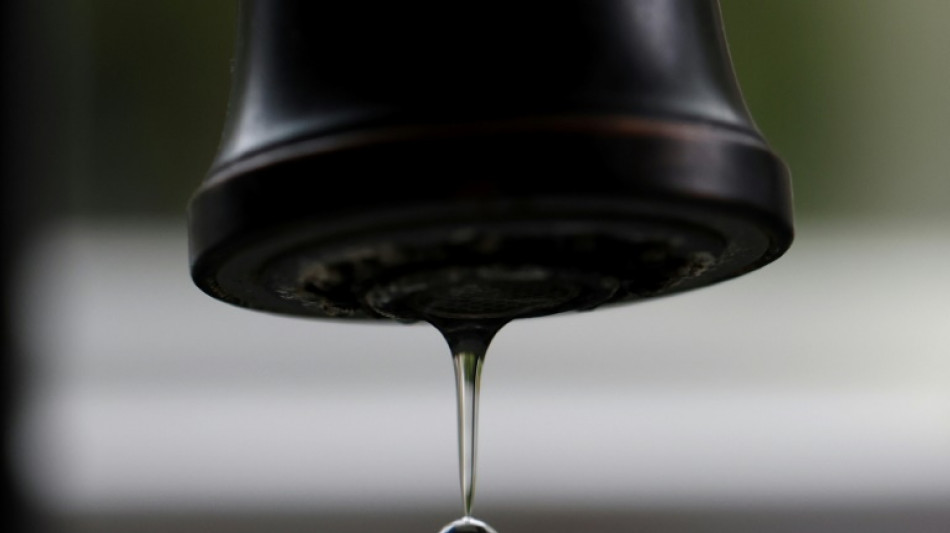
Trump admin weakens limits on 'forever chemicals' in drinking water / Photo: JUSTIN SULLIVAN - GETTY IMAGES NORTH AMERICA/AFP/File

Trump admin weakens limits on 'forever chemicals' in drinking water

US President Donald Trump's administration on Wednesday announced plans to ease limits on the amount of toxic "forever chemicals" allowed in drinking water, reversing what had been hailed as a landmark public health victory.

Text size:

In a statement, the Environmental Protection Agency said it would retain maximum contaminant levels for just two of the most notorious compounds from the PFAS class of chemicals, while removing limits for others also known to pose serious health risks.

Recent research has found that nearly 158 million people across the United States have drinking water contaminated with per- and polyfluoroalkyl substances (PFAS), which have been linked to a wide range of health problems, from decreased fertility to cancer and behavioral disorders in children.

The original rules, imposed by Joe Biden's administration in April 2024, were celebrated as a long-overdue response to decades of industry deception and government inaction.

But under the changes announced by EPA Administrator Lee Zeldin, the limits would now apply only to PFOA and PFOS -- two legacy PFAS chemicals historically used in nonstick Teflon pans and 3M's Scotchgard -- while exempting newer-generation PFAS that were developed as replacements.

The EPA would also extend the compliance deadline for PFOA and PFOS from 2029 to 2031.

"We are on a path to uphold the agency's nationwide standards to protect Americans from PFOA and PFOS in their water," Zeldin said in a statement. "At the same time, we will work to provide common-sense flexibility in the form of additional time for compliance."

PFAS are called "forever chemicals" because they take millions of years to degrade in the environment.

First developed in the 1930s and prized for their strength, heat resistance and water- and grease-repellant properties, they have been detected everywhere from the plateaus of Tibet to the ocean floor -- and in the blood of nearly every living being.

They are still commonly used in clothing, cookware and cosmetics.

"This is a huge step backwards, and it's really a betrayal of the promise this administration made to provide clean drinking water and clean air, and to make America healthy again," Melanie Benesh of the nonprofit Environmental Working Group told AFP.

She noted that the excluded chemicals were developed as substitutes, but the EPA's own research has linked some of them -- including GenX -- to harm to the liver, kidneys, immune system, fetal development, and cancer.

Eventually, water utilities will be required to install granular activated carbon filtration systems to remove PFAS molecules. But the newer generation PFAS, which have shorter molecular chains, require more frequent filter changes, adding to operational costs.

"This is a gift to the water utilities and to polluters,"said Benesh.

She added that the plans are likely to be challenged in court because of a provision of the Safe Drinking Water Act that states changes to existing water standards have to be at least as or more health protective than current standards.

T.Ueda--JT